
Space rock (music genre)
Space rock is a subgenre of rock marked by extended, atmospheric arrangements, electronic textures and science‑fiction themes. It emerged in the late 1960s–1970s and influenced shoegaze, post‑rock and ambient pop.
Overview
Space rock is a style of rock music that emphasizes expansive, often hypnotic soundscapes and production techniques that suggest motion, distance or cosmic vastness. The phrase has been used to describe both a set of early progressive and psychedelic bands and later alternative acts that adopted a more melodic, ambient approach. Readers can find a general introduction to the topic via overview sources.
Image gallery
3 Images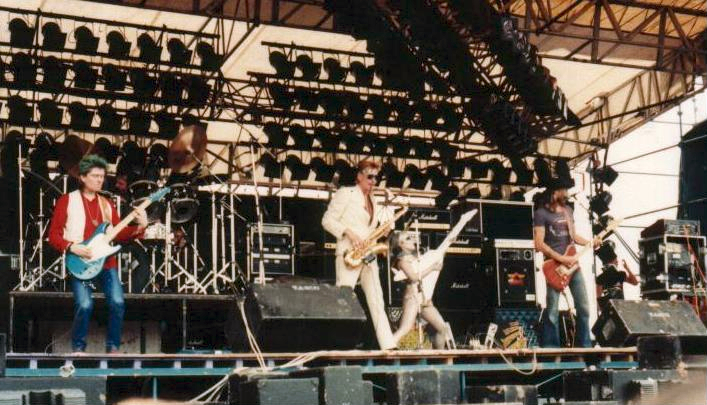


Musical characteristics
Common musical features include long instrumental passages, prominent layered synthesisers, sustained and effect‑laden guitar tones, and repetitive rhythmic motifs that create a sense of suspension or drift. Vocals are frequently secondary to texture or processed as part of the soundfield. Studio techniques such as tape delay, reverb and modulation are important to the aesthetic, and attention to electronic timbres is typical of the style; details on common instruments and gear can be found at instrumentation notes.
Instruments and production
- Analogue and digital synthesisers for pads, drones and leads
- Electric guitar using delay, reverb, phasing and sustain
- Keyboards (including Mellotron‑like textures) and organ
- Sequencers, loops and studio editing to build extended forms
- Occasional use of found sounds, field recordings and electronic effects
Origins and early practitioners
The roots of space rock lie in the late 1960s and early 1970s, when progressive rock and psychedelic artists began to explore extended instrumental arrangements and lyrical material drawn from science fiction and futurism. Critics and historians often point to the overlap with broader progressive rock movements (progressive rock) and the psychedelic tradition (psychedelic). A number of British groups are frequently cited as formative examples, notably Hawkwind and Pink Floyd, which helped establish many of the genre's stylistic conventions.
Lyrics and thematic concerns
Lyric themes commonly include space travel, alienation, technology, cosmology and speculative fiction. These topics often serve as metaphors for psychological or social concerns rather than literal narratives. Writers and performers sometimes draw directly on science‑fiction imagery to shape album concepts and live presentation; an overview of those lyrical themes is available at science fiction themes.
Later revivals and influence
From the 1980s onwards, artists in alternative, neo‑psychedelic, shoegaze and ambient pop scenes reinterpreted space rock aesthetics, combining atmospheric textures with more conventional songcraft. Commentators have used the term to describe late‑1980s British acts who softened the experimental edges in favor of melody and atmosphere; see commentary on that strand at later alternative. The techniques and moods of space rock also influenced post‑rock, film scoring and various strands of electronic music.
Legacy
Space rock remains a useful descriptive label for music that privileges immersive atmosphere, slow build and electronic color over traditional rock immediacy. Its importance lies less in strict boundaries and more in a set of approaches to composition and production that continue to inform contemporary artists. For broader context and cross‑references to related movements, consult general genre surveys and histories linked from genre overviews and studies of progressive roots and psychedelic connections.
See also: Hawkwind • Pink Floyd • synthesisers and gear • science fiction themes • later alternative interpretations
Questions and answers
Q: What is space rock?
A: Space rock is a subgenre of rock music that originated in the 1970s and is characterized by slow, lengthy instrumental passages dominated by synthesisers, experimental guitar work, and science fiction lyrical themes.
Q: To which groups did the term 'space rock' originally refer?
A: The term 'space rock' originally referred to a group of early mostly British 1970s progressive rock and psychedelic bands such as Hawkwind and Pink Floyd.
Q: What are some typical characteristics of space rock music?
A: Some typical characteristics of space rock music include slow, lengthy instrumental passages dominated by synthesisers, experimental guitar work, and science fiction lyrical themes.
Q: When did the meaning of the words 'space rock' change?
A: The meaning of the words 'space rock' changed later in the 1980s when it was used to describe a series of British alternative rock bands that drew from earlier influences to create a more melodic but still ambient form of pop music.
Q: What is the difference between early space rock and later space rock?
A: The early space rock was mostly progressive rock and psychedelic, characterized by science fiction lyrical themes and experimental guitar work while the later space rock was a more melodic and ambient form of pop music.
Q: What are the lyrical themes of space rock music?
A: The lyrics of space rock music are usually science fiction themed.
Q: Who are some of the bands associated with the later meaning of 'space rock'?
A: Some of the bands associated with the later meaning of 'space rock' are Spiritualized, My Bloody Valentine, and Ride.
Related articles
Author
AlegsaOnline.com Space rock (music genre) Leandro Alegsa
URL: https://en.alegsaonline.com/art/92411
Sources
- allmusic.com : Pink Floyd biography
- allmusic.com : Space Rock