
Sound card: functions, types, history and uses
A sound card (audio card) handles a computer's audio input and output. This article explains components, integrated vs expansion cards, historical development, typical uses and important distinctions.
Overview
A sound card, also called an audio card, is a component that enables a computer to process, generate and record audio signals. In broad terms it converts digital audio data into analog signals that can be played through loudspeakers or headphones, and it converts analog inputs from microphones or instruments into digital data the system can store or process. Sound cards historically appeared as separate expansion boards but are now frequently provided as onboard audio within a computer's main electronics.
Image gallery
10 Images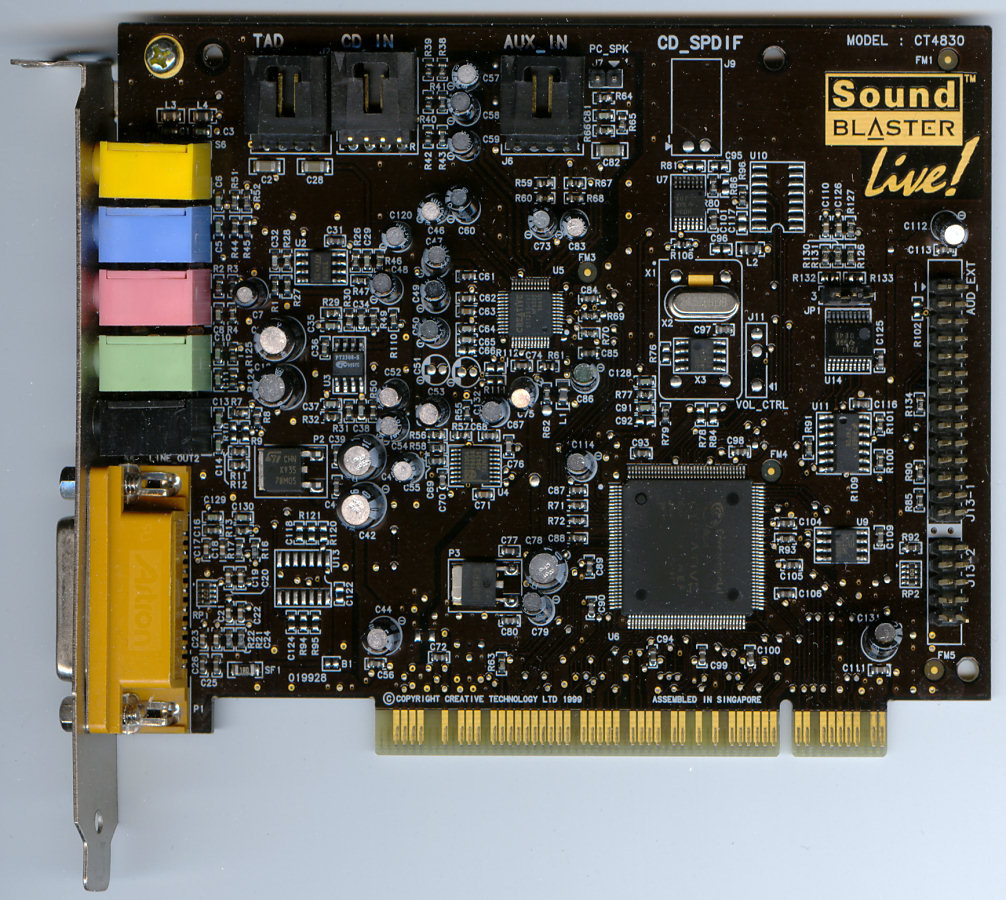


Main components and connections
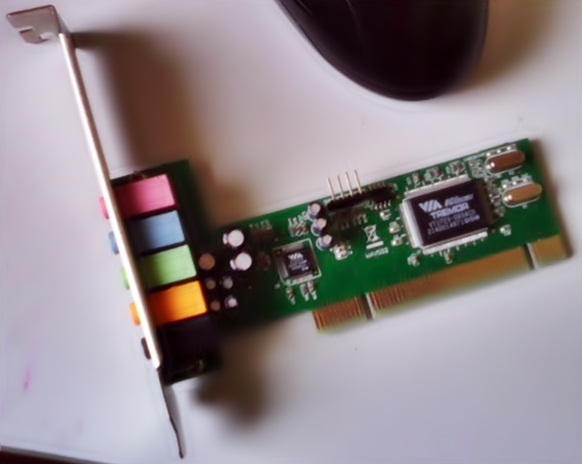
A typical sound card or audio subsystem contains several functional parts: digital-to-analog converters (DACs), analog-to-digital converters (ADCs), audio codecs (which integrate converters with basic processing), input/output jacks and digital interfaces. Common external connections include line-in, line-out or speaker outputs, and microphone inputs. Professional or older cards add MIDI interfaces, optical digital connectors and balanced outputs for studio gear.
- Converters and codecs: handle the conversion between analog and digital forms.
- Inputs/outputs: physical jacks for speakers, microphones and line-level devices.
- Control logic: communicates with the operating system and bus interface on the motherboard.
Integrated vs expansion cards
Early personal computers used add-in expansion boards to provide audio. These expansion cards plugged into motherboard slots and implemented their own processors, mixers and connectors. Over time many functions moved onto the computer's main board as integrated audio, reducing cost and saving space—an important advantage in portable systems like laptops. Enthusiasts and professionals still use discrete expansion sound cards when they need higher fidelity, hardware MIDI ports, specialized inputs or very low jitter and low latency performance for music production. Modern expansion cards commonly use the PCI family of interfaces for communication with the CPU and memory.
History and development
Sound support in personal computing evolved from basic beeps and simple tone generation to complex multi-channel audio. Early adapters used industry-standard expansion buses and provided limited features; later developments integrated more of the audio pipeline into single chips and improved sampling rates and bit depths. Today many systems implement audio through dedicated chips on the board—effectively an integrated circuit—while still allowing external, higher-performance options when required. Understanding how audio fits into overall computer architecture helps explain trade-offs between integration and expandability.
Uses and examples
Sound cards are used in everyday consumer tasks such as playing music, watching videos, voice calls and gaming, where surround sound and positional audio enhance immersion. In professional contexts—recording studios, live sound, digital audio workstations—cards provide multi-channel I/O, low-latency monitoring and synchronization features. Hobbyists may add cards with MIDI ports to connect keyboards and controllers, or specialized inputs to digitize analog recordings.
Notable distinctions and practical considerations
When choosing audio hardware consider sampling rate and bit depth (which determine theoretical fidelity), driver quality (affecting compatibility and latency), and electrical noise isolation (important for recording). Integrated audio is perfectly adequate for most users, while external USB interfaces and internal PCI cards target musicians and audio professionals. For further technical reference see general information on computer hardware and examples of bus standards such as the older ISA and the more modern PCI variants used by expansion devices.
Additional resources and product details may be found through component manufacturers and community documentation; consult reputable sources when selecting hardware for critical audio work and when interconnecting devices in a studio or live setup. For a quick visual comparison, imagine a simple integrated audio chip on a mainboard versus a larger expansion card with multiple jacks and dedicated power regulation—both serve the same core purpose but address different user needs.
Questions and answers
Q: What is a sound card?
A: A sound card is a part of computer hardware that controls the input and output of sound signals.
Q: What is an expansion card?
A: An expansion card is a card that can be added to the motherboard.
Q: Are most audio cards integrated with the motherboard nowadays?
A: Yes, nowadays most audio cards are integrated with the motherboard.
Q: What features do integrated audio cards offer?
A: Integrated audio cards offer line-in, speaker, and microphone connections.
Q: Why did integrated circuit sound cards become popular?
A: Integrated circuit sound cards became popular because they occupy less space, making them practical for laptop computers.
Q: What are the additional features that can be obtained from sound cards as expansion cards?
A: Additional features that can be obtained from sound cards as expansion cards include MIDI ports for connection of musical instruments and low latency requirements.
Q: What computer bus standard is used in modern expansion sound cards?
A: Modern expansion sound cards use the PCI computer bus standard.
Related articles
Author
AlegsaOnline.com Sound card: functions, types, history and uses Leandro Alegsa
URL: https://en.alegsaonline.com/art/92058