
BASE jumping: jumping from fixed objects with a parachute
BASE jumping is an extreme sport in which participants leap from fixed structures—buildings, antennas, spans, or cliffs—and deploy a parachute to reach the ground safely. It differs from skydiving and carries high risk.
BASE jumping is an activity in which a person leaps from a fixed object and deploys a parachute to slow descent before reaching the ground. The sport is considered an extreme or high-risk pursuit because jumps often begin at low altitude and close to obstacles, leaving little margin for error. Equipment and technique are adapted to short-deployment situations, and many jumps blend athletic skill with careful site assessment.
Image gallery
5 Images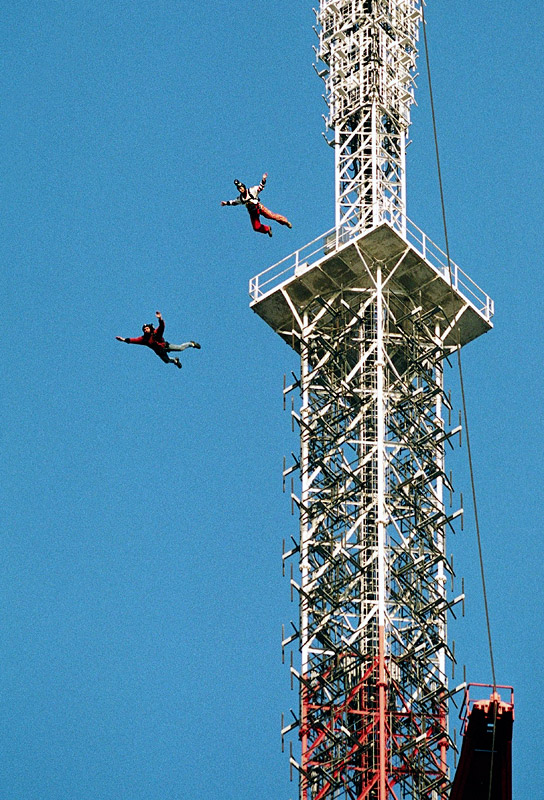


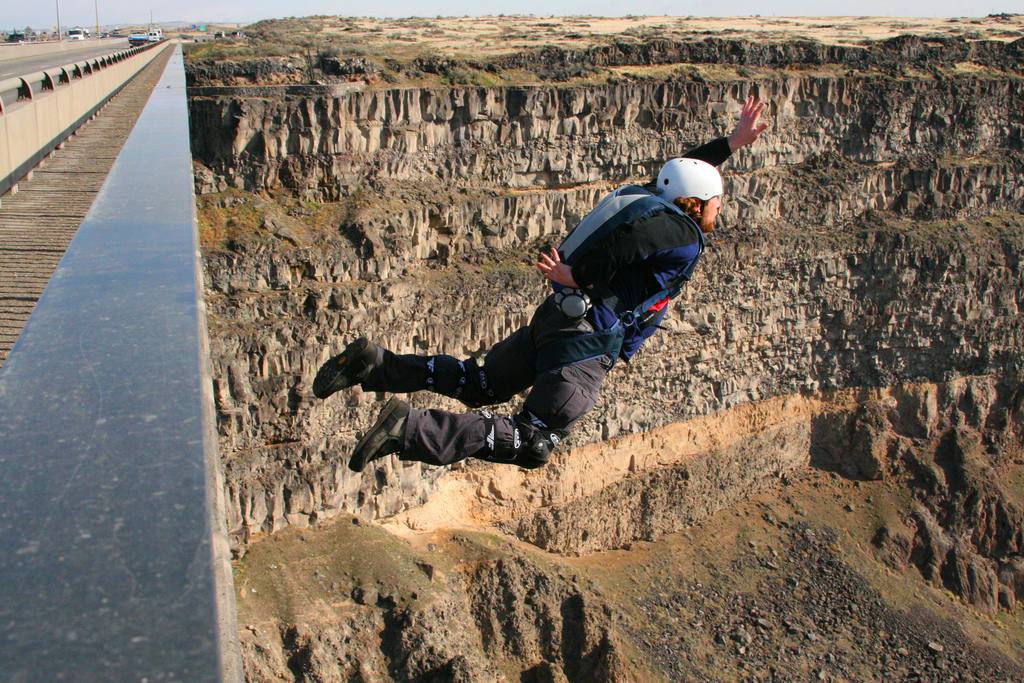
Categories
The letters in the name form the acronym that classifies typical launch sites. Each category is associated with different challenges and legal contexts:
- Buildings — urban structures and towers often require special permission and present obstacles like ledges and nearby structures.
- Antennas — radio and TV masts are slender and high; wind and turbulence around them can be hazardous.
- Spans (bridges) — many popular jumps come from bridge decks or arches and may involve over-water landings.
- Earth — cliff faces and natural rock formations; this category is similar to cliff jumping and often involves complex terrain below.
Equipment and technique
Because BASE jumps begin at lower altitude than airplane exits, participants use canopies and packing techniques optimized for fast, reliable opening and maneuverability. A typical setup includes a main canopy designed for rapid inflation and a reserve or backup system. Some jumpers use a pilot chute deployment or a static-line style for immediate opening. Wingsuits are often combined with BASE jumping to extend glide distance, but they add complexity and risk. Proper training focuses on body position at exit, canopy deployment timing, and contingency planning for obstacles.
History and distinction
The organized practice of leaping from fixed objects grew in the late 20th century as parachuting technology and portable filming enabled more attempts. The term and its four-part classification were popularized within the parachuting community around that period, and figures in the sport helped document early jumps. BASE jumping differs from skydiving primarily by launch method: skydivers exit aircraft at greater altitude and have more time for freefall and canopy deployment, whereas BASE jumpers face short delays and immediate proximity to ground or structures.
Risks, legality, and culture
BASE jumping carries a higher fatality and injury rate than many recreational sports due to low-altitude openings, changing weather, and close obstacles. Many countries and local authorities restrict or prohibit jumps from specific sites; trespass and public-safety concerns often complicate access. Within the community, experienced jumpers emphasize scouting, conservative decision-making, and incremental skill development. For safety information and equipment resources see parachute manufacturers and technical guides, and for background on the sport's terminology see the article on the acronym BASE.
Notable aspects include the use of specialized canopies, frequent legal challenges at iconic sites, and a strong subculture that values photography and documentation of new sites. While admired for its daring and aesthetic imagery, BASE jumping remains controversial because of its public-safety implications and the real risks participants accept.
Questions and answers
Q: What is BASE jumping?
A: BASE jumping is a fringe sport in which a person jumps from a fixed place and uses a parachute to slow down before the ground is reached.
Q: What does the acronym "BASE" stand for in BASE jumping?
A: The acronym "BASE" stands for each of the four jump location categories: from buildings, antennas, spans (bridges) and the earth.
Q: What does jumping from the earth category entail in BASE jumping?
A: Jumping from the earth category in BASE jumping involves jumping off a cliff.
Q: Is BASE jumping considered an extreme sport?
A: Yes, BASE jumping is considered an extreme sport as it involves speed, height, danger or spectacular stunts.
Q: How many jump location categories are there in BASE jumping?
A: There are four jump location categories in BASE jumping.
Q: What does a BASE jumper use to slow down before reaching the ground?
A: A BASE jumper uses a parachute to slow down before reaching the ground.
Q: Can anyone participate in BASE jumping?
A: No, not everyone can participate in BASE jumping as it requires specialized training, knowledge and equipment. Additionally, it is illegal in many places.
Related articles
Author
AlegsaOnline.com BASE jumping: jumping from fixed objects with a parachute Leandro Alegsa
URL: https://en.alegsaonline.com/art/9195
Sources
- basenumbers.org : "BASENumbers.org"
- articles.chicagotribune.com : "BASE jumpers fall for thrill-seeking lifestyle"
- physicsclassroom.com : "Skydiving: The Speed of the skydiver"
- bjsportmed.com : "Parachuting from fixed objects: descriptive study of 106 fatal events in BASE jumping 1981-2006"
- doi.org : 10.1136/bjsm.2008.046565
- ncbi.nlm.nih.gov : "How dangerous is BASE jumping? An analysis of adverse events in 20,850 jumps from the Kjerag Massif, Norway"
- doi.org : 10.1097/01.ta.0000239815.73858.88
- pubmed.ncbi.nlm.nih.gov : 17495709
- medicine.ox.ac.uk : "Risk of dying and sporting activities"
- nydailynews.com : "BASE jumper Ian Flanders dies in Turkey after getting tangled in lines after 900-foot canyon jump"
- nytimes.com : "Dean Potter, Extreme Climber, Dies in BASE-Jumping Accident at Yosemite"
- cbsnews.com : "American BASE jumper dies in fatal plunge in Turkey"
- spiegel.de : "Extremsport im Himalaya: Basejumper Rosow stirbt bei Sprung aus 7000 Metern"
- edition.cnn.com : "Four men arrested in One World Trade Center jump stunt"