
Sooglossidae (Seychelles frogs): overview, biology and conservation
Sooglossidae are a tiny family of leaf‑litter frogs best known from the Seychelles with unusual reproductive modes, restricted ranges and an evolutionary history tied to ancient Gondwanan biogeography.
Sooglossidae are a small family of frogs commonly known as Seychelles frogs; for a general taxonomic reference see Sooglossidae. Members are minute, ground‑dwelling amphibians with limited, often disjunct distributions. The family is notable for specialized life histories, strong associations with humid leaf litter and rock crevices, and for its evolutionary significance as a relict lineage.
Image gallery
2 Images
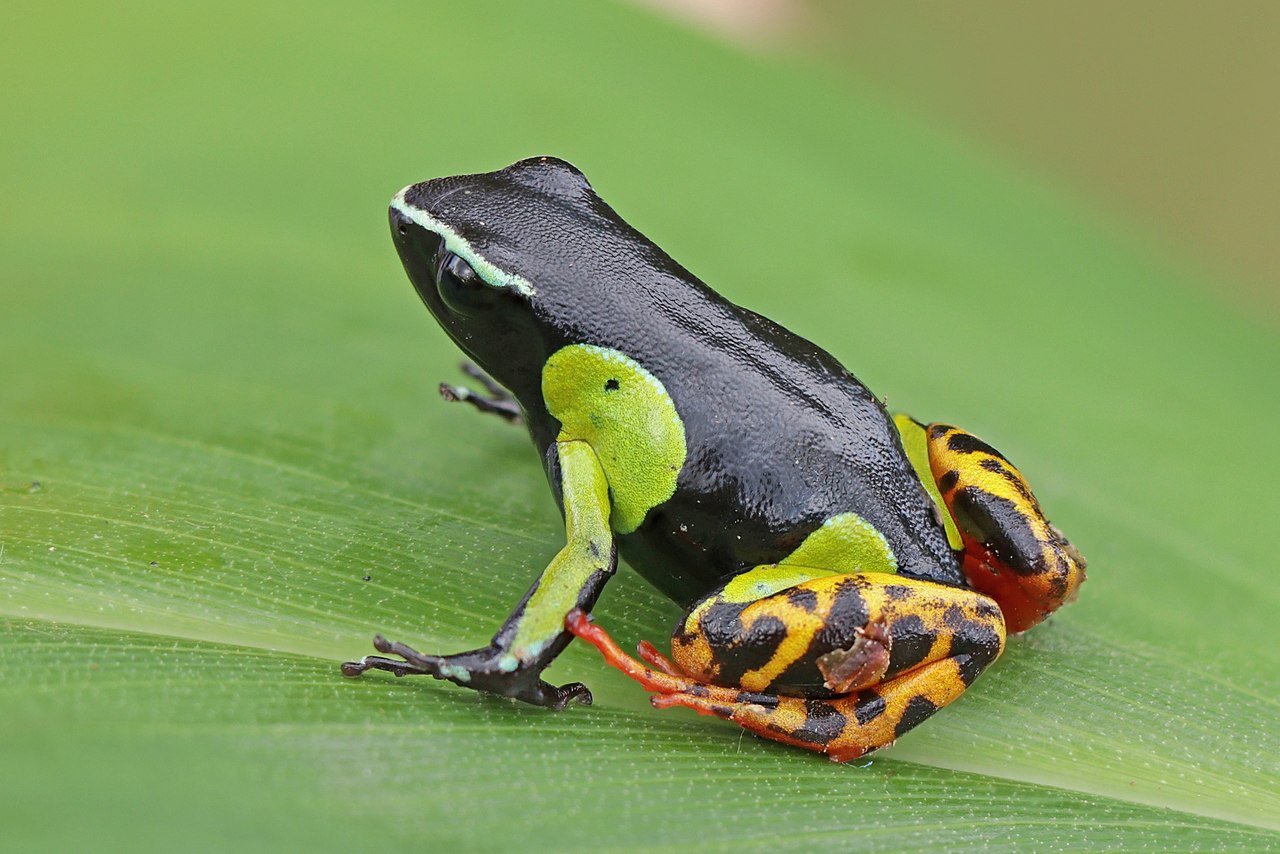
Physical traits and behaviour
Individuals are typically very small, generally only a few centimetres in length, and show cryptic colouring that helps them remain concealed in leaf litter and beneath stones. Their limbs and body proportions suit a terrestrial lifestyle rather than an aquatic one. These frogs are secretive and most active in moist conditions; they often shelter beneath fallen leaves, among roots or in crevices during dry periods.
Reproduction and parental care
Reproductive biology in Sooglossidae is one of their most striking features. Eggs are laid on moist ground rather than in open water. At least one species in the group shows direct development, with eggs hatching as miniature froglets, bypassing a free‑swimming tadpole stage. Other species produce tadpoles that receive parental care: adults carry tadpoles on the parent's back until metamorphosis, a behaviour often described as tadpole carriage. These strategies reduce reliance on standing water and are well suited to small island and forest‑floor environments.
Taxonomy and relationships
The family contains only a small number of species grouped in a few genera endemic to the Seychelles. Because of their limited diversity and distinct features, Sooglossidae have attracted interest from systematists. Historically, comparisons have been made with some unusual Indian frogs, and molecular studies have explored whether those similarities reflect deep Gondwanan connections. One Indian taxon has been treated by many authors in a separate family, illustrating that relationships between Seychelles and Indian lineages have been debated and refined as new data appear; see broader discussions of Indian‑Seychelles links in the literature (India).
Distribution and habitat
Sooglossidae are best known from the inner islands of the Seychelles (Seychelles) where small, humid forests and rocky ground provide suitable microhabitats. Their restricted ranges make populations naturally fragmented. Within these habitats they are typically associated with moist leaf litter, under logs, and among rock crevices rather than open water bodies.
Ecology and diet
These frogs are insectivorous, feeding on small invertebrates found in the leaf litter, such as insects and other arthropods. Their small size and secretive habits mean they play a modest but important role in the forest‑floor food web, both as predators of invertebrates and as prey for larger animals.
Conservation and research
Most species have very small ranges and specialised habitat requirements, making them vulnerable to habitat loss, invasive species, altered hydrology and climate change. Conservation efforts focus on habitat protection, detailed surveys to determine current distributions and population trends, and research into their reproductive biology and phylogenetic relationships. Because of their restricted distributions and unusual biology, Sooglossidae are of conservation concern and of interest to researchers studying island biogeography and amphibian evolution.
Notable facts
- Very small, secretive frogs adapted to life in leaf litter and rock crevices.
- Reproductive diversity includes both direct development and parental transport of tadpoles.
- Disjunct Seychelles–India comparisons have led to hypotheses of ancient Gondwanan origins, though relationships remain a subject of study.
- High conservation priority due to narrow endemism and sensitivity to habitat change.
For taxonomic details and regional checklists consult specialist sources and the general family entry at Sooglossidae. Additional background on the Seychelles is available at Seychelles, and discussions of wider biogeographic links appear in literature referencing India. For life‑history terms and examples see entries on direct development and on tadpole carriage.
Questions and answers
Q: What is the Sooglossidae?
A: The Sooglossidae is a family of frogs.
Q: Where are the Seychelles frogs found?
A: The Seychelles frogs are found on the Seychelles Islands and India.
Q: What is the size of the Seychelles frogs?
A: The Seychelles frogs are small land frogs, about 4 cm (1.6 in) in length.
Q: Where do the Seychelles frogs hide?
A: The Seychelles frogs hide under fallen leaves or in rock crevices.
Q: Where do the Seychelles frogs lay their eggs?
A: The Seychelles frogs lay their eggs on moist ground, rather than in water.
Q: Do all species of Seychelles frogs have tadpoles?
A: No, one species lacks tadpoles, with the eggs hatching directly into froglets.
Q: How do the other species of Seychelles frogs carry their tadpoles?
A: The other species of Seychelles frogs carry their tadpoles on their back until metamorphosis.
Related articles
Author
AlegsaOnline.com Sooglossidae (Seychelles frogs): overview, biology and conservation Leandro Alegsa
URL: https://en.alegsaonline.com/art/91927