
Sonic the Hedgehog: franchise overview, design, history and cultural impact
A comprehensive overview of Sega's Sonic the Hedgehog: character, gameplay, development, major entries, spin-offs and cultural legacy across games, animation, comics and film.
Overview
Sonic the Hedgehog is a long-running Japanese platform video game series and cross-media media franchise created by Sega. The series centers on Sonic, a bright blue hedgehog noted for supersonic speed. Since the debut title in 1991, Sonic has been Sega’s primary mascot and a signature figure in video-game culture, appearing in numerous sequels, spin-offs and adaptations.
Image gallery
10 Images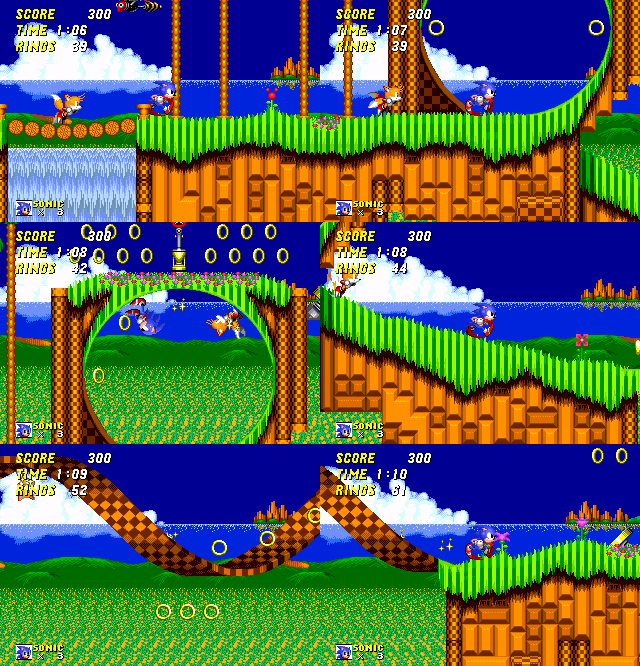




Characteristics and gameplay
The core games emphasize momentum-based platforming: players guide Sonic through levels that combine fast, linear sections with exploration. A recurring mechanic is collecting golden rings that act as health and currency, and finding special items such as the Chaos Emeralds. Levels often feature springs, loop-de-loops and multi-tiered paths that reward speed or careful exploration. The villainous inventor Doctor Eggman (also known as Robotnik) is a frequent antagonist whose machines and schemes provide boss encounters.
History and development
Sonic was developed by Sega’s internal group, Sonic Team, and first released in 1991 for Sega’s 16-bit console to serve as a new company mascot, replacing earlier characters and competing with rivals such as Nintendo's Mario. The original game helped define the 16-bit era and secured Sonic’s popularity. The series evolved into three-dimensional gameplay with entries like Sonic Adventure for the Dreamcast in 1998, which introduced more cinematic storytelling and multiple playable characters.
Characters, spin-offs and media
- Key allies include Tails, Knuckles and Amy, who support Sonic in many games and stories.
- Beyond mainline platformers, the franchise includes racing, fighting, party and puzzle spin-offs, as well as mobile titles and free-to-play apps referenced among mobile game downloads.
- Adaptations encompass comic books, animated TV series and two live-action/CGI feature films that broadened mainstream recognition.
Importance and legacy
Sonic remains one of video games’ most recognizable characters. The series is notable for its fusion of speed-oriented level design with colorful character-driven storytelling. It has sustained commercial and cultural relevance through decades of changing hardware and design trends, influencing platform design and spawning a large fan community. Developers have repeatedly revisited the balance between classic 2D mechanics and modern 3D experimentation.
Notable facts and distinctions
The franchise has gone through distinct eras—from the classic side-scrolling entries to more ambitious 3D titles, to hybrid and mobile-focused releases. Sonic’s blue color and energetic personality were chosen to reflect Sega’s branding and to create a marketable mascot. The series has produced landmark titles, licensing agreements and merchandise that helped secure its long-term presence in gaming culture.
For further reading on platforming mechanics and franchise history, see related topics such as platform games, the notion of a corporate mascot, and the broader competitive environment of the early 1990s involving Nintendo and others. The original 1991 release remains a frequently cited milestone in game design and marketing history.
Additional resources and official information can be found through Sega and Sonic-specific outlets maintained by Sega and Sonic Team, while retrospective coverage often highlights transitions exemplified by titles like Sonic Adventure and platform shifts such as the Dreamcast. The enduring appeal of the character and franchise continues to be reflected in sales, adaptations and fan communities worldwide.
Contextual links: Sonic, design elements, speed-focused gameplay, Doctor Eggman, 1991 debut, mascot development, Mario comparisons, 16-bit legacy, mobile presence.
Questions and answers
Q: What is Sonic the Hedgehog?
A: Sonic the Hedgehog is a Japanese platform video game series and media franchise created by Sega featuring their mascot, Sonic.
Q: Who is the main character in Sonic the Hedgehog?
A: Sonic the Hedgehog is the main character, a bright blue hedgehog with supersonic speed who usually stops the villain Doctor Eggman's plans for taking over the world.
Q: Who are some of Sonic's friends?
A: Sonic is often helped by his friends like Tails, Amy Rose, and Knuckles.
Q: Why was Sonic created?
A: Sonic was created because Sega wanted a new mascot character to replace Alex Kidd and compete with Nintendo's mascot, Mario.
Q: What was the first Sonic the Hedgehog game and when was it released?
A: The first Sonic the Hedgehog game was released in 1991 and created by Sega's Sonic Team division.
Q: What was the first major 3D Sonic game and when was it released?
A: The first major 3D Sonic game, Sonic Adventure, was released in 1998 for the Dreamcast.
Q: How successful is the Sonic the Hedgehog franchise?
A: The franchise has made over Template:US $ by 2014 and has sold 800 million copies as of 2018, including free-to-play mobile game downloads. It helped Sega become one of the biggest video game companies during the 16-bit era of the early 1990s.
Related articles
Author
AlegsaOnline.com Sonic the Hedgehog: franchise overview, design, history and cultural impact Leandro Alegsa
URL: https://en.alegsaonline.com/art/91872
Sources
- sonic.sega.jp : "Sonic's official character profile"
- sonic.sega.jp : "Tails's official character profile"