
Somewhere in Time (Iron Maiden album)
Somewhere in Time is Iron Maiden's sixth studio album, released 29 June 1986. Known for its guitar-synth textures, futuristic artwork and the singles 'Wasted Years' and 'Stranger in a Strange Land'.
Overview
Somewhere in Time is the sixth studio album by the English heavy metal band Iron Maiden, released on 29 June 1986. The record marked a stylistic shift for the band, incorporating guitar synthesizers and a denser, more technicolor production while retaining Maiden's melodic songwriting and driving rhythms. On release it reached No. 3 on the UK albums chart and became one of the group's best-known mid-1980s works.
Image gallery
1 Image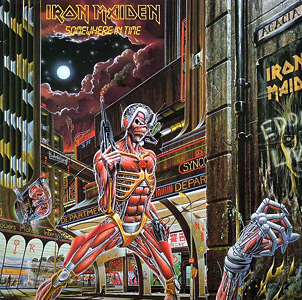
Recording, personnel and musical direction
The lineup for the album featured Bruce Dickinson (vocals), Dave Murray and Adrian Smith (guitars), Steve Harris (bass) and Nicko McBrain (drums). Produced by Martin Birch, the sessions explored new textures through guitar synths and layered guitars, giving some tracks a more contemporary, almost futuristic sheen than earlier rawer albums. The material balances straightforward metal anthems with more reflective and reverb-tinged pieces, pointing toward the band's progressively ambitious direction on later releases.
Artwork and themes
The cover, created by long-term Maiden artist Derek Riggs, presents the band’s mascot in a time-travel setting filled with visual references and Easter eggs that allude to previous albums and science-fiction motifs. The artwork contributes strongly to the album's identity: its lyrical and sonic themes often touch on memory, travel, alienation and the passage of time, woven into historical and speculative narratives.
Tracks and singles
- Notable singles from the album include "Wasted Years" and "Stranger in a Strange Land," both of which received airplay and remain staples in the band’s catalogue.
- The title track "Caught Somewhere in Time" sets the tone with reflective lyrics and melodic guitar work; other songs range from driving rockers to moodier compositions.
Reception and legacy
Critical reaction to Somewhere in Time was mixed to positive. Some reviewers praised the songwriting and production, while others felt the new synth textures made the band sound less raw than earlier albums. Over time the record has been reassessed by fans and critics and is often cited for its ambitious production choices and memorable melodies. It occupies an important place in Iron Maiden's discography as the bridge between their classic 1980s sound and the more experimental ideas they pursued on subsequent albums.
Notable facts
Aside from its chart success, the album is remembered for introducing guitar-synth tones into Maiden’s palette and for its detailed cover artwork full of hidden references. Songs from Somewhere in Time continue to appear in live setlists and compilations, underscoring its lasting popularity within the band's body of work.
Questions and answers
Q: Who released the album Somewhere in Time?
A: Iron Maiden released the album Somewhere in Time.
Q: When did Somewhere in Time go on sale?
A: Somewhere in Time went on sale on 29 June 1986.
Q: What was the popularity rank of Somewhere in Time in England?
A: Somewhere in Time was the third most popular album in England when it started being sold.
Q: How did the album perform in terms of reviews?
A: The album got average reviews.
Q: What did one reviewer say about Somewhere in Time?
A: One reviewer said that it was "less inspired" than Iron Maiden's earlier albums, but that the first half of it was still good.
Q: How many studio albums did Iron Maiden release before Somewhere in Time?
A: It is not mentioned in the text how many studio albums Iron Maiden released before Somewhere in Time.
Q: What genre does Iron Maiden play?
A: The text does not specify what genre Iron Maiden plays.
Related articles
Author
AlegsaOnline.com Somewhere in Time (Iron Maiden album) Leandro Alegsa
URL: https://en.alegsaonline.com/art/91777
Sources
- ironmaiden.com : "Somewhere In Time"
- allmusic.com : "Review"