
Solitary confinement
Separation of a prisoner from others for punishment, protection, or management; overview of practice, terminology, effects, history, and legal and ethical concerns.
Solitary confinement is the practice of keeping a person in physical isolation from others within a detention setting. Often imposed as a disciplinary measure or for safety and security reasons, it restricts almost all social contact except limited interactions with staff. Some authorities describe it as a form of long-term incarceration while human rights organizations frequently warn that prolonged isolation can amount to psychological harm or torture. For a general definition see punitive or management practices.
Image gallery
8 Images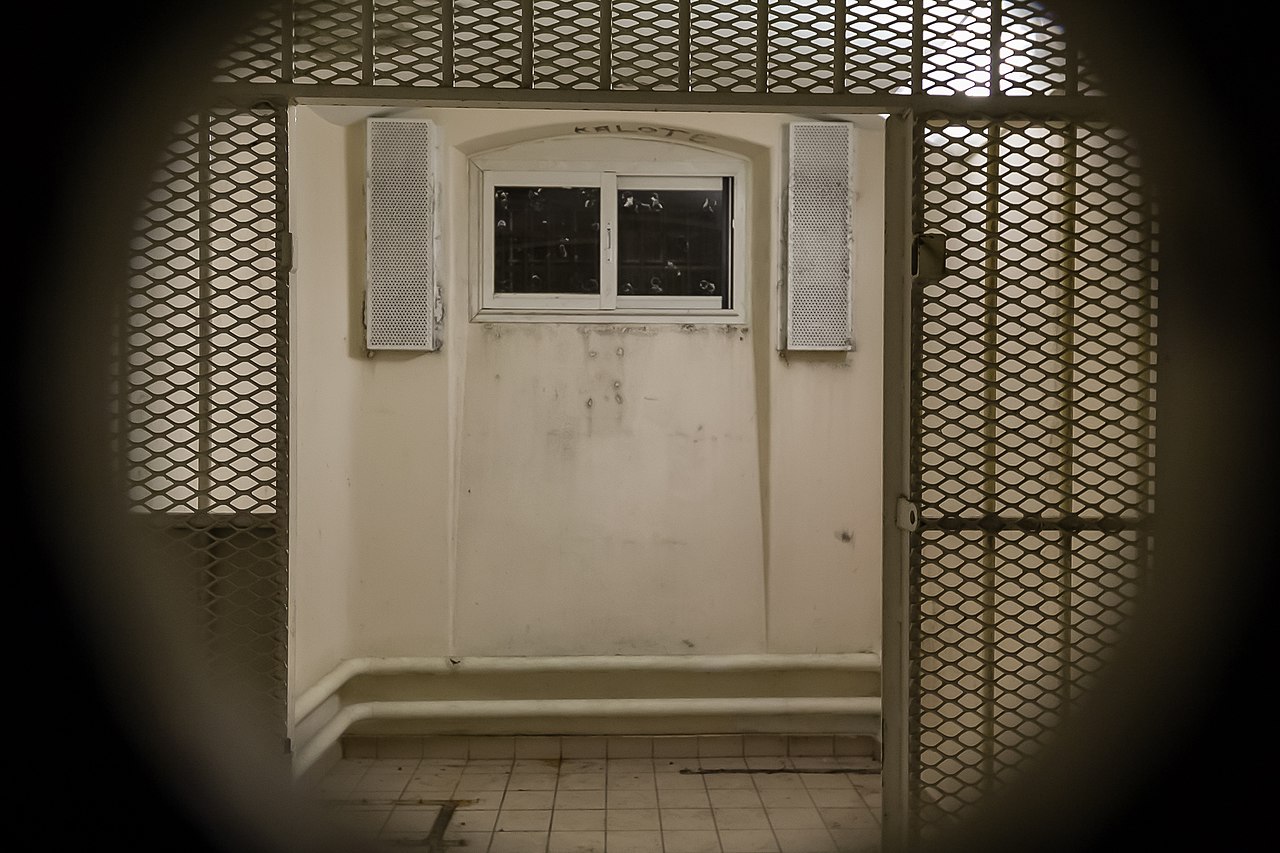


Characteristics and typical conditions
Conditions vary widely by jurisdiction and institution. Common features include a small, single-occupancy cell, restricted movement, limited access to programs and recreation, and reduced or no contact with other inmates. Duration can range from a few hours to indefinite periods, and supervision levels may differ. Typical elements include:
- Isolation in a single cell for most of the day.
- Limited or supervised out-of-cell time for exercise and showering.
- Controlled visitation and correspondence.
- Use for both disciplinary sanctions and protective custody.
History and terminology
Solitary practices have existed in various forms for centuries, from early penitentiary regimes to modern high-security facilities such as supermax units. The practice has accumulated many colloquial names: in American English people sometimes use terms like the hole, SHU, lockdown, while in British English words such as the block or the cooler are common. Different legal systems distinguish disciplinary isolation, administrative segregation, and protective custody.
Decision-making about placement, review procedures, and maximum durations are governed by prison regulations and, in many places, oversight by courts or independent bodies. Critics argue that secrecy, lack of meaningful review, and extended separations worsen outcomes for those confined.
Effects, debates, and alternatives
Research and clinical reports link prolonged solitary confinement to anxiety, depression, perceptual distortions, and cognitive impairment; the risk is greater for people with pre-existing mental health conditions. These findings underpin ongoing ethical and legal debates over use, limits, and reform. Alternatives proposed or implemented in some jurisdictions include enhanced mental health care, step-down programs that gradually restore social contact, restorative justice approaches, and improved classification to reduce unnecessary isolation.
For discussions aimed at practitioners, policymakers, and the general public, further summaries and resources are available from advocacy, legal, and correctional organizations. The term may also be encountered in broader discussions of incarceration policy and human rights oversight in custodial settings; see resources related to prison practice and individual rights, including materials addressing the experience of the prisoner.
Questions and answers
Q: What is solitary confinement?
A: Solitary confinement is a punishment or special form of imprisonment where a prisoner is not allowed contact with anyone except the prison staff.
Q: Is solitary confinement a form of torture?
A: Yes, it may be a kind of psychological torture.
Q: Why is solitary confinement used in prisons?
A: Solitary confinement is used to protect one prisoner from other inmates in the prison.
Q: What are some other names for solitary confinement in American English?
A: Some other names for solitary confinement in American English are the 'hole', 'lockdown', the 'SHU' (pronounced 'shoe') or the 'pound'.
Q: What are some other names for solitary confinement in British English?
A: Some other names for solitary confinement in British English are 'block' or 'the cooler'.
Q: Is solitary confinement a common punishment in prisons?
A: It depends on the prison and the country, but solitary confinement is a punishment that is used in many prisons around the world.
Q: How long do prisoners typically stay in solitary confinement?
A: The length of time a prisoner spends in solitary confinement varies from prison to prison and from case to case. Some prisoners may be in solitary for just a few days, while others may be in solitary confinement for years.
Related articles
Author
AlegsaOnline.com Solitary confinement Leandro Alegsa
URL: https://en.alegsaonline.com/art/91686
Sources
- newyorker.com : "Is long-term solitary confinement torture?"
- telegraph.co.uk : "Army captain was real life 'Cooler King' from The Great Escape"
- news.bbc.co.uk : "UK | Wales | North West Wales | Cooler King recalls Great Escape"
- sonic.net : Solitary Confinement Torture In The US
- bop.gov : Institution Supplement - Visiting Regulations, USP McCreary
- cdcr.ca.gov : Visitors, State Prison, Corcoran (CSP-COR)
- cnn.com : Trend toward solitary confinement worries experts
- radioproject.org : Survivors of Solitary Confinement
- radioproject.org : National Radio Project
- radioproject.org : Direct link to audio file