
Solenodon — the slotted-tooth mammals
Solenodons are rare, nocturnal insectivorous mammals with grooved incisors and a venom-delivery system. Two species survive in the Caribbean; the group is a relict lineage illuminating early placental evolution.
Overview
Solenodons are small, nocturnal mammals found only in parts of the Caribbean. Members of the family Solenodontidae, they are notable for grooved lower incisors that function in delivering toxic saliva and for retaining a number of primitive features rarely seen in modern placental mammals. Solenodons are among the few venomous mammals known, and their elongated snout and specialized sensory structures allow them to locate prey by scent and touch rather than vision.
Image gallery
3 Images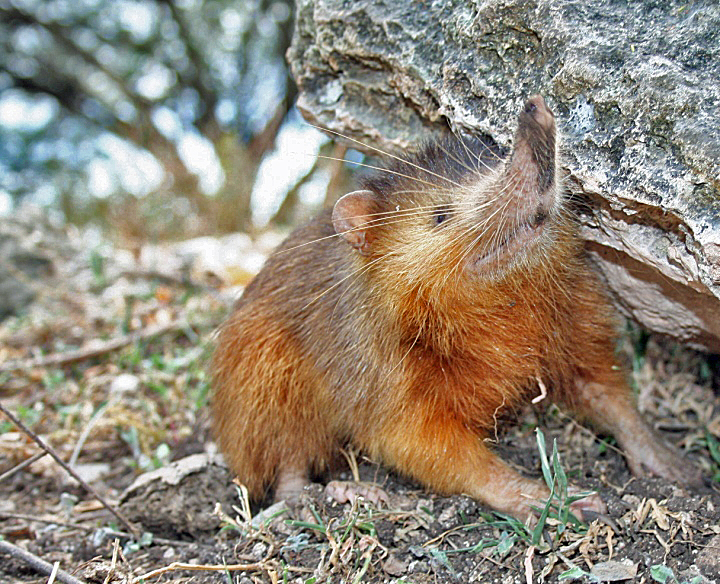


Anatomy and adaptations
Solenodons have a flexible rostrum, strong limbs for digging, and coarse fur. Their dentition includes long incisors with a longitudinal groove; saliva from modified salivary glands travels along these grooves when they bite. This adaptation helps subdue invertebrate and small vertebrate prey. They retain skeletal and cranial characteristics that are considered primitive for mammals, such as certain skull and jaw features that echo early mammalian forms.
Taxonomy and species
Only one living genus, Solenodon, remains. Two extant species survive: the Cuban solenodon (Solenodon cubanus) and the Hispaniolan or Haitian solenodon (Solenodon paradoxus). The Hispaniolan solenodon occupies a variety of habitats across the island of Hispaniola, from lowland dry and moist forests to montane pine and cloud forests. Both species are island endemics and have very restricted ranges compared with widespread small mammals.
Behavior and diet
Solenodons are primarily insectivorous but will take a range of animal matter, including insects, worms, snails, and occasionally small vertebrates. They forage at night, probing leaf litter and soil with their elongated snout. Their sensory adaptations and nocturnal habits make them secretive and difficult to observe. They dig burrows, use natural rock crevices or shallow nests for shelter, and typically raise small litters.
Evolutionary history and fossils
The solenodon lineage is ancient and was more widespread in the past. Fossil relatives and similar insectivorous mammals are known from earlier epochs. Some paleontologists have suggested links to North American Oligocene groups and genera such as Apternodus, and fossils from the Oligocene and later deposits have been examined for comparisons. Two additional solenodon species are described from the fossil and historical record and are thought to have become extinct during the Quaternary.
Conservation
Both surviving solenodon species are of conservation concern because of limited ranges, habitat loss, and predation and competition from introduced mammals such as dogs, cats and mongooses. Conservation work includes habitat protection, field surveys, community engagement, and captive-care research. Because solenodons represent a relict branch of mammal evolution, they are a high priority for researchers interested in mammalian diversity and evolutionary history.
Further reading and resources
Specialist reviews, field reports and taxonomic summaries provide the best current information. See general overviews on venomous mammals and nocturnal specialists for context: venomous mammals, lists of nocturnal mammals, the family entry at Solenodontidae, genus summaries at Solenodon, and discussions of primitive traits at primitive mammal characteristics. Regional biodiversity accounts for Hispaniola include conservation status and habitat descriptions, and paleontological literature references include work relating to the Oligocene and proposed relatives such as Apternodus. Historical accounts and Quaternary records are noted in reviews of extinct Caribbean mammals (Quaternary extinctions).
- Distinctive trait: grooved, slotted lower incisors linked to venom delivery.
- Distribution: island endemics of the Caribbean, mainly Cuba and Hispaniola.
- Significance: a living relict lineage that informs understanding of early placental evolution.
Questions and answers
Q: What is the family name of venomous, nocturnal mammals?
A: The family name of these mammals is Solenodontidae.
Q: What does the name Solenodon mean?
A: The name Solenodon means "slotted-tooth".
Q: What kind of mammals are solenodons?
A: Solenodons are burrowing insectivores.
Q: How many genera are there in the Solenodontidae family?
A: There is only one genus in the Solenodontidae family, which is Solenodon.
Q: What characteristics do solenodons keep from primitive mammals?
A: Solenodons keep some primitive mammal characteristics.
Q: What are the two living species of solenodon?
A: The two living solenodon species are the Cuban Solenodon and the Haitian or Hispaniolan solenodon.
Q: Which habitats do Hispaniolan solenodons live in?
A: Hispaniolan solenodons live in many habitats on the island of Hispaniola from lowland dry forest to highland pine forest.
Related articles
Author
AlegsaOnline.com Solenodon — the slotted-tooth mammals Leandro Alegsa
URL: https://en.alegsaonline.com/art/91664
Sources
- departments.bucknell.edu : departments.bucknell.edu/biology/resources/msw3/browse.asp?id=13700014
- books.google.com : books.google.com/books?id=kDchYICxSDsC&pg=PA237&dq=The+origin+of+the+Greater+Antillean+in…