
Solar power plant: technology, types, history and applications
Comprehensive overview of solar power plants: photovoltaic and concentrated technologies, components, siting, integration with grids and storage, environmental and economic considerations, and operational practices.
Overview
A solar power plant is a facility that converts the energy in sunlight into usable electricity. Two broad approaches dominate utility and commercial deployments: direct conversion with photovoltaic (PV) modules and indirect conversion using concentrated solar power (CSP) systems. PV plants convert light to electric current in semiconductor materials, whereas CSP plants concentrate sunlight to produce heat and drive a thermal power cycle. Both can feed electricity to grids or supply local loads and can be designed at scales ranging from small distributed systems to large utility installations.
Image gallery
10 Images



Major types and how they work
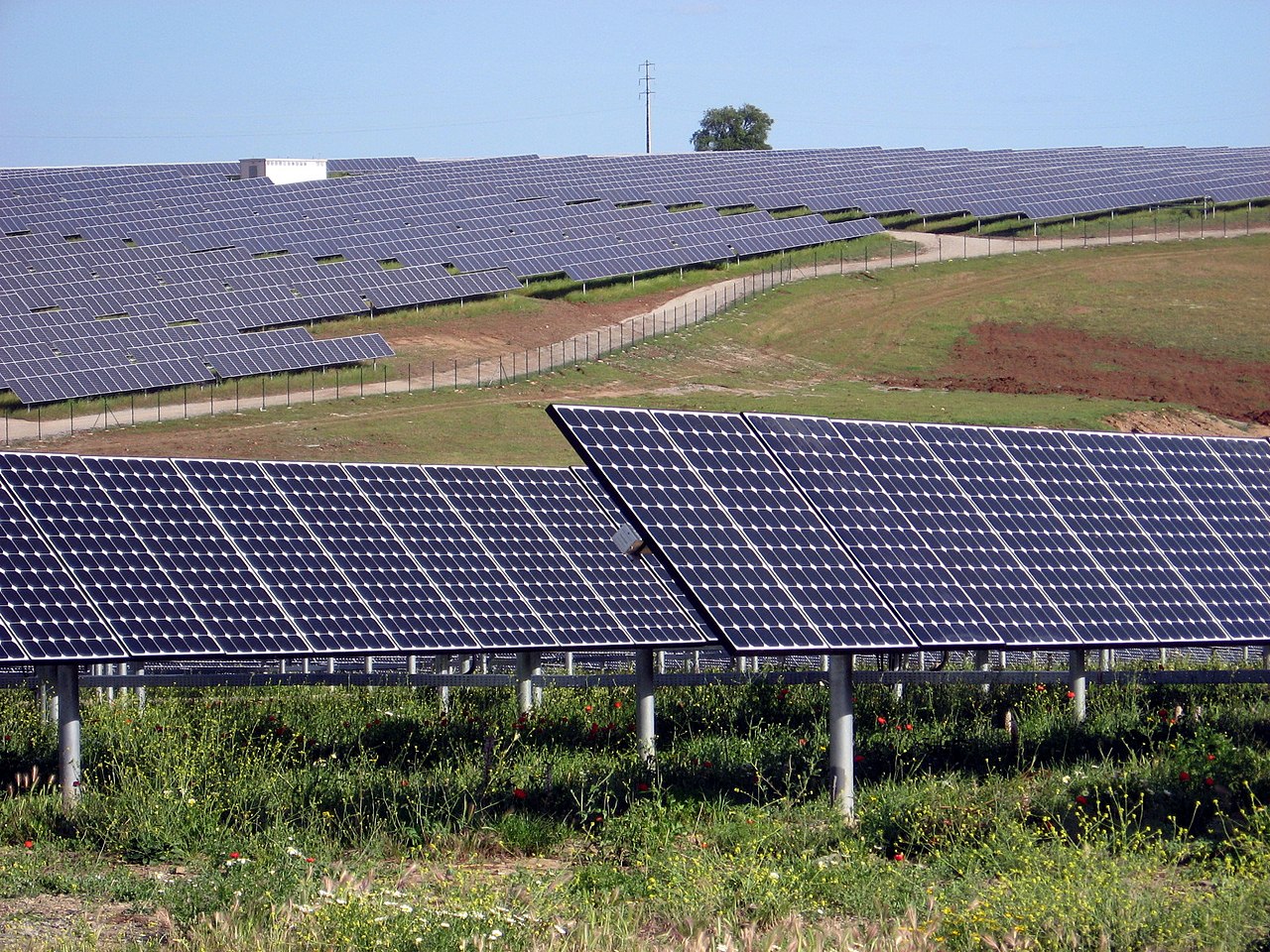
Photovoltaic plants assemble arrays of solar modules composed of cells that produce direct current when illuminated. Modules are mounted on racks or tracking structures; wiring and inverters convert and condition the power for export or consumption. PV technology includes crystalline silicon and thin‑film variants; newer approaches and manufacturing improvements have reduced cost and increased module efficiency over recent decades. Installations may be fixed‑tilt, single‑axis tracked, or dual‑axis tracked to increase energy yield.
Concentrated solar power plants use mirrors or lenses to focus a large area of sunlight onto a receiver. Typical CSP configurations include parabolic troughs, heliostat fields with a central tower, and parabolic dishes. The concentrated sunlight heats a fluid or solid receiver, producing high temperatures that drive steam turbines or other heat engines. CSP commonly incorporates thermal energy storage—frequently molten salt or other high‑temperature media—allowing extended operation after sunset and providing dispatchable power aligned with peak demand.
Typical components
- PV plants: solar modules, racking and foundations, trackers (optional), inverters, transformers, combiner boxes, and monitoring systems;
- CSP plants: mirrors or heliostats, receiver, heat transfer fluid, thermal storage tanks, steam turbine or generator, and heat exchangers;
- Balance of plant: access roads, grid interconnection equipment, switchgear, control systems, water management for cleaning and cooling, and site security;
- Optional systems: battery energy storage, hybrid backup generation, and advanced monitoring for predictive maintenance.
Siting and resource assessment
Planning a solar power plant requires assessment of local solar resource (irradiance and its variability), land availability, topography, and grid access. PV systems perform well in many climates and at a range of latitudes; CSP plants are typically sited where direct normal irradiance is high and atmospheric clarity supports effective concentrating of sunlight. Land use, environmental sensitivities (flora, fauna, and water resources), and proximity to transmission infrastructure are central considerations during permitting and design.
Integration, storage and grid services
Because solar output varies with weather and daylight, integration into electricity systems often relies on a mix of approaches: geographical diversity of plants, flexible grid resources, demand management, and energy storage. Batteries paired with PV can provide frequency response and short‑term firming, while CSP with thermal storage can supply power into evening peaks. Advanced inverters and plant control systems enable reactive power support, ride‑through capabilities, and coordination with grid operators for stable operation.
Environmental, economic and social considerations
Solar plants produce electricity with minimal direct air emissions during operation and low marginal operating costs. Environmental considerations include land use, habitat disruption where siting is extensive, and water consumption for some CSP cooling or cleaning regimes. Economic factors include capital cost, financing, incentives, and levelized cost of energy compared with alternative generation. Policy frameworks, renewable procurement mechanisms and grid connection rules strongly influence the pace and pattern of deployment.
Operation, maintenance and performance
Operational regimes differ by technology: PV arrays require periodic cleaning, vegetation control, and inverter and electrical system maintenance; CSP plants also need optical alignment, mirror washing, receiver inspections, and management of heat transfer fluids and thermal storage systems. Performance is tracked with yield modelling and monitoring; capacity factor expectations vary by technology, resource and storage capacity. Proper maintenance and monitoring prolong plant life and preserve economic returns.
History, notable projects and research
Large‑scale demonstration and commercial plants since the late 20th century helped mature both PV and CSP technologies. Early utility CSP projects and multi‑plant PV parks provided data that informed later design and financing. Notable historical installations and case studies are documented in industry and academic sources; for technical primers see technical summaries, for project case studies see historical project reports, and for industry market analyses consult market reviews and deployment studies. Broader research collections and review articles are available at research repositories.
Outlook
Solar power plants are expected to remain a growing element of electricity systems worldwide. Continued cost reductions, improvements in module efficiency, advances in storage technologies and system integration practices are making solar increasingly competitive as a primary generation source. Careful planning for land use, grid upgrades and environmental protection, together with evolving regulatory frameworks, will shape how solar contributes to low‑carbon energy transitions in the coming decades.
For project developers, utilities and policy makers, selection among PV, CSP and hybrid solutions depends on local resource quality, desired dispatchability, capital availability and regulatory incentives. Understanding the technical distinctions, operational requirements and broader system impacts is essential to designing solar power plants that are reliable, economical and environmentally responsible.
Questions and answers
Q: What is a solar power plant?
A: A solar power plant is based on the conversion of sunlight into electricity, either directly using photovoltaics (PV), or indirectly using concentrated solar power (CSP).
Q: What are some of the largest photovoltaic and CSP plants in the world?
A: The largest photovoltaic power plant in the world was the 354 MW Solar Energy Generating Systems (SEGS) CSP installation located in the Mojave Desert, California. Other large CSP plants include the 250 MW Agua Caliente Solar Project in Arizona, the Solnova Solar Power Station (150 MW, 250 MW when finished), and the Andasol solar power station (150 MW), both in Spain.
Q: How does a concentrated solar power system work?
A: Concentrated solar power systems use lenses, mirrors, and tracking systems to focus a large area of sunlight into a small beam. Photovoltaics converts light into electric current using the photoelectric effect.
Q: Why has there been an increase in use of solar energy lately?
A: The utilization of these products is increasing day by day after knowing the importance of solar energy use. The government is also taking initiatives to aware people about solar products by introducing incentive schemes. Installing a solar power plant is quite beneficial as it saves money and contributes towards protecting our environment.
Q: What are some advantages of installing a solar power plant?
A: Installing a solar power plant provides many advantages such as saving money on electricity bills, contributing towards environmental protection, and providing clean energy that can be used for powering all sorts of appliances. It also requires only one-time investment with no need to spend again on heavy electricity costs.
Q: How do photovoltaics convert light into electric current?
A: Photovoltaics converts light into electric current using the photoelectric effect.
Q: Are governments taking any initiatives to promote usage of renewable energy sources like sun's rays?
A Yes, governments around the world have decided to bring renewable sources like sun's rays into great use by introducing incentive schemes and awareness programs about their benefits for both individuals and society at large.
Related articles
Author
AlegsaOnline.com Solar power plant: technology, types, history and applications Leandro Alegsa
URL: https://en.alegsaonline.com/art/91641
Sources
- commons.wikimedia.org : Solar power plants
- pvresources.com : Technologies: From silicon to the solar cell.
- pvresources.com : Large-Scale Photovoltaic Power Plants Ranking 1-50
- cleanenergyactionproject.com : Solnova Solar Power Station
- cleanenergyactionproject.com : Andasol Solar Power Station
- teatronaturale.com : Solar power is the future of energy
- vox.com : How cheap does solar power need to get before it takes over the world?