
Socialist Party (France): history, ideology and political role
Comprehensive overview of France's Socialist Party (Parti Socialiste, PS): its origins, organization, political positions, major leaders, electoral record and recent developments.
Overview
The Socialist Party (Parti Socialiste, PS) is one of France's principal centre-left political parties. Traditionally associated with social democracy, the PS has advocated a mixed economy, a robust welfare state, progressive taxation and strong state involvement in public services. It played a central role in French politics across the late 20th century and into the early 21st century as the main force of the moderate left (social democratic currents).
Image gallery
2 Images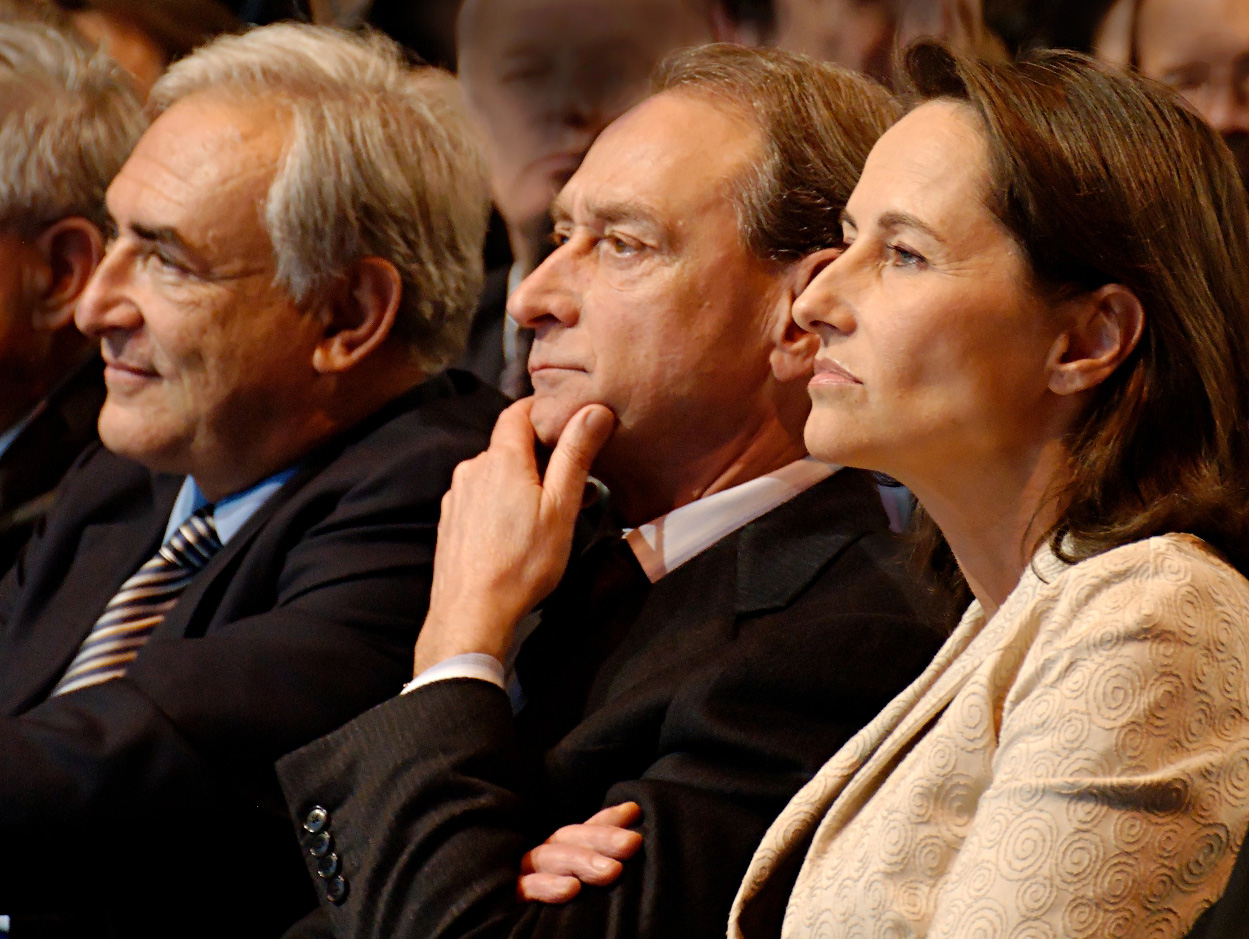

Origins and development
The PS grew out of a reorganization of the French left after the decline of the older socialist formation, the French Section of the Workers' International (SFIO). In the early 1970s the party consolidated under renewed leadership and clearer programmatic aims, culminating in a series of congresses that defined its modern structure. The rise of François Mitterrand as a unifying figure transformed the party into a national governing force; his victory in the 1981 presidential election marked the first time the PS led the executive under the Fifth Republic (François Mitterrand).
Organization and ideology
The PS is organized around national congresses, a national council and federations in each department. Internally it contains multiple currents ranging from moderate social democrats to more left-leaning socialists. Over time the party has combined commitments to social justice — such as public healthcare, education and social protection — with support for regulated markets and European integration. Policy debates within the party have often centered on the proper balance between state intervention, market reforms and fiscal responsibility.
Electoral history and government
The PS has won several national elections and held the presidency and prime ministerships at different periods. After Mitterrand's long tenure, other prominent PS leaders and candidates included Lionel Jospin, who led governments in the late 1990s and early 2000s, and Ségolène Royal, the party's 2007 presidential candidate (Ségolène Royal), who was defeated by the centre-right candidate (Nicolas Sarkozy). The PS returned to the presidency in 2012 when François Hollande won the presidential election (François Hollande).
Policies and examples of governance
- Early 1980s: a period of ambitious state-led reforms and nationalizations followed by economic adjustments.
- Late 1990s: coalition governments focused on employment policies and reduced working hours as part of modernization efforts.
- 21st century: debates about labor market reform, public spending and responses to globalization challenged traditional approaches.
Decline, renewal and recent developments
In the 2010s the PS faced internal divisions, electoral setbacks and the emergence of new parties and movements on both the left and the centre. Fragmentation of the left and changing voter alignments reduced its dominance. In response, the party has explored alliances and coalitions in national and regional contests. Internal renewal efforts, strategic partnerships and debates over priorities continue as the PS seeks to rearticulate its role in contemporary French politics.
Notable distinctions and legacy
The PS's legacy includes shaping modern French social policy, participating in the expansion of public services, and advancing European integration from a left perspective. It remains a reference point for centre-left politics in France even as the broader political landscape evolves. For further reading and official materials see party resources and historical analyses at the party's pages and major political archives (official site, ideological overview, biography, candidate profiles, election results, recent presidencies).
Questions and answers
Q: What is the Socialist Party of France?
A: The Socialist Party (Parti Socialiste or PS) is one of the largest political parties in France, and it is a social democratic party.
Q: When was the Socialist Party established in France?
A: The Socialist Party replaced the French Section of the Workers' International (SFIO) in 1969.
Q: Who were the two candidates from the Socialist Party in the French presidential elections of 2007 and 2012?
A: The Socialist Party candidate for the 2007 presidential election was Ségolène Royal, and in 2012, François Hollande was the party's candidate and he won the presidential election.
Q: Who was the first Socialist Party candidate to win the French presidential election under the Fifth Republic?
A: François Mitterrand was the first Socialist Party candidate to win the French presidential election under the Fifth Republic in 1981.
Q: Which political ideology does the Socialist Party follow?
A: The Socialist Party is a social democratic party.
Q: Who defeated Ségolène Royal in the French presidential election of 2007?
A: Nicolas Sarkozy defeated Ségolène Royal in the French presidential election of 2007.
Q: When did the Socialist Party candidate François Hollande win the French presidential election?
A: François Hollande won the French presidential election in 2012.
Related articles
Author
AlegsaOnline.com Socialist Party (France): history, ideology and political role Leandro Alegsa
URL: https://en.alegsaonline.com/art/91460