
Snowmobile
A motorized vehicle for traveling on snow and ice, characterized by a continuous track and front skis; used for recreation, work, transport, and search and rescue in snowy environments.
A snowmobile is a lightweight, motorized vehicle designed to travel over snow and ice. Unlike wheeled vehicles, a typical snowmobile moves on a continuous rubber track and is steered by a pair of front skis. This combination of track and skis gives the machine flotation and directional control on soft snow and compacted surfaces. Snowmobiles range from small, single-rider machines for trail riding to larger configurations intended for hauling, multi-passenger transport, or utility work.
Image gallery
10 Images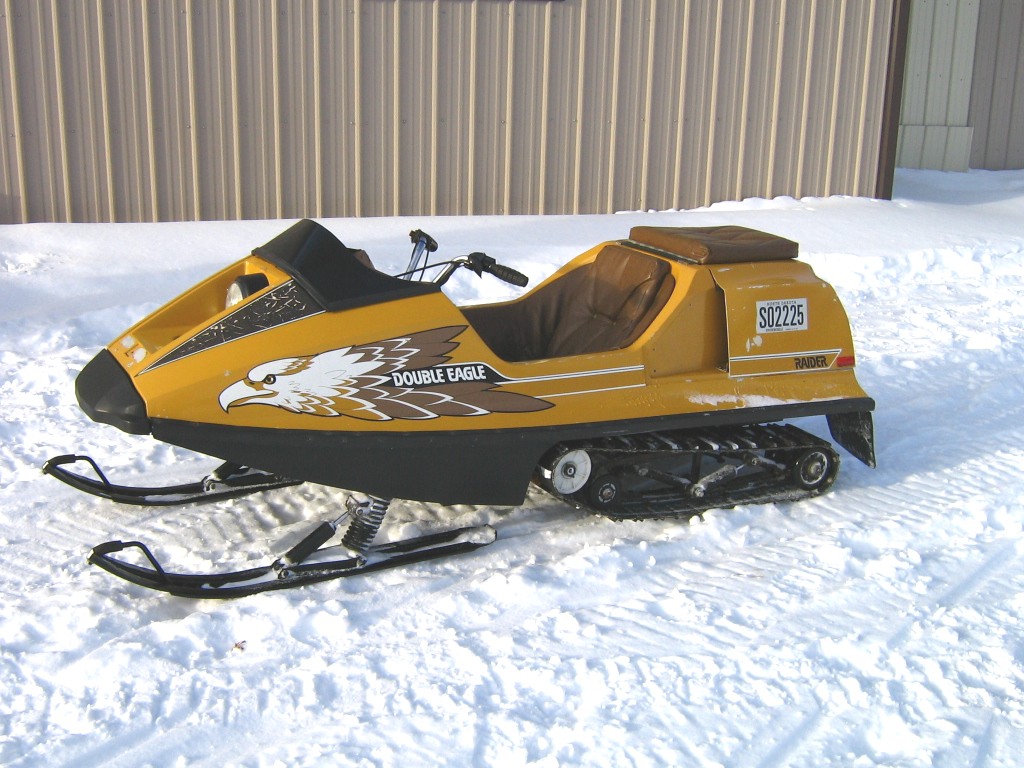




Design and main components
The basic components of a snowmobile include an engine, transmission, continuous track, front skis and a steering mechanism. Engines may be two-stroke or four-stroke and vary in displacement and power output. The continuous track provides propulsion and much of the braking capacity, while the skis direct the vehicle and carry part of the load. In contrast to cars that use wheels, a snowmobile substitutes a track system and skis for low-ground-pressure travel over snow.
Common subsystems and parts:
- Track: rubber with embedded reinforcement and lugs or paddles for traction.
- Skis: usually composite or metal runners for steering and stability.
- Suspension: front and rear systems to absorb bumps and maintain track contact.
- Drive and braking: clutch, belt, and sometimes mechanical brakes that act on the driveline.
Traction, studs and stopping
Traction on snow and ice depends on track design, snow conditions, and additional hardware such as studs. Metal studs, often made of steel or stainless steel and sometimes tipped with carbide, can be installed in the track to improve bite on hard-packed or icy surfaces. Studs are produced in different shapes and lengths to suit terrain; when fitted in an effective pattern they improve acceleration, cornering and reduce stopping distance. However, studs change handling characteristics and may be restricted by trail rules or environmental regulations. For further technical details on stud types and installation, see manufacturers' guidance.
Stopping distance for a snowmobile is influenced by speed, machine mass, surface condition and the effective mechanical damping between track and snow. On ice or hard-packed snow, the mechanical damping is reduced and the available friction from the track or studs becomes the primary force for deceleration, so operators must adapt speed and technique to conditions.
History, uses and distinctions
Developed during the 20th century, snowmobiles evolved from larger, tractor-like snow vehicles into compact, consumer machines popularized in the mid-1900s. They opened access to remote winter terrain for transportation, recreation and work. Today snowmobiles are used for trail riding and sport, utility tasks such as shepherding and forestry, winter tourism, search and rescue, and by emergency services in snowbound regions.
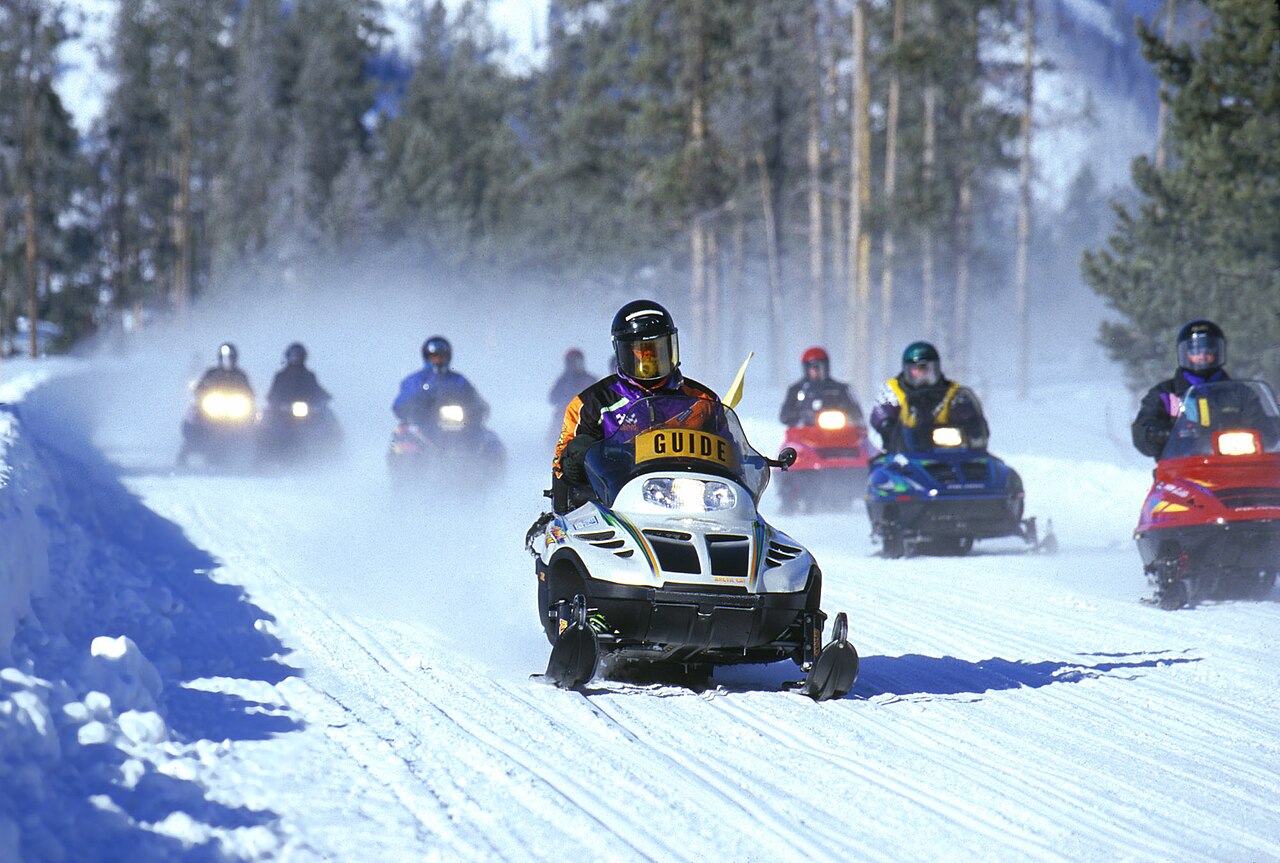
Snowmobiles are distinct from larger tracked vehicles such as snowcats or snow coaches: those are designed for heavy hauling, grooming ski slopes, or carrying many passengers, while snowmobiles prioritize speed, agility and low weight. Recreational riders often use marked trail systems; in backcountry areas, operators must consider avalanche risk, navigation and environmental impact.
Operation, safety and maintenance
Safe operation requires appropriate clothing, helmets, avalanche awareness in mountainous terrain, and knowledge of machine limits. Regular maintenance includes track inspection, ski and runner checks, drive belt replacement, and winterized engine care. Operators should also be aware of local laws, trail permits and seasonal restrictions that govern where and how snowmobiles can be used.
Overall, the snowmobile is a specialized vehicle that enables mobility on snow-covered ground. Its design balances flotation, traction and steering to meet the varied demands of recreation, work and rescue in winter landscapes.
Questions and answers
Q: What is a snowmobile?
A: A snowmobile is a motorized vehicle used for travelling over snow.
Q: How does a snowmobile move?
A: A snowmobile moves using treads instead of wheels.
Q: What is the purpose of the skis in the front of some snowmobiles?
A: The skis in the front of some snowmobiles are used for steering.
Q: What is the effect of adding snowmobile studs to the tread?
A: Adding snowmobile studs to the tread decreases the time and distance it takes to stop a snowmobile.
Q: What factors determine the distance it takes for a snowmobile to stop?
A: The distance it takes for a snowmobile to stop is determined by the speed of the machine, weight of the machine, available friction, and mechanical damping.
Q: What is the purpose of snowmobile studs?
A: Snowmobile studs are used to control acceleration, deceleration, and maneuverability on specific terrains.
Q: How do you achieve the best traction results with snowmobile studs?
A: The best traction results with snowmobile studs are achieved by using the correct amount and type of stud installed in an effective pattern.
Related articles
Author
AlegsaOnline.com Snowmobile Leandro Alegsa
URL: https://en.alegsaonline.com/art/91354