
Snowdonia (Eryri): geography, history, and the national park
Snowdonia (Welsh: Eryri) is a mountainous region in north Wales and the country's largest national park, known for Snowdon, glacial landscapes, slate heritage, and outdoor recreation.
Snowdonia, known in Welsh as Eryri, is a largely mountainous region in north Wales. It contains the highest peak in Wales, Snowdon (Welsh: Yr Wyddfa), and several deep glacial valleys and lakes. The term historically applied to a smaller area around the mountain itself; today it is most widely used to refer to the wider protected landscape and surrounding communities.
Image gallery
10 Images
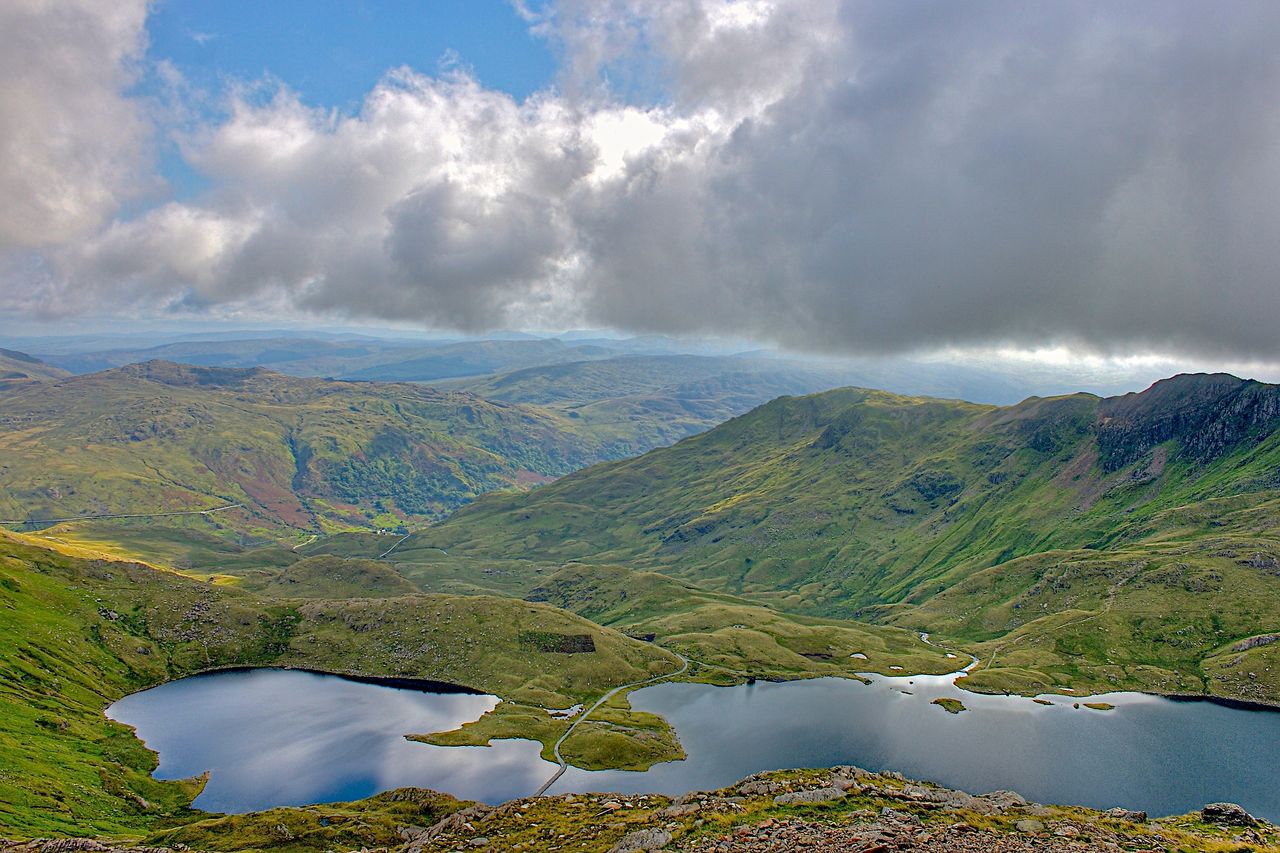


National park and extent
The modern national park was created in 1951 and covers about 838 square miles (2,170 square kilometres), making it the largest national park in Wales. The designation brought together diverse landforms — from craggy summits and peatlands to river valleys and stretches of coastline — under a single conservation and planning framework. The park authority is responsible for balancing nature conservation, local livelihoods and visitor access.
Geography and geology
Snowdonia's mountains are the eroded remnants of ancient volcanic and sedimentary rocks shaped by successive ice ages. The highest summit, Snowdon, rises above a ring of ridges and corries. Large natural lakes, including Bala Lake (Llyn Tegid), occupy glacial basins. The landscape supports distinct upland habitats, steep gorges, and coastal fringes where the mountains meet the sea.
History, industry and culture
People have lived in the area for millennia; the archaeological record includes prehistoric cairns and medieval settlements. From the 18th century onward, slate quarrying became a dominant industry, leaving a strong cultural and industrial heritage visible in abandoned quarries, worker housing and narrow-gauge railways. The Welsh language, music and place-names remain prominent in local life.
Conservation and recreation
Snowdonia is valued for biodiversity and scenic qualities. Habitats range from montane heath and blanket bog to native woodlands and freshwater systems, supporting birds, plants and upland mammals. The park is a popular destination for walking, climbing, mountain biking and heritage tourism. Waymarked paths, visitor centres and historic railways help accommodate millions of visits while planners work to reduce erosion and protect habitats.
Notable features and visitor activities
- Summit routes and scenic ridges popular with hikers and climbers.
- Industrial heritage: slate quarries and museum sites that interpret the area's work history.
- Major lakes, rivers and coastal spots used for fishing, kayaking and wildlife watching.
- Railways and cultural events that highlight Welsh language and local traditions.
Visitors are encouraged to respect sensitive habitats and local communities. For practical information and guidance on routes, conservation policies and visitor services, consult official park resources and local outlets before travel.
Further reading and official information are available through park materials and regional guides: see the national park authority and regional references for detailed planning and cultural background (official park). Local histories and visitor guides also provide accessible introductions to routes and heritage.
Whether approached as a place for outdoor recreation, a landscape of geological interest, or a living cultural region, Snowdonia/Eryri remains one of the United Kingdom's most distinctive upland areas.
Questions and answers
Q: What is Snowdonia?
A: Snowdonia is a region in north Wales and a national park of 838 square miles in area.
Q: When was the first national park in Wales established?
A: The first national park in Wales, which is Snowdonia, was established in 1951.
Q: What is the largest national park in Wales?
A: Snowdonia is the largest national park in Wales.
Q: What is included in Snowdonia's national park?
A: Snowdonia's national park includes the highest mountain in Wales and the largest natural lake in Wales.
Q: What was the meaning of the word Snowdonia before 1951?
A: Before 1951, the word Snowdonia was used for the much smaller area around Snowdon itself.
Q: How much larger is the area around Snowdon itself compared to Snowdonia's national park?
A: The area around Snowdon itself, which includes the national park, is twice as large as the previous definition of Snowdonia.
Q: What is the Welsh name for Snowdonia?
A: The Welsh name for Snowdonia is Eryri.
Related articles
Author
AlegsaOnline.com Snowdonia (Eryri): geography, history, and the national park Leandro Alegsa
URL: https://en.alegsaonline.com/art/91350
Sources
- eryri-npa.gov.uk : "Eryri"
- independent.co.uk : "National Parks – The complete guide to Britain's national parks"
- estb.msn.com : "Our national parks"
- eryri-npa.gov.uk : "A Sense of Place"
- eryri-npa.co.uk : "The Welsh Language"
- eryri-npa.gov.uk : Park Profile 2007
- walkingnorthwales.co.uk : "Walks for region – Snowdonia Mountains and Coast"
- telegraph.co.uk : "Important plant areas in the UK"
- eryri-npa.gov.uk : "Wildlife"
- walesonline.co.uk : "If you go down to the woods today you might find an endangered pine marten"
- telegraph.co.uk : "The wetter, the better"
- timesonline.co.uk : "40 die as one year's rain falls in a day"