
Snow White (fairy tale)
A classic European fairy tale about a jealous queen, a sleeping princess revived from a poisoned apple, and the many literary and popular adaptations from oral tradition to film.
Overview
Snow White is a traditional European fairy tale that tells of a young princess whose beauty provokes the envy of a stepmother or queen, leading to attempts on her life and a final miraculous restoration. The tale centers on a few recognizable elements—mirror, apple, deathlike sleep, and a group of humble companions—that recur in many regional variants. The story is widely known through printed versions and later popular adaptations that have helped shape its global image. For a general introduction to the genre, see fairy tale.
Image gallery
10 Images




Typical plot and characters
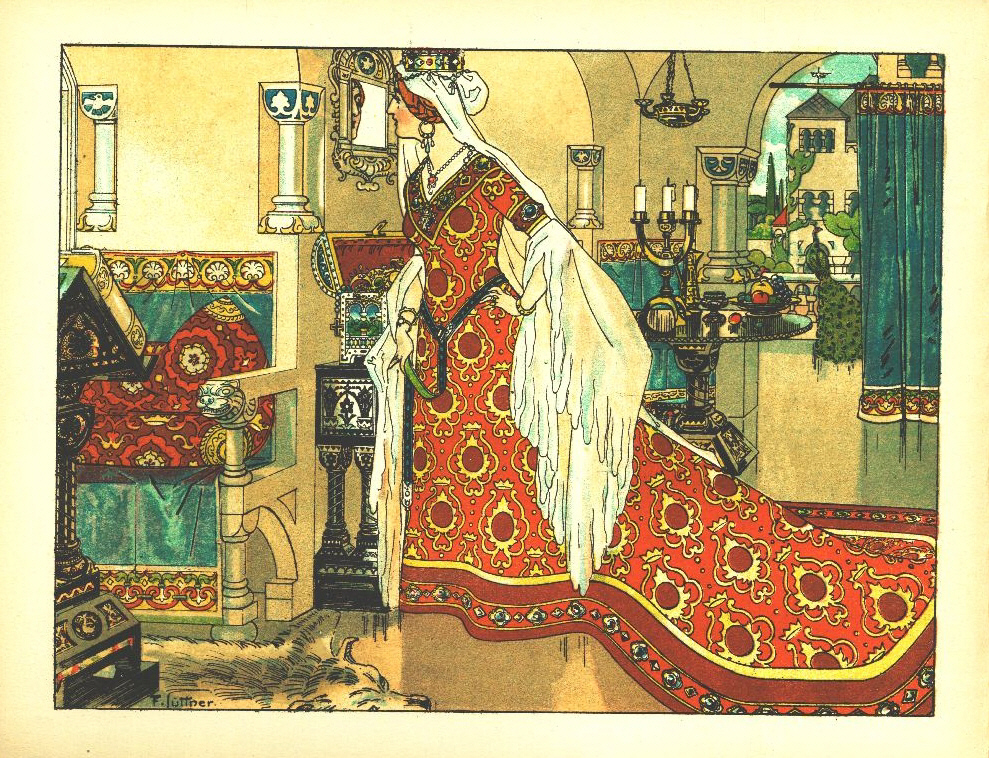
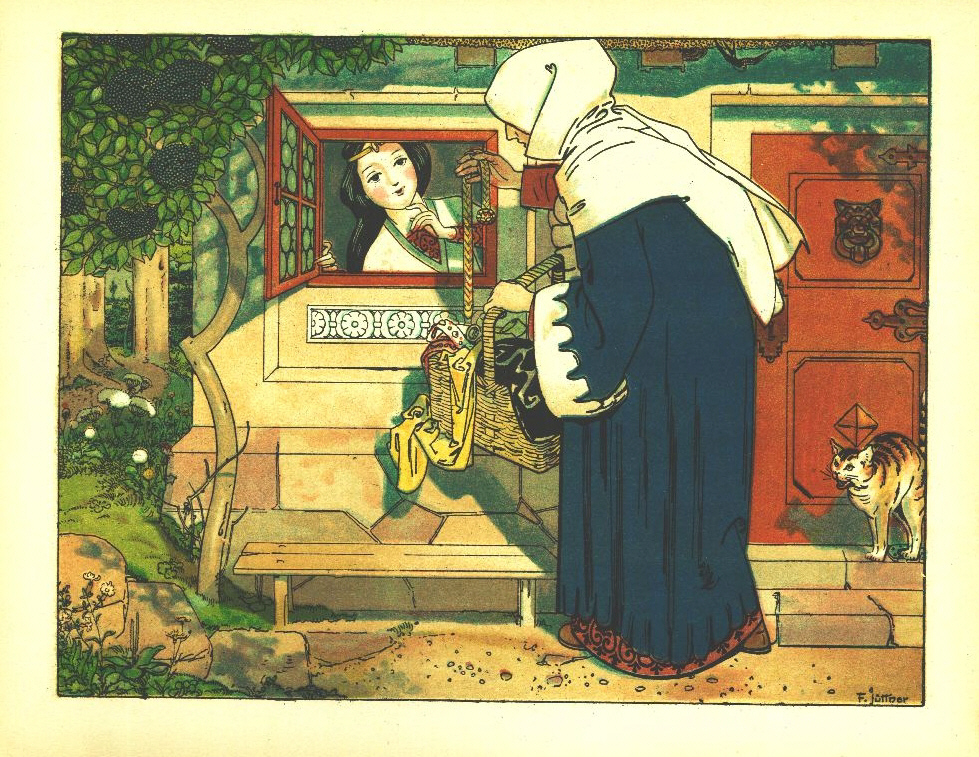
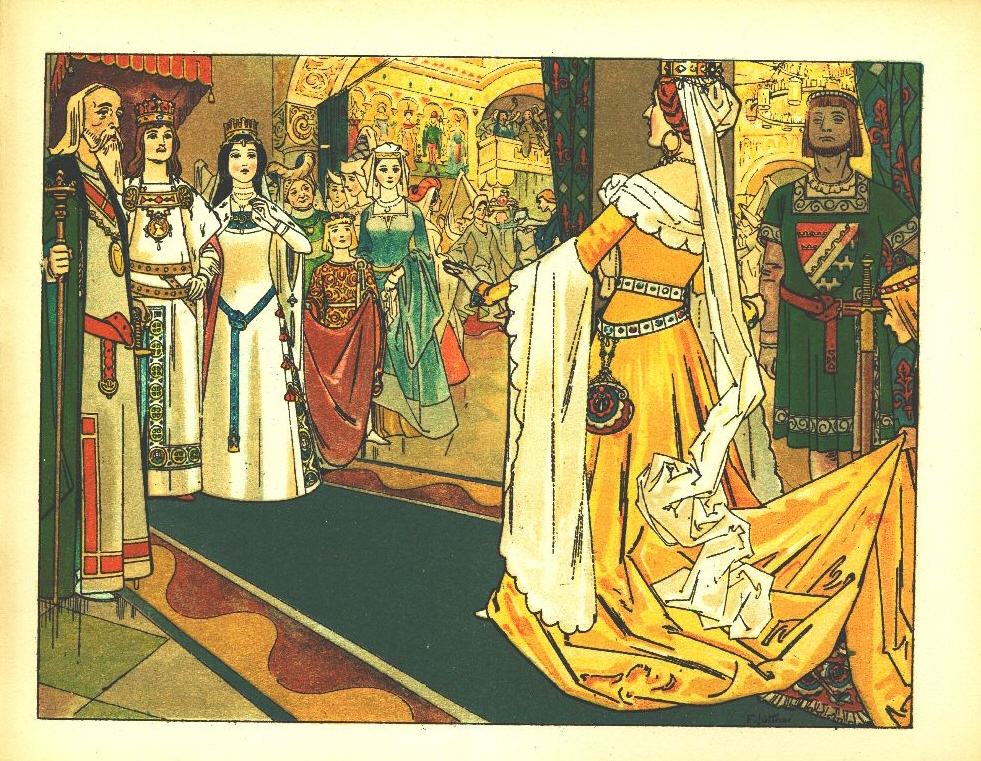
A concise, conventional outline: a king or lord’s daughter, called Snow White in many versions, grows up to be extremely beautiful. Her jealous stepmother (often a queen) consults a magic mirror and discovers that Snow White has surpassed her in beauty. The queen orders the girl killed; Snow White escapes, finds shelter with a group of miners or forest-dwellers (commonly seven), and lives with them until the queen discovers her hiding place. Through trickery—usually a poisoned apple—Snow White falls into a deathlike sleep and is thought dead. She is preserved in a glass coffin until a visitor, sometimes a prince, revives her, restoring order and often punishing the queen.
Motifs, variations and structure
The tale combines several folklore motifs: the jealous ruler, the helpful small people, the enchanted/poisoned food, and sleep-as-death with later revival. Variants differ on how Snow White survives (escape vs. rescue), the identity and number of her companions, and how she is revived (kiss, jar jostle, removed apple). These elements appear across Europe and beyond, showing how oral tradition reshapes a core narrative into many localized forms.
History and major printed versions
Elements of the Snow White story appear in early European story collections. A version with related motifs can be found in Giambattista Basile’s Pentamerone, and later 18th-century retellings by authors such as Johann Karl August Musäus are part of the chain of transmission; he collected German-languaged tales in German Folktales materials. The most influential printed variant for modern readers is the Brothers Grimm's "Little Snow White" (German: Schneewittchen), first included in their 1812 volume Children's and Household Tales. Scholars consider the Grimms' text a key reference point but not the single origin: it is a compilation and literary shaping of oral narratives.
Adaptations and cultural impact
Snow White has been adapted across media: stage plays, ballets, films, television series, and illustrated books. The most internationally visible adaptation is Walt Disney's 1937 animated feature, Snow White and the Seven Dwarfs, which popularized specific visual and character conventions; material from the film has itself been reinterpreted in later works. The movie is often cited when discussing animation history and popular reception of fairy tales in the 20th century; see the film entry here and related materials here.
Significance and interpretations
Analysts have read Snow White in multiple ways: as a coming-of-age narrative, a moral tale about envy and innocence, a reflection of sibling and stepfamily tensions, or an allegory of death and rebirth. Feminist, psychoanalytic, and cultural historians have all used the story to explore changing ideas about beauty, childhood, and gender roles. Because the plot combines visceral imagery (poisoning, implied death) with domestic settings, it remains a compelling subject for reinterpretation in literature, film, and scholarship.
Common motifs (summary list)
- Jealous authority figure and magic mirror
- Flight into the forest and refuge with modest companions
- Deceptive gift (usually an apple) causing a deathlike sleep
- Preservation or display of the sleeping heroine, followed by revival
For further reading and primary-source comparisons, consult editions and analyses listed by major collections and scholarly resources, including entries on fairy tales, Basile's Pentamerone, Musäus and other 18th-century collectors (Musäus), the Grimms' work (Children's and Household Tales and Schneewittchen), and modern discussions surrounding the Disney adaptation (Walt Disney, Snow White film, related analyses).
Questions and answers
Q: What is "Snow White"?
A: "Snow White" is a fairy tale.
Q: In how many versions is "Snow White" known worldwide?
A: "Snow White" is known worldwide in various versions.
Q: Where can one find early printed versions of "Snow White"?
A: Early printed versions of "Snow White" can be found in Giambattista Basile's Pentamerone (1634) and in J. K. Musäus's German Folktales (1782).
Q: Who recorded a version of "Snow White" called "Little Snow White" in 1812?
A: The Brothers Grimm recorded a version of "Snow White" called "Little Snow White" in 1812.
Q: What is the best-known version of "Snow White" today?
A: The Grimms' version is probably the best-known version of "Snow White" today.
Q: In what different formats has "Snow White" been adapted?
A: "Snow White" has been adapted many times to plays, movies, and television programs.
Q: Who adapted the Grimms' version of "Snow White" into an animated movie in 1937?
A: Walt Disney adapted the Grimms' version of "Snow White" into an animated movie in 1937 called Snow White and the Seven Dwarfs.
Related articles
Author
AlegsaOnline.com Snow White (fairy tale) Leandro Alegsa
URL: https://en.alegsaonline.com/art/91342