
Sleeping Beauty: origins, versions, themes and cultural influence
Overview of the Sleeping Beauty fairy tale, its major versions, common motifs, history of publication, notable adaptations and cultural significance.
Sleeping Beauty is a long-standing fairy tale about an enchanted princess who falls into a prolonged sleep and is later released by a rescuer. The core narrative—an unavoidable sleep caused by a curse or enchantment, a seeming end to ordinary life, and a later awakening—appears in multiple European traditions and has been retold in many literary and performing forms. The tale is often titled "The Sleeping Beauty in the Wood," "Briar Rose" or "Little Briar Rose," and commonly centers on themes of fate, purity, and the passage of time.
Image gallery
10 Images
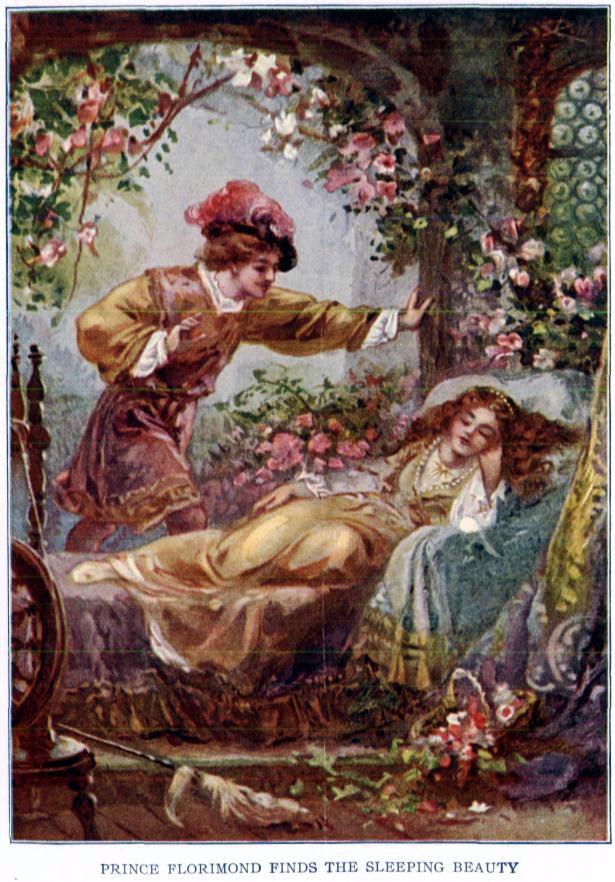


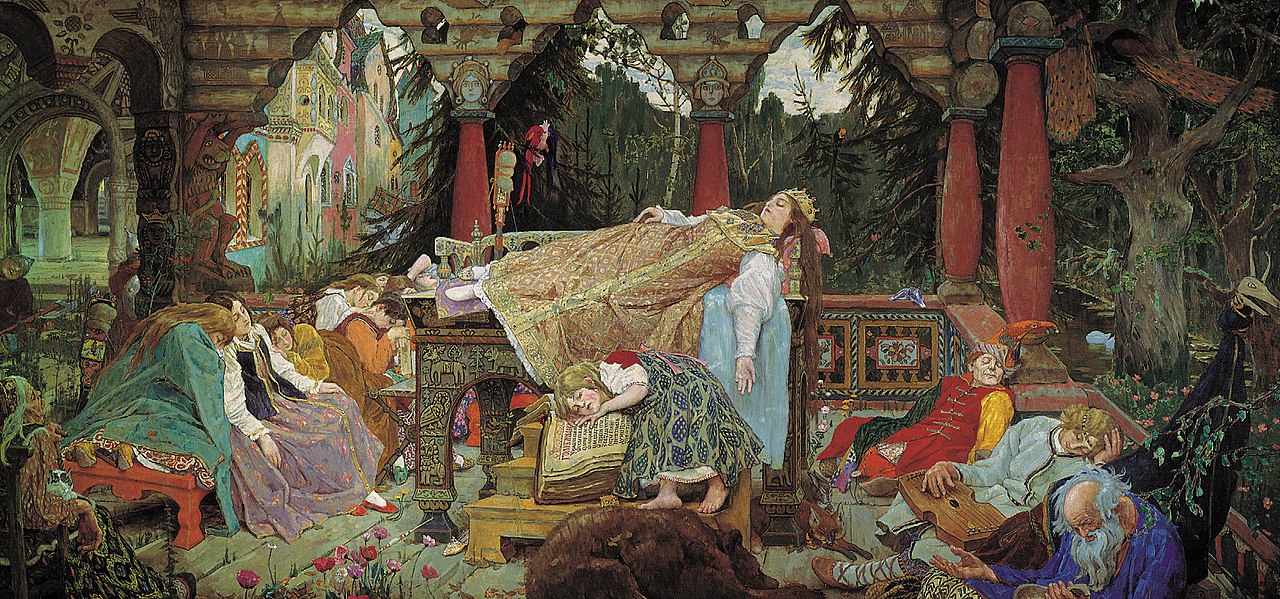

Major versions and publication history
Two of the best-known literary versions come from the 17th and 19th centuries. Charles Perrault published a version that first circulated in manuscript form and later appeared in print as part of the collection Contes de ma mère l'oye; his tale is commonly known in English as "The Sleeping Beauty in the Wood". The Brothers Grimm recorded a German variant under the title Dornröschen, often translated as "Briar Rose". Both authors placed the story within broader anthologies of folk and literary tales: Perrault alongside other moralizing narratives such as Little Red Riding Hood, Bluebeard, Puss in Boots and Diamonds and Toads, and the Grimms in their collection Kinder- und Haus-Märchen.
Typical structure and motifs
The story usually follows a set of recognizable elements: a royal birth or christening, a curse pronounced by a slighted supernatural figure, the prophetic sleep often triggered by a spindle or thorn hedge, and the eventual arrival of a prince or hero who ends the spell. Variants differ on details—who curses the princess, whether the prince's awakening is by a kiss or merely by entering the chamber, and whether subsequent events (such as marriage or later threats) are recounted. In Perrault's version the narrative continues after the awakening with further trials, while many later adaptations truncate the tale to focus on the sleep and rescue.
- Primary motifs: enchanted sleep, spinning wheel or spindle, hedge or forest barrier, rescue by a male figure (princess and rescuer).
- Common titles and regional names: Perrault's tale, Dornröschen (Grimm).
The tale's flexibility has allowed variations in tone and emphasis: some tellings stress moral instruction, others foreground romance, and modern retellings may reframe the heroine's agency or the symbolism of sleep.
Adaptations and cultural impact
Sleeping Beauty has inspired stage works, music, and film. Notable adaptations include a 19th-century pantomime adaptation by James Robinson Planché (Planché's pantomime), the classic ballet often associated with choreography set to a major composer's score (ballet), and a widely seen animated reworking by a major studio (Disney's film). The tale's imagery—sleeping castles, thorny enclosures and the motif of time suspended—has become a recurring symbol in literature, visual art, and popular culture.
Scholars and storytellers study Sleeping Beauty both as a concrete folktale and as a cluster of motifs that reveal changing social attitudes about childhood, gender, and destiny. Editions and retellings draw on the tale's rich manuscript and oral history, and it remains a reference point for discussions about narrative structure, adaptation, and the persistence of mythic themes across media and centuries.
For readers seeking primary texts and comparative material, consult editions and annotations of Perrault's collection (Contes de ma mère l'oye) and the Grimm anthology (Kinder- und Haus-Märchen). Further background on fairy-tale categorization and motif studies can be found in resources that treat the tale alongside other stories such as Little Red Riding Hood, Bluebeard, Puss in Boots and Diamonds and Toads, each of which illuminates a different side of folk narrative tradition.
Additional reading and recordings of variants are available through specialist collections and archives; many online and print resources index versions, translations and adaptations for comparative study (fairy-tale studies, pantomime history, ballet repertory, cinematic adaptations, and the textual history of the Grimm and Perrault corpora).
Questions and answers
Q: What is the title of the fairy tale?
A: The title of the fairy tale is "Sleeping Beauty".
Q: Who wrote the original version of "Sleeping Beauty"?
A: Charles Perrault wrote the original version of "Sleeping Beauty".
Q: When was Perrault's version first published?
A: Perrault's version was first published in 1695 in a hand-written and illustrated manuscript called Tales of Mother Goose. It was then revised and published again in Paris in 1697 by Claude Barbin.
Q: What other stories were included with "Sleeping Beauty" in Tales of Mother Goose?
A: Other stories included with "Sleeping Beauty" in Tales of Mother Goose were "Little Red Riding Hood", "Bluebeard", "Puss in Boots", and "Diamonds and Toads".
Q: When did the Brothers Grimm publish their version?
A: The Brothers Grimm published their version, titled “Briar Rose” or “Little Briar Rose” (German: Dornröschen), in 1812 as part of Children's and Household Tales (German: Kinder- und Haus-Märchen).
Q: How has Sleeping Beauty been adapted to various media?
A: Sleeping Beauty has been adapted to various media including a pantomime by James Robinson Planché, a ballet, and a Disney animated movie.
Related articles
Author
AlegsaOnline.com Sleeping Beauty: origins, versions, themes and cultural influence Leandro Alegsa
URL: https://en.alegsaonline.com/art/91083