
Slave Coast (Bight of Benin): geography, history, and legacy
Coastal region of present-day Togo, Benin and western Nigeria that was a major epicenter of the Atlantic slave trade and a crossroads of cultural and economic exchange from the 16th to 19th centuries.
Overview
The term "Slave Coast" refers to a stretch of coastline in West Africa corresponding largely to parts of present-day Togo, Benin (historically Dahomey) and the western shore of Nigeria. It lies along the eastern portion of the Gulf of Guinea and is commonly associated with the Bight of Benin. In pre-colonial centuries this coastal belt contained fertile lands and high population densities relative to much of the interior, and it developed strong coastal polities that engaged in trade with European and American merchants.
Image gallery
2 Images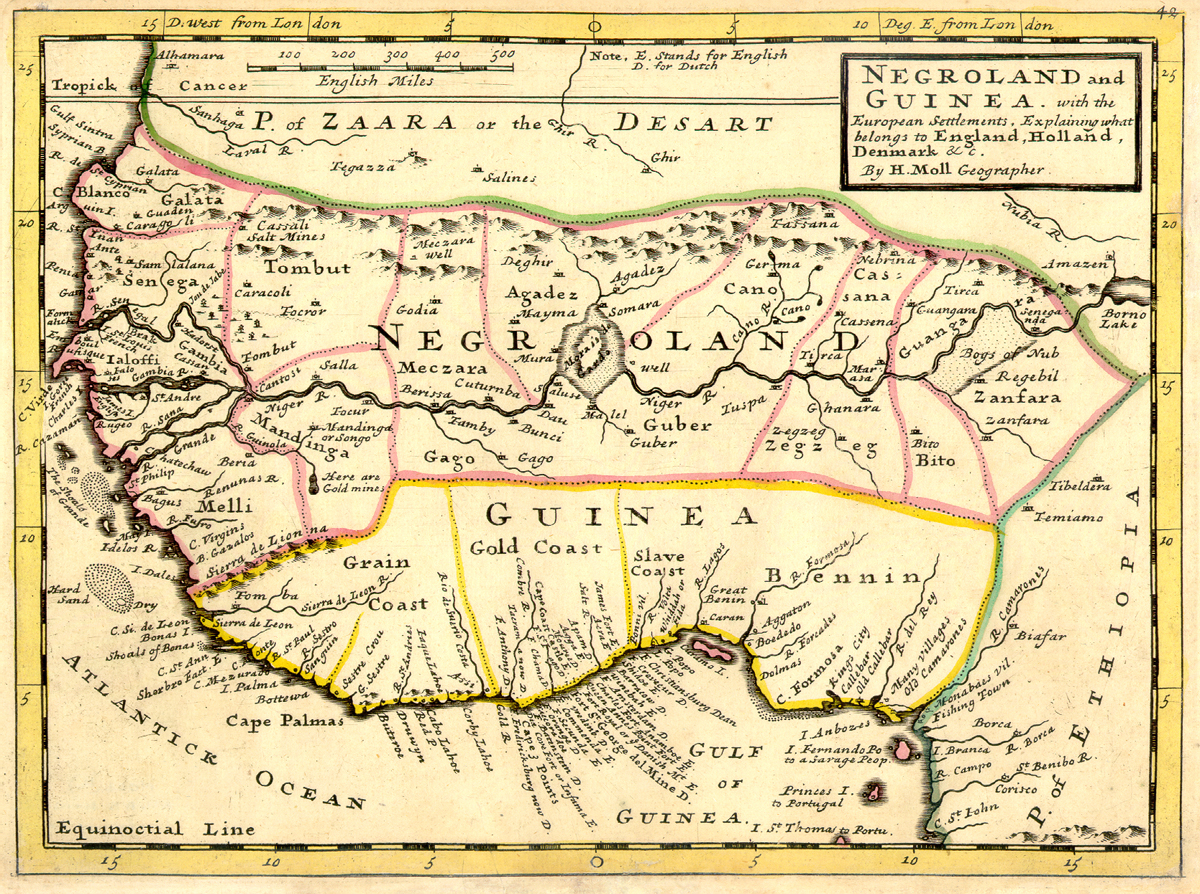

Geography and social characteristics
The region combines lagoons, river mouths and narrow coastal plains backed by forest and savanna. Its ports and natural harbors made it convenient for coastal shipping. Local societies were diverse in language and political organization, ranging from city-states to kingdoms. Agricultural productivity, artisanal crafts and inland trade networks all contributed to dense settlements along the coast and nearby interior zones.
Role in the Atlantic slave trade
From roughly the early 1500s until the 19th century the Slave Coast became a major source area for the transatlantic slave trade. European and later American traders purchased captives in exchange for goods, and large numbers of enslaved people were forcibly transported across the Atlantic. The trade was a central part of the wider Atlantic slave trade system that supplied labor to the New World, especially to plantations in Brazil and the Caribbean. The scale of removals transformed demographics, local politics and economies.
Principal ports and scale
Several coastal settlements served as embarkation points for enslaved Africans. Among the better-known ports were:
- Ouidah (a major departure point)
- Lagos
- Aného (also called Little Popo)
- Grand-Popo
- Agoué
- Jakin
- Porto-Novo
- Badagry
Scholars estimate that the region exported on the order of millions of captives over these centuries. Enslaved people were traded in return for a range of commodities, and the local economies became heavily oriented toward exchange with European traders.
Trade goods and cultural exchange
Goods that entered the region in exchange for people included manufactured items and consumables such as alcohol, tobacco and European textiles. The constant maritime contact also produced bi-directional cultural influences: religious ideas, craft techniques, crops, and architectural forms mixed across continents. For example, elements of local and foreign building styles and urban layouts were blended, creating distinctive architectural expressions in some coastal towns.
Abolition, aftereffects and legacy
Formal abolition by European governments during the 19th century reduced official state participation in the trade, but independent traders and illicit voyages continued for some years afterwards. The long-term consequences of the Slave Coast era include profound demographic changes in West Africa, disrupted political formations, and deep cultural legacies on both sides of the Atlantic. Today the history of the Slave Coast is studied as a critical chapter in global history and commemorated in museums, oral histories and heritage sites that seek to explain the human costs and lasting impacts of the trade.
Note: This article summarizes broad, widely accepted aspects of the region's history and does not attempt to convey the full complexity of local experiences and scholarship.
Questions and answers
Q: What is the Slave Coast?
A: The Slave Coast is the name given to the coastal areas of present Togo, Benin, and western Nigeria.
Q: What was the population of the Slave Coast in pre-colonial times?
A: The Slave Coast was one of the most densely populated parts of the African continent in pre-colonial times.
Q: Why was the Slave Coast important during the Atlantic slave trade?
A: The Slave Coast was one of the most important places for the Atlantic slave trade from the early 16th century to the 19th century.
Q: Where did the slaves from the Slave Coast go?
A: The slaves from the Slave Coast mostly went to Brazil and the Caribbean.
Q: What goods were the slaves traded for?
A: The slaves from the Slave Coast were traded for goods like alcohol and tobacco from the Americas and textiles from Europe.
Q: How many slaves were exported from the Slave Coast?
A: Researchers estimate that between 2 and 3 million slaves were exported out of the Slave Coast.
Q: Did the slave trade continue after slavery was ended by European countries?
A: Yes, the slave trade continued for a time with independent traders instead of government agents after slavery was ended by European countries.
Related articles
Author
AlegsaOnline.com Slave Coast (Bight of Benin): geography, history, and legacy Leandro Alegsa
URL: https://en.alegsaonline.com/art/91050