
Skyland (Washington, D.C.): neighborhood and redevelopment
Skyland is a residential and commercial area in Southeast Washington, D.C., part of Anacostia. Long known for its shopping center, it has been the focus of a major mixed‑use redevelopment and community debate.
Overview
Skyland is a neighborhood in Southeast Washington, D.C., located within the broader Anacostia area and represented within Ward 7. The neighborhood sits near major local corridors such as Good Hope Road and Alabama Avenue, with Fort Stanton Park forming part of its western and southern edge. Historically anchored by the Skyland Shopping Center at Alabama Avenue and Naylor Road SE, the area has combined residential blocks, small businesses and parkland.
Image gallery
3 Images

Location and characteristics
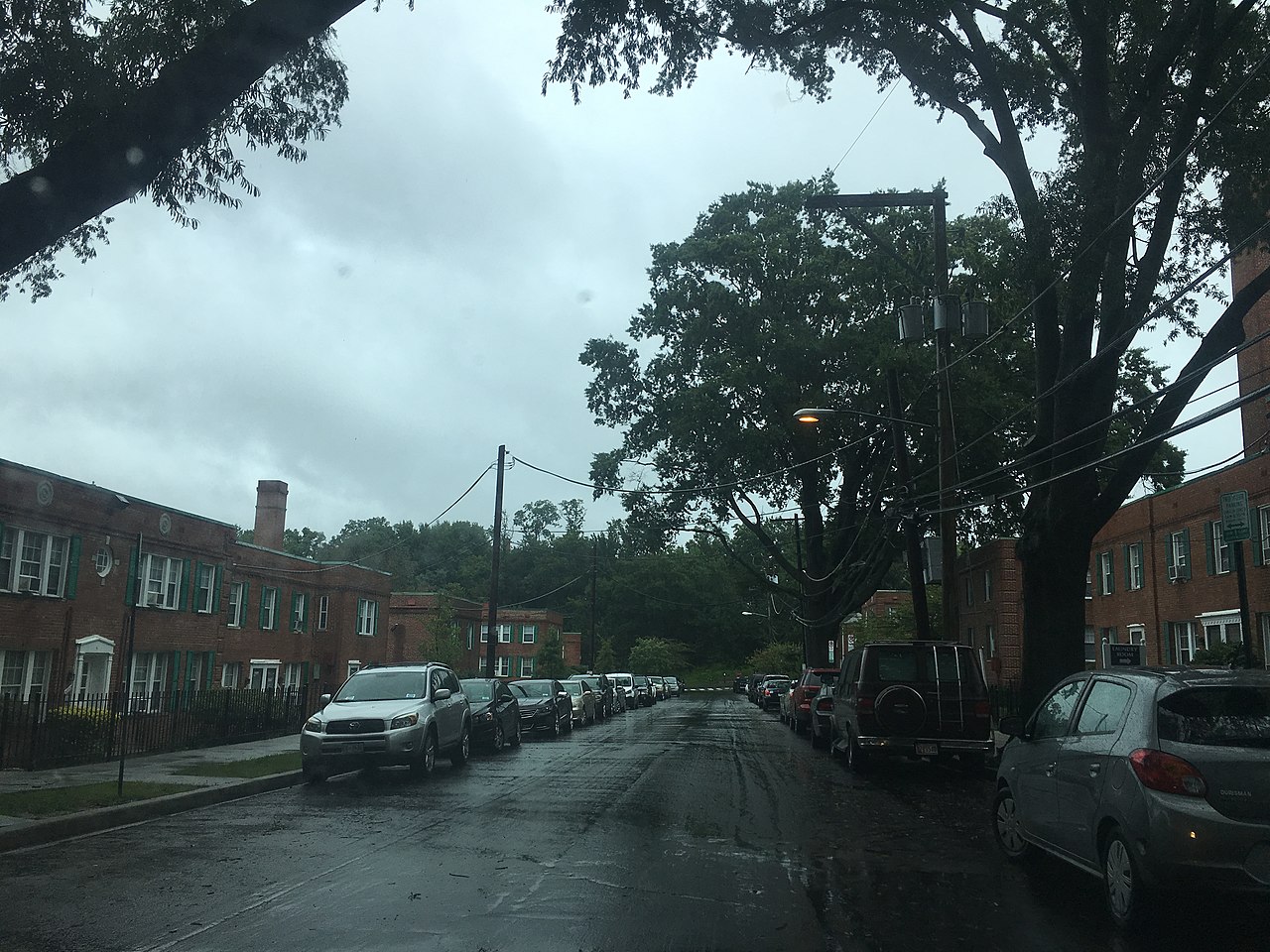
Skyland is primarily residential but has long been identified with the 18‑acre commercial parcel known as the Skyland Shopping Center. The site sits at a crossroads for nearby communities including Good Hope, Hillcrest and Naylor Gardens. Typical characteristics of the area include rowhouses and single‑family homes, local storefronts on arterial roads, and proximity to significant open space such as Fort Stanton Park.
Redevelopment plans
For decades the Skyland Shopping Center had suffered from vacancy and deferred maintenance, prompting calls for redevelopment. The District government has pursued a plan to replace the aging center with a mixed‑use town center. Proposals have emphasized a combination of retail, housing and public space, with the stated goals of improving local access to goods and services, creating jobs, and generating long‑term property and sales tax revenue.
- Planned elements: new retail space intended to attract national and local retailers, streetscape improvements and public amenities.
- Housing: several hundred residential units were proposed, including a mix of for‑sale and rental housing intended to serve a range of incomes.
- Financing and design: the project has involved a Tax Increment Financing (TIF) proposal, a Planned Unit Development (PUD) application to the Zoning Commission, private development partners and architectural firms engaged to prepare plans.
History and disputes
The redevelopment effort has been a multi‑decade process. Local residents sought assistance as retail buildings deteriorated and vacancies increased. Federal and local agencies have reviewed financing options; at one point the U.S. Department of Housing and Urban Development (HUD) raised concerns that affected the use of federal funds. The District government selected private developers and designers to advance a vision for a modern mixed‑use center, but the plan met resistance from some property owners and community members.
A principal point of contention has been land acquisition. Some landholders opposed selling to the selected developers and litigated the issue; the District has at times considered the use of eminent domain to assemble the site for redevelopment. Other disputes have involved which grocery operator or national retailers would be permitted on the site, and how many affordable housing units would be included.
Timeline and outcomes
Over several review cycles the project has advanced through zoning and financing approvals, including an approved PUD and consideration of a TIF package. Design and construction timelines proposed by officials have shifted with market conditions and legal challenges. Proponents argue the project will bring new amenities and jobs, while critics caution about displacement risks, the fairness of land acquisition, and whether promised benefits will materialize.
Significance and notable facts
Skyland exemplifies many common urban redevelopment challenges: revitalizing a deteriorated suburban‑style shopping center, balancing private investment with public oversight, and reconciling differing community priorities. The project illustrates tools often used in U.S. cities—PUDs, TIF financing and, controversially, eminent domain—to achieve comprehensive redevelopment. The neighborhood remains an important focus of civic planning within Southeast Washington as stakeholders continue to work toward a final built outcome.
Questions and answers
Q: What neighborhood is Skyland in?
A: Skyland is a neighborhood in Southeast Washington, D.C.
Q: What is the plan for rebuilding the Skyland Shopping Center?
A: The District government wants to rebuild the 18-acre (73,000 m2) Skyland Shopping Center at Alabama Avenue and Naylor Road, SE in Ward 7 into a mixed-used town center with 320,000 square feet (30,000 m2) of retail space filled with high-quality, national stores and locally-owned shops and restaurants.
Q: Who are the architects drawing up plans for the new buildings?
A: Torti Gallas & Partners are architects who are drawing the new plans.
Q: How much will it cost to build the new buildings?
A: The new buildings will cost $260 million.
Q: Will there be housing included in this project?
A: Yes, there will be 420 to 470 units of housing included in this project - 80 percent of which will be owned by those living there and 20 percent rented out.
Q: Is Wal-Mart allowed to open a store at Skyland?
A: On May 25th 2011 DC Mayor Vincent Gray told Wal-Mart officials that he would not allow them to build four other new stores in the District of Columbia unless Wal-Mart also opened a store in Skyland. However Safeway holds an exclusive right to sell groceries at this development which may block a Wal-Mart from opening at Skyland.
Q: When is building expected to start on this project?
A Building is expected to start on this project in 2012 with completion anticipated for 2014.
Related articles
Author
AlegsaOnline.com Skyland (Washington, D.C.): neighborhood and redevelopment Leandro Alegsa
URL: https://en.alegsaonline.com/art/91003
Sources
- tools.wmflabs.org : 38°51′32″N 76°58′17″W / 38.8588°N 76.9715°W / 38.8588; -76.9715