
Skye: Scotland’s largest Inner Hebridean island
Overview of Skye (Isle of Skye): geography, history from Mesolithic and Norse periods to clan era, economy, wildlife, culture and practical notes for visitors including Portree and the Cuillin.
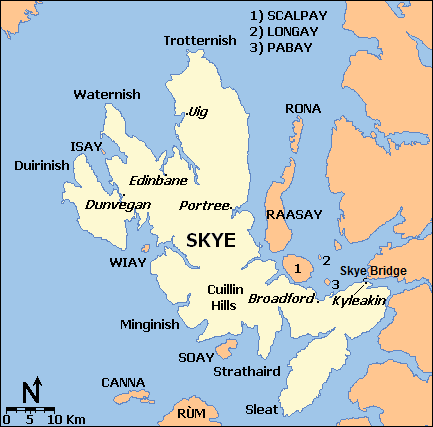
The Isle of Skye is the largest and most northerly of the Inner Hebrides. It lies off the west coast of Scotland within the group known as the Inner Hebrides. Skye's scenery—mountains, peninsulas, sea cliffs and sheltered bays—has shaped settlement, economy and culture for millennia. Today the resident population is around nine thousand people, and languages and traditions remain visible: roughly half of the local population use Scottish Gaelic to some degree, and Gaelic remains important in community life and events.
Image gallery
10 Images


Landscape, geology and climate
Skye's landscape is varied. The Cuillin mountains form a dramatic core with steep ridges and challenging peaks that attract hillwalkers and climbers. The Trotternish peninsula to the north shows dramatic landslip scenery and spectacular rock formations such as the Old Man of Storr and the Quiraing. Coastlines include high cliffs and deep sea lochs, while lower ground supports crofting, pasture and small woodlands. The island's climate is maritime: mild but often wet and windy, conditions that influence vegetation, peat growth and the shape of coastal habitats.
History and archaeology
People have occupied Skye since at least the Mesolithic period, leaving archaeological traces on beaches, in caves and across fertile lowlands. In the early medieval period the island experienced Norse influence and later became important to Highland clan society. Clans such as the MacLeods and the MacDonalds were prominent landholders for centuries, and many surviving castles, ruined towers and clan sites date from that era. The 18th and 19th centuries brought profound social change: agricultural reform and the Highland Clearances altered settlement patterns and population levels, with emigration and shifts in land use that still shape local memory and landscape.
Flora, fauna and conservation
Skye supports a range of wild species and habitats. Raptors, including birds of prey often sought by birdwatchers, share the uplands with red deer; coastal waters are important for seals, cetaceans and migrating fish such as Atlantic salmon. Seabird colonies occur on cliffs, and intertidal zones support diverse marine life. Conservation groups, land managers and community trusts work to balance visitor pressure, farming and the protection of habitats and species, while local initiatives aim to conserve peatlands and native woodlands.
Economy and local life
The island's economy combines traditional and modern activities. Crofting and small-scale agriculture remain important in rural districts, alongside commercial and recreational fishing for coastal communities. Tourism is a major economic driver: visitors come for walking, climbing, wildlife watching and cultural events (tourism). Skye is also associated with whisky production and related visitor experiences; local distilleries contribute to employment and to the island's profile as a food and drink destination (whisky and distilling).
Culture, language and community
Skye has a strong cultural identity. Gaelic language, traditional music, storytelling and craft traditions remain active in many communities, supported by festivals, music sessions and educational initiatives that celebrate and sustain heritage (culture and events). Community trusts and local enterprises play a growing role in housing, land management and services, with efforts to retain young people and diversify the rural economy.
Transport and visiting
Access to Skye improved with the construction of a permanent road bridge to the mainland in the late 20th century, and ferries still operate to neighbouring islands. The island's principal town, Portree, functions as the main service and accommodation centre and has a sheltered harbour popular with visitors. Those planning to visit should allow time for weather changes, respect access codes on private and common grazing land, and follow local guidance on path use and parking to avoid erosion and disturbance to wildlife.
Notable places and practical highlights
- Portree – principal town, shops, harbour and visitor services
- The Cuillin Hills – mountain range prized by climbers and walkers
- Trotternish Ridge, Old Man of Storr and the Quiraing – distinctive geology
- Dunvegan Castle – historic seat associated with Clan MacLeod
- Fairy Pools and Talisker area – scenic and popular natural sites
- Important wildlife watching areas and marine viewpoints (wildlife and marine species)
Skye's combination of deep history, living culture and striking natural environments makes it one of Scotland's most visited islands. Ongoing challenges include managing visitor impact, supporting affordable housing and sustaining local services, but many residents and organisations work together to balance conservation, cultural vitality and economic opportunity.
Further reading and resources on the island's geography, history and opportunities for visitors are available through regional guides and community resources; for tourism information and events see local visitor services and cultural listings (tourism, culture), and for natural history and species accounts consult conservation organisations and marine groups (wildlife). For context within Scotland and the archipelago see regional overviews of the Inner Hebrides and Scotland.
Questions and answers
Q: What is Skye?
A: Skye is the largest and most northerly island in the Inner Hebrides of Scotland.
Q: How many people live in Skye?
A: More than 9000 people live in Skye.
Q: What is the main settlement in Skye?
A: The main settlement in Skye is Portree, known for its picturesque harbour.
Q: What industries operate in Skye?
A: The main industries in Skye are tourism, agriculture, fishing, and whisky-distilling.
Q: What caused a decline in population in Skye?
A: The Highland Clearances of the 19th century caused a decline in the population from over 20,000 to around 9,200 in the early 21st century.
Q: What is Skye renowned for?
A: Skye is renowned for its spectacular scenery, vibrant culture and heritage, and its abundant wildlife, including the Golden Eagle, Red Deer, and Atlantic Salmon.
Q: What is the connection between Skye and the mainland?
A: Skye is now linked to the mainland by a road bridge.
Related articles
Author
AlegsaOnline.com Skye: Scotland’s largest Inner Hebridean island Leandro Alegsa
URL: https://en.alegsaonline.com/art/90999
Sources
- scottish-islands-federation.co.uk : "Scotland's Island Populations"
- dunvegancastle.com : "Dunvegan Castle"
- clandonald.com : "Armadale Castle"
- baronage.co.uk : "The Barony of MacDonald"
- skyewalk.co.uk : "Sgurr Dearg and the In Pinn"
- sundayherald.com : "Running in Heaven"