
Skatepark — design, features, history and community role
Public or private recreational areas designed for skateboarding and BMX, detailing common elements, types, origins, uses, and safety and maintenance considerations.
Overview
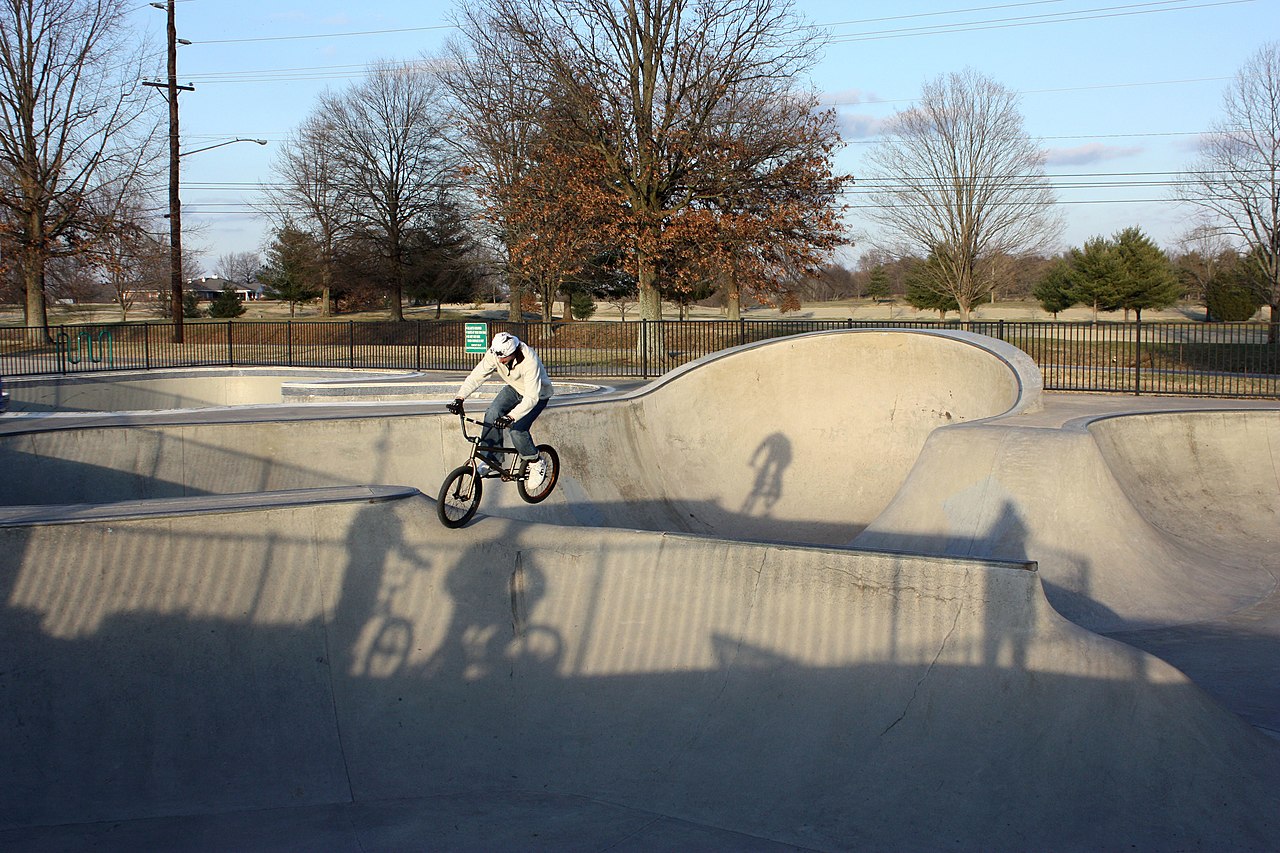
A skatepark is a purpose-built recreational area where people ride skateboards, scooters, BMX bikes and similar wheeled devices. Parks vary from simple street-style plazas to complex concrete bowls and transition courses. They provide a defined environment for learning, practicing tricks, and socializing in a space engineered to manage speed, flow and impact.
Image gallery
10 Images




Common elements and layout
Many parks combine a variety of features to suit different skill sets and disciplines. Typical components include:
- Transition elements: quarter pipes, halfpipes and mini ramps that create curved surfaces for carving and aerial tricks.
- Street features: ledges, stairs, rails, flat bars and funboxes that mimic urban obstacles.
- Flow and links: hips, pyramids, roll‑ins and launch ramps that connect sections and allow continuous lines.
- Special structures: bowls and pools for deep carving, foam pits for learning aerials, and euro gaps for gap tricks.
Design types and materials
Skateparks are commonly classified as street, transition (or vert), bowl or hybrid. Concrete is the dominant material for permanent parks because it offers a smooth, durable riding surface and precise shaping. Pre‑fabricated modules made from wood, metal or composite materials are used for temporary, indoor or portable parks. Good design balances skill progression, sightlines, drainage and local regulations.
History and development
Modern skateparks grew from skateboarding’s expansion in the 1960s and 1970s, when surfers adapted moves to pavement and emptied swimming pools. The first dedicated commercial facility is often credited to a 1976 park in Carlsbad, California, which helped popularize purpose‑built venues. Since then the discipline has diversified and municipal and private projects have spread worldwide, including large urban complexes reported in cities such as Shanghai.
Uses, culture and community value
Beyond recreation, skateparks serve as training grounds for athletes, venues for competitions and festivals, and community hubs for youth engagement. They can support local economies, encourage healthy activity, and offer creative expression through style and informal performance. Many communities collaborate with skaters during design to ensure parks meet the needs of users and reduce conflicts with other park activities.
Safety, management and notable considerations
Operators address safety through helmet and pad policies, supervised hours, surface maintenance and signage. Liability, vandalism and funding are common challenges; some cities use nonprofit skate groups or public–private partnerships to build and maintain facilities. For further practical guidance on riding and local projects, see resources aimed at skateboarders and BMX riders. For historical context, see accounts noting early parks such as the Carlsbad facility (early skatepark history). Examples of large modern complexes are reported in major cities including Shanghai (Shanghai park example) and other international sites (global skatepark developments).
Questions and answers
Q: What is a skatepark?
A: A skatepark is a recreational park designed for skateboarders and BMXers.
Q: What are some features commonly found in a skatepark?
A: A skatepark usually features quarter pipes, spines, flat banks, wall rides or vert walls, mini ramps, hips, funboxes, pyramids, launches, roll-ins, a euro or euro gap, a halfpipe, a bowl, foam pits, hand rails, a flat bar, and stairs.
Q: When was the very first skatepark made?
A: The very first skatepark was made in 1976 in Carlsbad, California.
Q: What is the largest skatepark in the world and where is it located?
A: The largest skatepark in the world is located in Shanghai, China.
Q: What are some of the obstacles found in a skatepark?
A: Some obstacles found in a skatepark include quarter pipes, spines, pyramids, railings, stairs, and more.
Q: Who can use skateparks?
A: Skateparks are designed for skateboarders and BMXers of all ages and skill levels.
Q: What are some benefits of skateparks?
A: Skateparks provide a safe and controlled environment for skateboarding and BMX, encourage physical activity, foster creativity and self-expression, and provide opportunities to socialize and make new friends.
Related articles
Author
AlegsaOnline.com Skatepark — design, features, history and community role Leandro Alegsa
URL: https://en.alegsaonline.com/art/90884
Sources
- carlsbadskatepark.org : carlsbadskatepark.org
- skateboardingmagazine.com : "Skateboarding Magazine"
- longboardbrand.com : "Longboard Teaching Guide"