
Sir Gawain and the Green Knight
A late 14th-century Middle English Arthurian romance notable for its beheading-game plot, alliterative verse, and the ‘bob and wheel’ stanzaic form; explores chivalry, testing, and human fallibility.
Overview
Sir Gawain and the Green Knight is a late 14th-century Middle English poem that belongs to the Arthurian cycle of courtly romances. Written in a dialect associated with the northwest Midlands, it is sometimes cited by its original form Sir Gawayn and þe Grene Knyȝt. The poem combines elements of adventure, moral testing, and the supernatural, and is often described as a classic example of the medieval chivalric romance within the broader Arthurian tradition.
Image gallery
10 Images


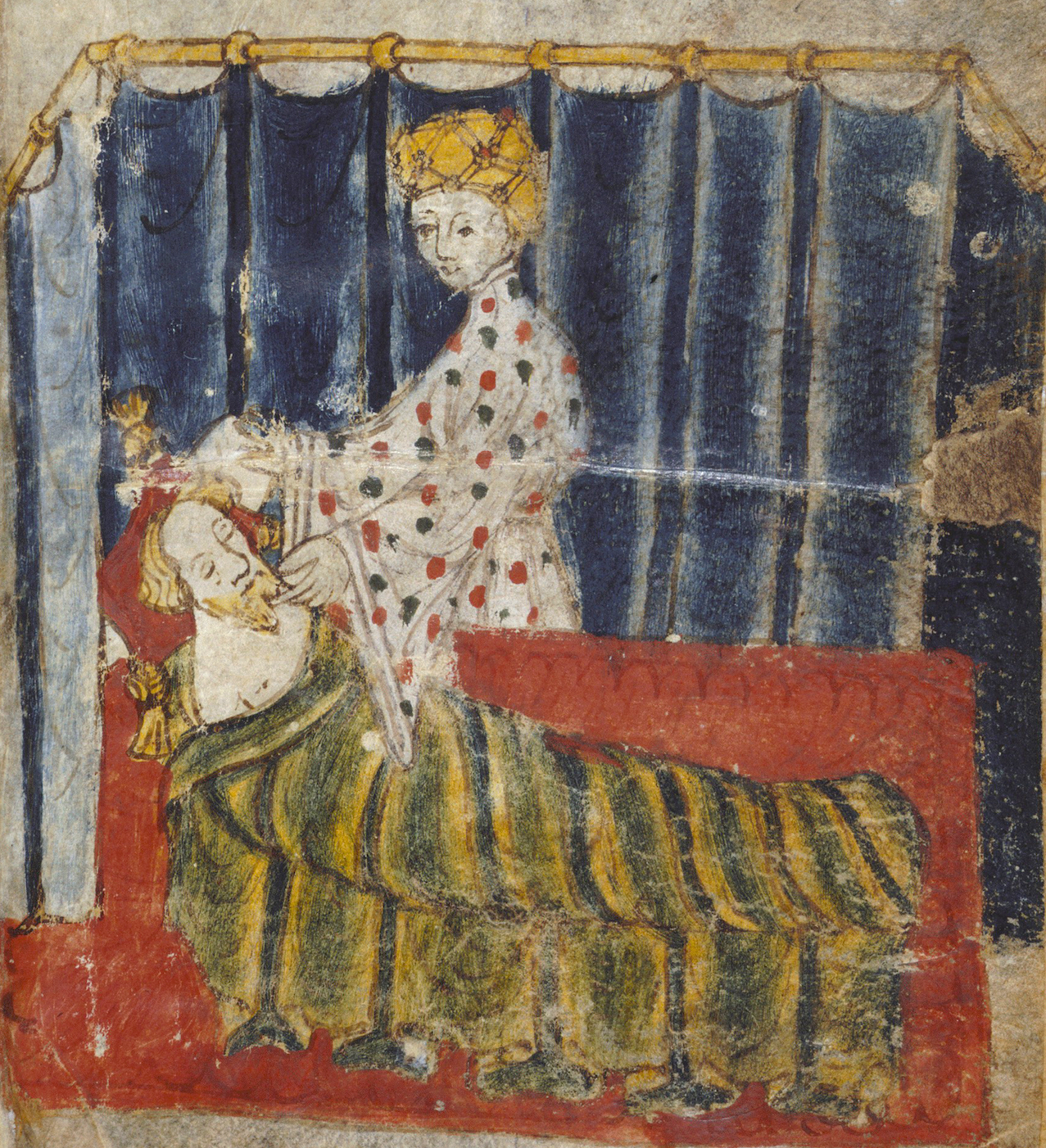

Plot in brief
The narrative opens at King Arthur’s court during a New Year’s feast, when a mysterious Green Knight issues a challenge that sends Sir Gawain on a perilous quest. This challenge—commonly called the “beheading game”—forces Gawain to honor a bargain under strict time and place. The story follows his journey to a remote castle, tests of courtesy and chastity, the exchange of winnings between hosts and guest, and the moral consequences of a single concealed item that complicates his oath.
Form and poetic technique
The poem is celebrated for its distinctive verse. It is written in long alliterative lines arranged in stanzas, with each stanza concluding in a short rhymed section known as the bob and wheel. Scholars point out the work's reliance on alliterative verse patterns together with a stanzaic structure that creates striking rhythmic contrasts. The language is vivid, filled with color imagery—especially the symbolic and persistent presence of green—and carefully wrought descriptions of armor, seasonal landscape, and courtly ritual.
Authorship, manuscript, and transmission
The poem survives in a single medieval manuscript alongside three religious poems; the anonymous writer is often referred to as the “Pearl Poet” or the “Gawain Poet.” Its preservation in one codex has made that manuscript an essential source for editors and translators. Because of its dialect, metrical patterns, and lexical choices, the poem has attracted sustained philological study and a steady stream of modern editions and translations aimed at both scholarly and general readers.
Themes and critical significance
Sir Gawain interrogates ideals of knighthood—courage, courtesy, truthfulness—by placing them against human weakness and ambiguity. Key themes include the tension between contractual obligation and personal survival, the interplay of Christian ethics with older folkloric motifs, and the symbolic role of nature as something that can both test and reveal character. Critics often emphasize the poem’s moral complexity rather than a simple heroic triumph.
Legacy and adaptations
The poem has inspired numerous translations, literary studies, and artistic adaptations. Modern readers encounter it in annotated editions and performances; it has also influenced contemporary film and literature, including cinematic interpretations in the 21st century. Because of its striking imagery and moral drama, the work remains a frequent subject in courses on medieval literature and continues to be reimagined in popular culture and scholarly commentary.
- Notable features: alliteration, stanzaic rhyme, bob and wheel (see form).
- Common labels: beheading game motif; exploration of chivalry (genre).
- Contextual ties: Arthurian material and medieval folklore (tradition).
For introductions to editions, translations, and further commentary, readers can consult modern scholarly editions and accessible translations that explain linguistic features and cultural background, providing gateways into this rich and enigmatic medieval poem (original title, stanzaic notes, metrical discussion, romance context, Arthurian links, technical glossary).
Questions and answers
Q: What is Sir Gawain and the Green Knight?
A: Sir Gawain and the Green Knight is a chivalric romance that is one of the most notable Arthurian stories written in Middle English in the late 14th-century.
Q: What is the story of Sir Gawain and the Green Knight known as?
A: It is known as the "beheading game".
Q: In what form is the story of Sir Gawain and the Green Knight written?
A: The story is written in stanzas of alliterative verse.
Q: How does each stanza of Sir Gawain and the Green Knight end?
A: Each stanza ends in a rhyming bob and wheel.
Q: When was Sir Gawain and the Green Knight written?
A: It was written in the late 14th-century.
Q: What is the significance of Sir Gawain and the Green Knight?
A: It is one of the most notable Arthurian stories and is considered a masterpiece of English literature.
Q: What language was Sir Gawain and the Green Knight written in?
A: It was written in Middle English.
Related articles
Author
AlegsaOnline.com Sir Gawain and the Green Knight Leandro Alegsa
URL: https://en.alegsaonline.com/art/90740