
Siouxsie and the Banshees: English post‑punk innovators
An overview of Siouxsie and the Banshees, the English post‑punk band founded by Siouxsie Sioux and Steven Severin in 1976 — their history, style, key recordings, lineup changes and influence.
Siouxsie and the Banshees were an influential English rock band formed in 1976 by singer Siouxsie Sioux and bassist Steven Severin in London. Over two decades they blended elements of punk, post‑punk, gothic and art rock to create a distinctive sound centered on Siouxsie's dramatic vocals, Severin's melodic basslines and inventive rhythms. The group released eleven studio albums between 1978 and 1995, achieved significant chart success in the United Kingdom and maintained a dedicated international following despite more limited mainstream exposure in the United States.
Image gallery
2 Images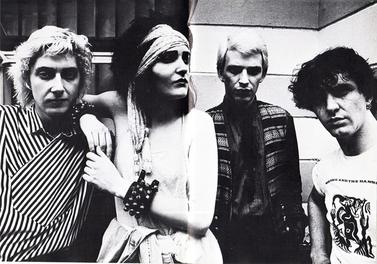

Early years and formation
The band made an immediate impression with a first performance at the 100 Club Punk Festival, where several notable musicians were involved. For that debut set drummer duties were filled by Sid Vicious and Marco Pirroni contributed on guitar; the group performed an improvised, roughly twenty‑minute rendition of the Lord's Prayer during the show, an episode recalled in contemporary accounts as a spontaneous piece. Originally formed without a settled name or long‑term plan, the act was persuaded to continue after the festival rather than dissolve as had been intended.
Early personnel stabilized and shifted rapidly. Kenny Morris joined on drums while Peter Fenton was an initial guitarist; within months Fenton was replaced by John McKay. The band began to refine its sound and stage presence, moving from raw punk energy toward more textural arrangements and darker atmospheres.
Recording career and milestones
In 1978 the group signed a recording contract with Polydor Records and issued their debut single "Hong Kong Garden," which reached the British top ten on the UK Singles Chart. Their first album, The Scream (1978), drew favorable critical attention for its inventive guitar work and striking vocals and helped establish the band as a leading voice in the post‑punk movement.
Throughout the late 1970s and into the 1980s the Banshees saw a series of notable lineup changes that affected their sound. Robert Smith of The Cure performed as guitarist on the 1979 Join Hands tour and returned to record with the band in 1982, stepping in for John McGeoch during a period of transition; he left in 1984, citing the strain of dividing his time between two groups as a reason. The band recorded a widely played cover of the Beatles' "Dear Prudence" featuring Smith, which became one of their highest‑placing singles in the UK.
Drummer Peter Edward "Budgie" Clarke joined during the Join Hands era and remained a central collaborator until the group's 1996 dissolution. Guitarists who followed included John "Valentine" Carruthers, Jon Klein and later Knox Chandler, while Martin McCarrick became an important addition on keyboards and cello, expanding the band's sonic palette.
Later albums and commercial reach
Siouxsie and the Banshees continued to explore different approaches across their catalog. In 1987 they released Through the Looking Glass, an album of interpretations of other artists' songs that showcased their ability to reimagine material in darker, more theatrical terms as a covers collection. Their ninth studio album, Peepshow (recorded in early 1988 and released that September), introduced more accessible pop elements while retaining idiosyncratic arrangements and received strong reviews from the contemporary music press.
The 1991 album Superstition yielded the single "Kiss Them for Me," which became the band's biggest American chart entry and reached the Billboard Hot 100 at number 23. Their final studio record, The Rapture, appeared in 1995; shortly afterward the group was dropped by Polydor and underwent a last series of personnel adjustments before announcing a split in 1996. The core members reunited briefly for a short tour in 2002, and their live work included high‑profile festival appearances, such as an early billing on the inaugural Lollapalooza roster.
Musical style, influence and legacy
Siouxsie and the Banshees are widely regarded as pioneers who helped shape post‑punk and the emerging gothic rock aesthetic of the late 1970s and 1980s. Their music is characterized by Siouxsie's theatrical vocal delivery, angular and atmospheric guitar textures, inventive percussion and a tendency to blend pop hooks with experimental arrangements. Over successive lineups the band balanced abrasive, minimalist moments with lush, orchestrated passages, influencing many later alternative, indie and goth bands.
Critics and peers often cite the group's willingness to evolve: each album explored different timbres and production approaches while retaining a distinct identity. Though their greatest commercial impact was in the UK — with singles such as "Hong Kong Garden" and the Beatles cover that climbed the British charts — their artistic reach extended internationally, and their work continues to be referenced by musicians and writers studying late 20th‑century British rock.
Selected recordings and personnel
- Notable albums: The Scream (1978); Join Hands (1979); Through the Looking Glass (1987); Peepshow (1988); Superstition (1991); The Rapture (1995).
- Key singles: "Hong Kong Garden" (UK top ten); "Dear Prudence" (UK top five); "Kiss Them for Me" (US chart success).
- Long‑standing members: Siouxsie Sioux (vocals), Steven Severin (bass), Budgie (drums). Other contributors who shaped eras of the band include John McKay, John McGeoch, Robert Smith, John Carruthers, Jon Klein and Martin McCarrick.
For readers seeking contemporary reporting or archival material, there are many interviews, reviews and retrospective pieces that document the band’s evolving sound and stagecraft. The Banshees remain a frequently cited reference point for discussions of innovation in post‑punk and the wider alternative music scene of the late 20th century.
Questions and answers
Q: Who started Siouxsie and the Banshees?
A: Siouxsie Sioux and Steven Severin started Siouxsie and the Banshees in 1976 in London.
Q: What was their most popular song in the UK?
A: Their most popular song in the UK was "Dear Prudence", a Beatles cover, which reached number 3 on the UK Singles Chart.
Q: When did they release their first album?
A: They released their first album, The Scream, in November 1978. It reached number 12 on the UK Albums Chart.
Q: Who played guitar for them during their 1979 tour for Join Hands?
A: Robert Smith played guitar for them during their 1979 tour for Join Hands.
Q: Who joined as a drummer when they formed as a band two months after playing at 100 Club Punk Festival?
A: Kenny Morris joined as a drummer when they formed as a band two months after playing at 100 Club Punk Festival.
Q: What year did they release Through the Looking Glass, an album of covers of songs by other musicians?
A: They released Through the Looking Glass, an album of covers of songs by other musicians, in 1987.
Q: What year did Superstition, their tenth album, get released?
A: Superstition, their tenth album, got released in 1991.
Related articles
Author
AlegsaOnline.com Siouxsie and the Banshees: English post‑punk innovators Leandro Alegsa
URL: https://en.alegsaonline.com/art/90726