
Adaptive unconscious
The adaptive unconscious comprises fast, automatic mental processes that shape perception, judgment and action. It operates beneath conscious awareness and evolved to support rapid, practical responses to the environment.
Overview
The adaptive unconscious refers to a collection of mental processes that operate outside of conscious awareness yet influence perception, judgment, decision-making and behavior. Unlike deliberate, effortful thought, these processes are rapid, automatic and typically focused on the present situation. They often produce impressions, intuitions or impulses before a person becomes consciously aware of them.
Image gallery
1 Image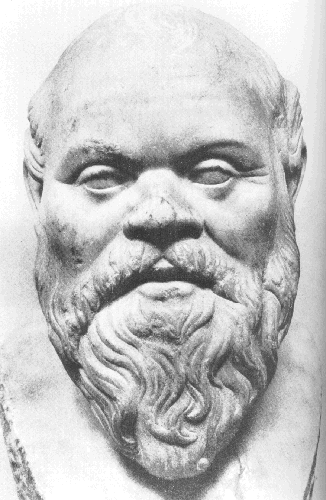
Key characteristics
Scholars distinguish the adaptive unconscious from both conscious reasoning and older notions of a repressed or Freudian unconscious. Typical features include:
- Speed and efficiency: it can deliver quick evaluations without deliberate analysis;
- Automaticity: it performs tasks with little or no subjective effort;
- Context-sensitivity: it relies on cues in the environment and recent experience;
- Limited awareness and flexibility: it is less able than conscious thought to apply abstract rules or reframe problems;
- Domain breadth: it contributes to both low-level operations (perception, motor control) and higher-level functions (goal priming, pattern recognition).
Origins and evolutionary perspective
The phrase "adaptive" highlights the view that many unconscious processes have survival or practical value. From an evolutionary standpoint, rapid automatic responses would have been advantageous in many ancestral environments because they saved time and cognitive resources. For much of animal evolution, especially prior to the emergence of complex conscious experience, nervous systems operated largely without the kinds of reflective awareness humans possess today; consciousness can be seen as an additional layer built on preexisting mechanisms. For discussions of adaptation and evolutionary pressures see adaptation, natural selection, vertebrate perspectives and broader accounts of evolution.
Evidence and methods
Researchers infer adaptive-unconscious processes through experimental methods that do not rely on verbal report: reaction-time tasks, priming experiments, implicit association measures, behavioral observation, and neuroimaging that shows brain activity without conscious report. Findings show that subtle cues can change choices or impressions even when people say they are unaware of those cues.
Applications, importance and limits
The adaptive unconscious plays a practical role in everyday life: first impressions, expert intuition (e.g., in medicine or sports), fluent social coordination, driving and routine skill execution all depend heavily on fast, nonconscious processing. At the same time, these systems can produce systematic errors or biases—such as stereotyping, overreliance on heuristics, or failure to adapt to novel problems—and are less able to justify decisions in a way that conscious reasoning can.
Distinctions and ongoing debates
Important distinctions remain between the adaptive unconscious and other concepts: the merely unconscious background processes that support awareness, the Freudian unconscious concerned with repressed content, and the cognitive unconscious as studied in modern psychology. Debate continues about how much high-level planning and goal setting the adaptive unconscious can perform, and about how consciousness and nonconscious processing interact to produce flexible, adaptive behavior.
Questions and answers
Q: What is the adaptive unconscious?
A: The adaptive unconscious is a set of unconscious mental processes that influence judgment and decision making. It operates outside of conscious view, quickly interpreting information and deciding how to act.
Q: How does it differ from conscious processing?
A: The adaptive unconscious is faster, effortless, more focused on the present, but less flexible than conscious processing.
Q: Is the adaptive unconscious involved in "high-level" cognition such as goal-setting?
A: Yes, according to some theories of the mind, the adaptive unconscious is thought to be involved in "high-level" cognition such as goal-setting.
Q: Does the term 'adaptive unconscious' suggest it has survival value?
A: Yes, the term 'adaptive unconscious' suggests it has survival value and was strongly selected for during vertebrate evolution.
Q: Was all mental activity originally unconscious?
A: Yes, for much of vertebrate evolution all mental activity was originally unconscious.
Q: Do fish have consciousness? A: No, no one supposes that fish have consciousness.
Related articles
Author
AlegsaOnline.com Adaptive unconscious Leandro Alegsa
URL: https://en.alegsaonline.com/art/907
Sources
- cdp.sagepub.com : cdp.sagepub.com/content/12/1/13
- doi.org : 10.1037/0033-2909.115.2.163
- link.springer.com : link.springer.com/article/10.3758/BF03210774
- doi.org : 10.1126/science.1163029
- pubmed.ncbi.nlm.nih.gov : 18719269
- doi.org : 10.1016/j.jesp.2006.05.011
- worldcat.org : 0022-1031
- doi.org : 10.1016/j.tics.2006.11.001
- worldcat.org : 1364-6613
- pubmed.ncbi.nlm.nih.gov : 17129749
- doi.org : 10.1037/0022-3514.92.4.585
- worldcat.org : 022-3514
- pubmed.ncbi.nlm.nih.gov : 17469946