
Sinovenator — a small basal troodontid from the Yixian Formation
Sinovenator is a small, birdlike troodontid from the Early Cretaceous Jehol biota of northeastern China, known from two specimens and important for studies of early paravian evolution.
Overview
Sinovenator is a small, birdlike theropod classified among the troodontids. It is known from the Lower beds of the Yixian Formation and is generally described as roughly the size of a chicken. The fossils come from the Early Cretaceous and are commonly placed at about 128 million years ago in age. Specimens attributed to Sinovenator form part of the diverse Jehol biota, a fossil assemblage that has yielded exceptionally preserved examples of small dinosaurs, birds, mammals and plants.
Image gallery
9 Images




Discovery and naming
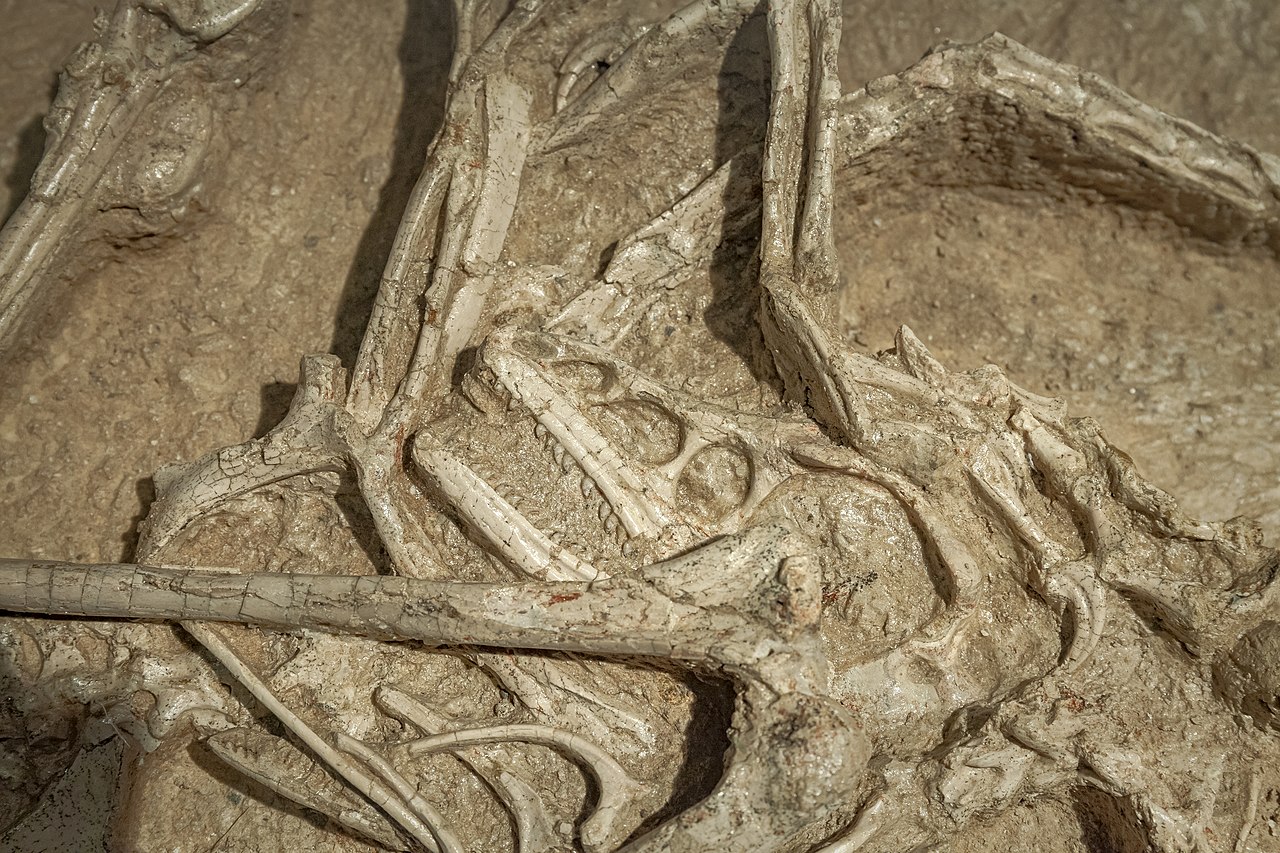
The genus was first described in 2002 based on a partial skull and disarticulated postcranial material; the published type description named the species and documented diagnostic features. The type specimen includes cranial fragments and dispersed bones, while a second specimen preserves much of the postcranial skeleton in association but lacks the skull. Both specimens are curated at the Institute of Vertebrate Paleontology and Paleoanthropology in Beijing, which holds numerous important Jehol fossils and makes them available for study.
Anatomy and distinguishing features
Sinovenator shows a mixture of primitive and derived characteristics. Cranial elements preserved in the holotype skull indicate a lightly built skull with a suite of small, closely spaced teeth. The postcranial skeleton exhibits gracile limbs and a pelvis that retains some ancestral features shared with other early paravians. The available bones include portions of the skeleton that allow comparison with both more derived troodontids and with other paravian groups.
Phylogenetic relationships
In phylogenetic analyses Sinovenator is usually recovered as a basal member of Troodontidae. It displays characters also found in early dromaeosaurids and primitive members of Avialae, the clade that includes modern birds. These shared features have been interpreted as evidence for the common descent of the three lineages within Paraves, and the taxon is frequently cited in studies that seek to reconstruct the sequence of anatomical changes near the origin of flight and avian-style anatomy.
Paleoecology and lifestyle
Sinovenator inhabited lacustrine and forested environments represented by the Yixian Formation. The Jehol ecosystem was punctuated by volcanic activity and ash deposition, which contributed to exceptional fossil preservation. Based on its size, dentition and limb proportions, Sinovenator is inferred to have been an active predator or opportunistic feeder on small vertebrates, invertebrates and possibly other food items available in its habitat. Its small body size and anatomy indicate a lifestyle distinct from larger, more robust theropods of the same region.
Fossil context and preservation
The strata that produced Sinovenator fossils are well known for fine-grained sediments that preserve delicate skeletal details. Many Jehol fossils show impressions of feathers or soft tissues, and although Sinovenator specimens are not always preserved with integumentary structures, the context of its preservation helps researchers test hypotheses about feather evolution, thermoregulation and locomotion in small theropods and early birds.
Scientific importance
Sinovenator is important because it documents an early stage in troodontid evolution and highlights the mosaic nature of character change in Paraves. Its combination of ancestral and derived traits provides a useful data point in comparative studies of cranial morphology, tooth evolution and hindlimb anatomy. As a relatively complete small theropod from the Jehol biota, it contributes to broader reconstructions of diversity, ecology and the evolutionary experiments that occurred during the origin of birds.
Key facts and further reading
- Group: Troodontidae
- Size: approximately chicken-sized
- Age: Early Cretaceous, ~128 Ma
- Geology: Yixian Formation
- Type material: holotype including skull elements; referred skeleton
- Repository: IVPP
For more detailed technical treatments consult specialized paleontological literature and museum publications that treat the Jehol biota, early paravian relationships and the origin of avian traits. General introductions to bird origins and paravian evolution provide additional context; useful categories to explore include comparative studies of Avialae, papers on common descent within Paraves and synthetic reviews of Paraves diversity and anatomy.
Questions and answers
Q: What is Sinovenator?
A: Sinovenator is a small troodontid dinosaur about the size of a chicken.
Q: When did Sinovenator live?
A: Sinovenator lived 128.2 million years ago in the early Cretaceous period.
Q: Where were the fossils of Sinovenator found?
A: The fossils of Sinovenator were found in the older (lower) portion of the Yixian Formation in China.
Q: What is the Jehol biota?
A: The Jehol biota is a collection of fossils found in northeastern China that includes many well-preserved dinosaurs and birds from the early Cretaceous period.
Q: What is the type specimen of Sinovenator?
A: The type specimen of Sinovenator is a partial skull and disarticulated skeleton.
Q: Where are the fossils of Sinovenator currently located?
A: The fossils of Sinovenator are in the collection of the Institute of Vertebrate Paleontology and Paleoanthropology in Beijing, China.
Q: What is the relationship between Sinovenator, dromaeosaurids, and Avialae?
A: Sinovenator shares features with the most primitive dromaeosaurids and Avialae, which shows the common descent of these three members of the Paraves.
Related articles
Author
AlegsaOnline.com Sinovenator — a small basal troodontid from the Yixian Formation Leandro Alegsa
URL: https://en.alegsaonline.com/art/90690