
Singapore Armed Forces (SAF)
The Singapore Armed Forces (SAF) are the military forces of the Republic of Singapore, responsible for defence, deterrence and support to civil authorities; built around conscription, modern equipment and regional cooperation.
The Singapore Armed Forces (SAF) are the uniformed military services charged with defending the sovereignty and territorial integrity of the Republic of Singapore. As the military component of the Ministry of Defence, the SAF contributes to the nation's Total Defence concept and works alongside civilian agencies to deter threats, secure sea lanes and provide emergency support. The SAF is commonly described as a compact but technologically advanced force that emphasises readiness, joint operations and workforce mobilisation.
Image gallery
10 Images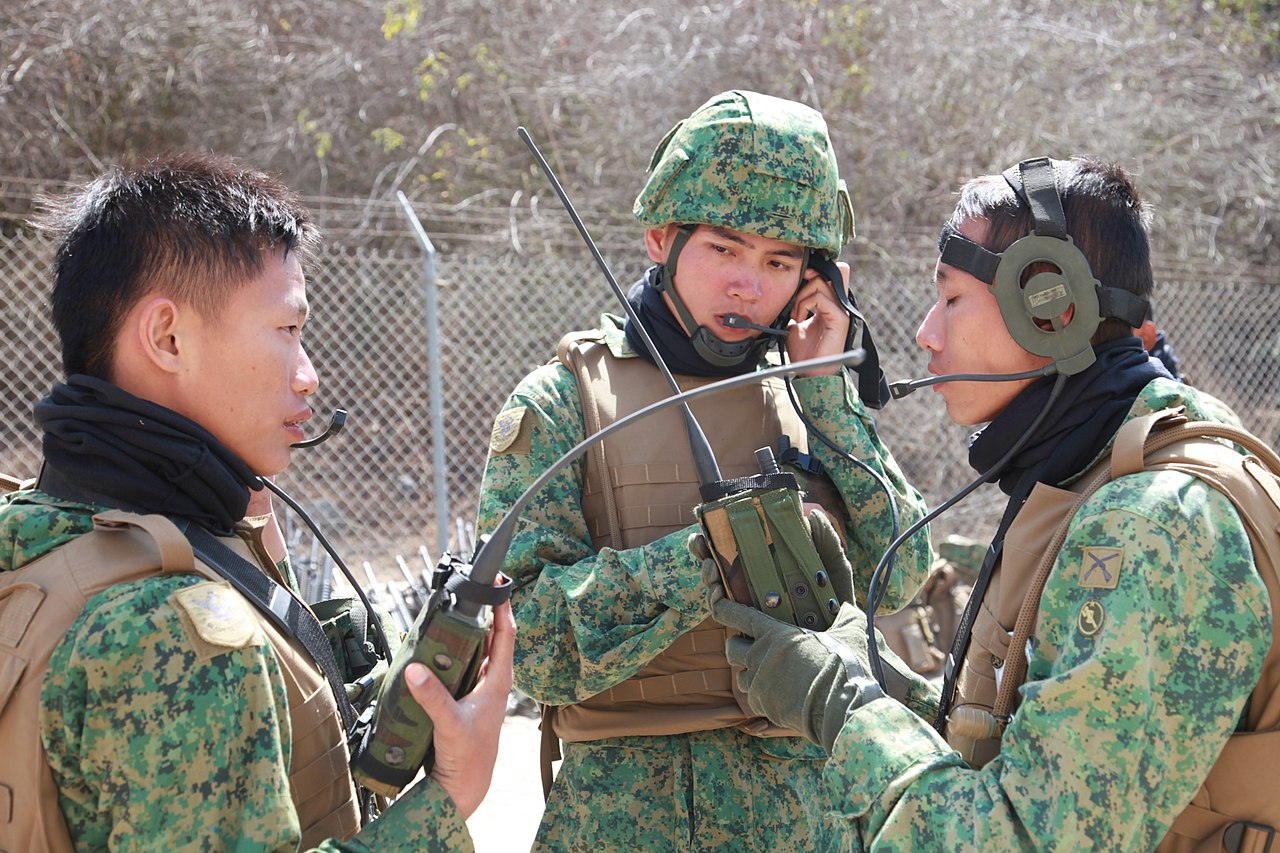


Organization and roles
The SAF comprises three principal services: the Singapore Army, the Republic of Singapore Air Force (RSAF) and the Republic of Singapore Navy (RSN). These branches operate together under joint command arrangements to provide land, air and maritime capabilities. Peacetime tasks include deterrence, protection of sea lines of communication, airspace defence, sovereignty patrols and support to civil authorities during disasters or national emergencies.
National Service and reserves
Conscription, introduced in the 1960s, is central to the SAF’s manpower model. National Service (NS) requires eligible citizens to serve a period of full‑time training followed by years in the reserve. The SAF therefore combines a professional core of regulars with a large pool of reservists—often called NSmen—who are periodically called up for training and mobilisation. This structure is intended to provide rapid expansion of capability in a crisis while maintaining a peacetime defence posture.
Equipment and capabilities
To offset limited population size, the SAF invests heavily in modern equipment, surveillance and force integration. Typical platforms include combat aircraft such as multirole fighters, naval vessels for maritime security and strike capability, and mechanised ground forces supported by armoured vehicles and artillery. Small-arms and infantry equipment include the locally adopted SAR-21 assault rifle. The SAF places strong emphasis on combined arms, networked command systems and regular exercises to enhance interoperability.
History and development
Since independence, the SAF has evolved from a modest defensive force into a technologically sophisticated, professionally trained organisation. Key phases include the establishment of universal conscription, systematic development of training institutions and progressive procurement of modern platforms. Training establishments, doctrine development and a focus on deterrence and diplomacy have guided the SAF’s gradual expansion of roles beyond territorial defence to include contributions to regional security cooperation.
Operations, training and international engagement
The SAF conducts regular training at home and overseas to broaden experience and maintain readiness. It participates in bilateral and multilateral exercises, defence diplomacy and practical cooperation on maritime safety, counter‑piracy and humanitarian assistance. The SAF also supports civil authorities during peacetime crises, such as disaster relief and public safety tasks. For more details on national policy and Total Defence, see official references.
Questions and answers
Q: What is the Singapore Armed Forces (SAF)?
A: The Singapore Armed Forces (SAF) is the military arm of the Total Defence of the Republic of Singapore; as well as the military component of the Ministry of Defence.
Q: How many services does the SAF have?
A: The SAF has three services: the Singapore Army, the Republic of Singapore Air Force (RSAF) and the Republic of Singapore Navy (RSN).
Q: What is the primary objective of the SAF?
A: The SAF protects the interests, sovereignty and territorial integrity of Singapore from external threats.
Q: How does the SAF operate its military defence system?
A: The SAF relies heavily on a large pool of conscripts in the active and reserve forces. It has an active strength of around 71,600 personnel and is capable of mobilising over 900,000 reservists.
Q: Who forms the backbone of the SAF's military defence system?
A: National Servicemen (NSmen) make up more than 80% of its military defence system and form the backbone of the SAF.
Q: What kind of rifle does the SAF use?
A: SAF uses the SAR-21 rifle.
Q: What is the SAF's role in Singapore's Total Defence?
A: The SAF is the military arm of the Total Defence of the Republic of Singapore, which means it plays a critical role in ensuring Singapore's survival and maintaining peace and security in the region.
Related articles
Author
AlegsaOnline.com Singapore Armed Forces (SAF) Leandro Alegsa
URL: https://en.alegsaonline.com/art/90617
Sources
- mindef.gov.sg : "NS Matters - Home"