
Simon & Garfunkel: American folk‑rock duo and cultural influence
Simon & Garfunkel were a 1960s American folk‑rock duo. Known for close harmonies and Paul Simon's songwriting, their songs—like "The Sound of Silence" and "Bridge Over Troubled Water"—remain influential.
Overview
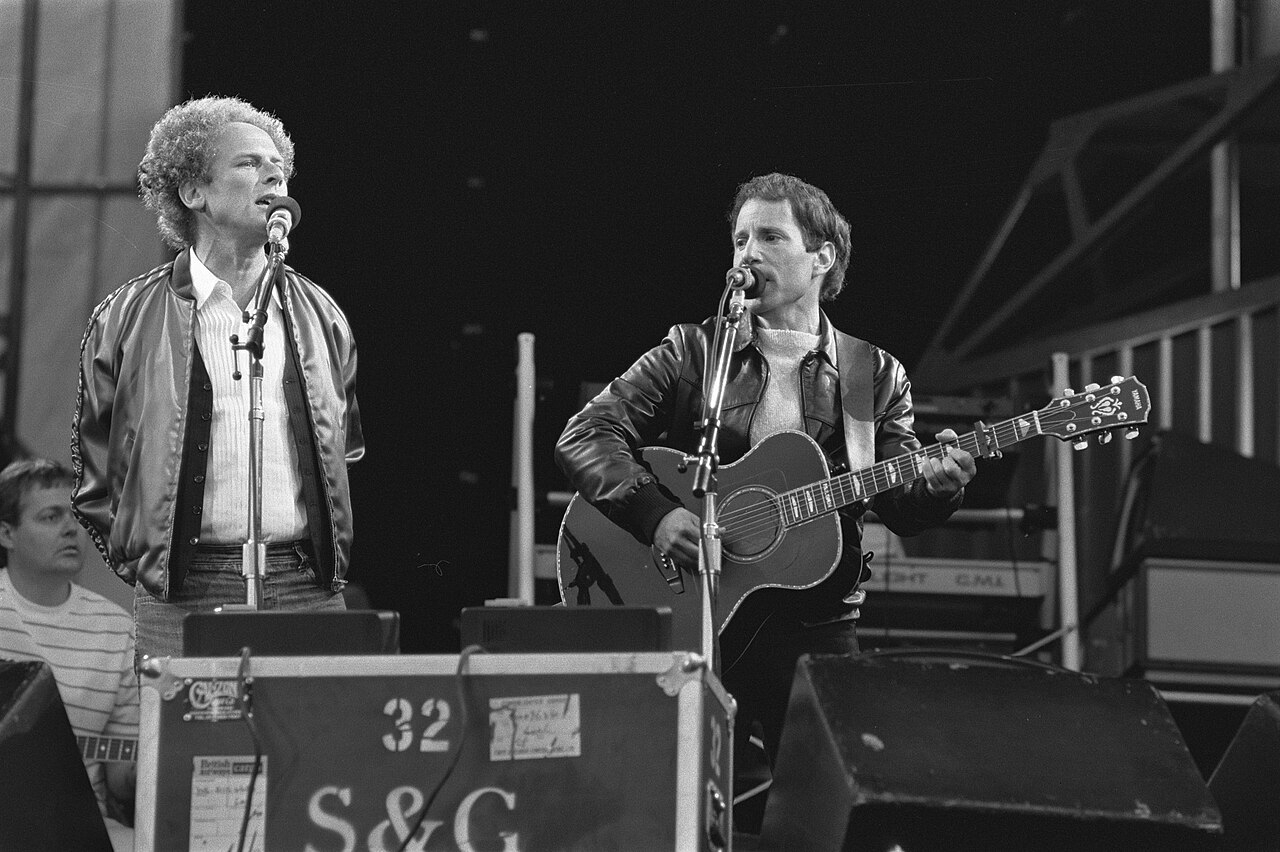
Paul Simon and Art Garfunkel formed one of the best‑known American folk and rock duos of the 20th century. Childhood friends from New York, they paired Simon's songwriting with Garfunkel's clear tenor and tight vocal harmonies to create a concise, expressive sound that became emblematic of the 1960s musical landscape.
Image gallery
6 Images



Musical style and characteristics
The duo combined acoustic folk roots with contemporary pop and rock arrangements. Simon's lyrics often blend personal reflection with social observation; Garfunkel's voice provided a lyrical, almost orchestral lead. Their recordings use layered harmonies, studio experimentation, and occasional orchestral backing to balance intimacy and grandeur.
Notable recordings and cultural impact
- "The Sound of Silence" — a breakthrough recording that shifted from a quiet acoustic track to a fuller studio release and brought national attention.
- "Mrs. Robinson" — became widely known after its association with the film The Graduate, and entered popular culture beyond the charts.
- "Bridge Over Troubled Water" — a signature ballad noted for its sweeping arrangement and emotional delivery.
- "So Long, Frank Lloyd Wright" — an example of Simon's oblique, conversational writing about public figures.
History and major events
They began performing together as teenagers (early recordings were released under other names) and rose to fame in the mid‑1960s. Creative pressures and differing artistic directions led to a breakup around 1970, after which both pursued solo careers. The pair reunited several times for special projects and tours; a particularly famous reunion was a free 1981 concert in New York City’s Central Park, which drew an estimated half‑million attendees.
Legacy and distinctions
Simon & Garfunkel left an enduring legacy on popular songwriting, vocal arrangement, and the folk‑rock genre. Their recordings have been widely covered and remain staples on radio and in film. Both artists have been recognized with major awards and continue to be cited as influences by songwriters and vocal groups. For context on their era and background see references to the 1960s, their childhood friendship, and broader discussions of music history.
Their work illustrates how concise, melody‑driven songwriting paired with distinctive vocal chemistry can achieve lasting cultural resonance. For further reading, see materials linked to figures such as Frank Lloyd Wright (whose name appears in their catalog) and archival resources available through music collections and public archives.
Questions and answers
Q: Who is Simon & Garfunkel?
A: Simon & Garfunkel were a famous American folk and rock music duo consisting of childhood friends Paul Simon and Art Garfunkel.
Q: What are some popular songs created by Simon & Garfunkel?
A: Some of the popular songs created by Simon & Garfunkel are "Mrs. Robinson", "So Long, Frank Lloyd Wright", "The Sound of Silence", and "Bridge Over Troubled Water".
Q: Who composed the songs of Simon & Garfunkel?
A: Paul Simon composed all of the songs of Simon & Garfunkel.
Q: When did Simon & Garfunkel become famous?
A: Simon & Garfunkel became famous in the 1960s.
Q: When did Simon & Garfunkel break up?
A: Simon & Garfunkel broke up in 1970.
Q: What was the biggest concert Simon & Garfunkel held and when was it?
A: Simon & Garfunkel's free concert in New York City's Central Park in 1981 was their biggest concert ever, with 500,000 people, about the same number as Woodstock.
Q: What genre of music did Simon & Garfunkel play?
A: Simon & Garfunkel played a mix of folk and rock music.
Related articles
Author
AlegsaOnline.com Simon & Garfunkel: American folk‑rock duo and cultural influence Leandro Alegsa
URL: https://en.alegsaonline.com/art/90525
Sources
- digital.library.unt.edu : Hear Simon & Garfunkel · web.archive.org