
SIMATIC — Siemens industrial automation system and PLC family
SIMATIC is Siemens' family of industrial automation products, including PLCs, HMIs, I/O and engineering software used to automate manufacturing, process and motion-control systems worldwide.
Overview
SIMATIC is a brand name used by Siemens for a broad family of industrial automation products and systems. At its core SIMATIC provides programmable controllers, human-machine interfaces, distributed input/output modules and the engineering tools required to design, program and maintain automated machines and production lines. Systems are typically installed in control cabinets located close to the machinery they govern.
Image gallery
10 Images


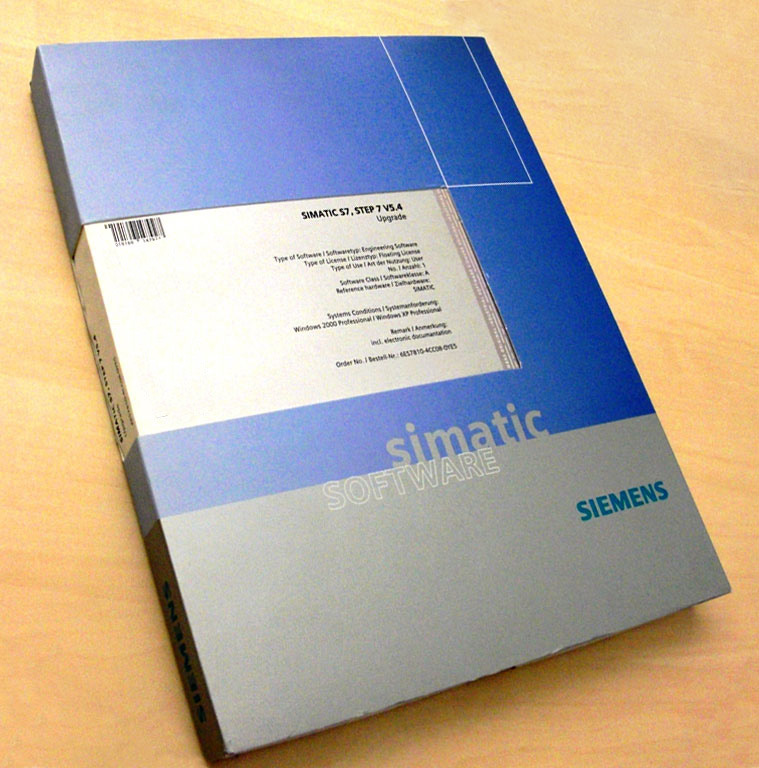

Main components and architecture
The SIMATIC family combines hardware and software to create complete automation solutions. Typical components include:
- Programmable Logic Controllers (PLCs) — CPU and modular controllers that execute control programs.
- Distributed I/O modules — field connections for sensors and actuators, mounted locally or remotely.
- Communication modules — support for industrial networks such as PROFINET and PROFIBUS.
- Human-Machine Interfaces (HMI) and operator panels — for monitoring and manual control.
- Industrial PCs and motion controllers — for complex computation, visualization and motion tasks.
Programming and engineering
SIMATIC controllers are programmed using industrial languages such as ladder logic, function block diagrams and structured text. Siemens provides engineering environments like STEP 7 and the more recent Totally Integrated Automation (TIA) Portal that integrate configuration, programming, diagnostics and visualization in one toolset. Programs are downloaded to the controller's CPU, which runs the logic in real time to control machinery and processes.
History and development
Introduced by Siemens in the mid‑20th century, SIMATIC evolved from simple relay-replacement controllers into a comprehensive automation platform. Over decades the family expanded to cover small machine controllers through large, redundant process controllers and integrated communication standards. Ongoing development has focused on performance, safety functions, network integration and compatibility with modern industrial IT concepts such as Industry 4.0.
Applications and examples
SIMATIC systems are used across manufacturing and process industries for tasks including:
- Discrete manufacturing: assembly lines, packaging, robotics coordination.
- Continuous processes: chemical, food and beverage, water treatment control.
- Motion control: servodrives, CNC interfaces and coordinated kinematics.
- Infrastructure and building automation where reliable logic control is needed.
Notable distinctions and practical points
SIMATIC is recognized for its wide product range and deep ecosystem: hardware families cover different performance classes, while the engineering tools aim to provide integrated workflows from design through commissioning and maintenance. Variants include safety-capable and redundant controllers for demanding environments. Because SIMATIC is widely adopted, many facilities rely on its diagnostics, networking and long-term support when planning upgrades or system lifecycle management.
For further technical details and product documentation consult the manufacturer's resources or technical references provided by system integrators and training centers.
Questions and answers
Q: What is SIMATIC?
A: SIMATIC is an automation system developed by Siemens for controlling machines used in industrial production.
Q: What does SIMATIC do?
A: SIMATIC controls machines and makes them run automatically.
Q: How does SIMATIC work?
A: To use SIMATIC, you need to upload the correct program onto your unit, which is kept in a control cabinet near the machine.
Q: What does the SIMATIC unit do?
A: The SIMATIC unit stores the program and controls the machine.
Q: Where is the SIMATIC unit located?
A: The SIMATIC unit is kept in a control cabinet near the machine.
Q: What kind of machines can SIMATIC control?
A: SIMATIC can control machines used in industrial production.
Q: Who developed SIMATIC?
A: SIMATIC was developed by the German company Siemens.
Related articles
Author
AlegsaOnline.com SIMATIC — Siemens industrial automation system and PLC family Leandro Alegsa
URL: https://en.alegsaonline.com/art/90497
Sources
- automation.siemens.com : automation.siemens.com
- w1.siemens.com : w1.siemens.com