
Siege of Sidney Street (Battle of Stepney), London, 1911
A 1911 armed confrontation in London's East End between police and a group of immigrants suspected of involvement in the Houndsditch murders; notable for its violence, a building fire, and political controversy.
Overview
The Siege of Sidney Street, often called the "Battle of Stepney," was an armed confrontation in London on 3 January 1911. It followed an earlier attack during a failed jewellery robbery in which several officers were killed. The siege took place in a three‑storey building on Sidney Street in the East End of London, drawing national attention because of its violence, the involvement of immigrant suspects described as anarchists, and the intervention of senior political figures.
Image gallery
10 Images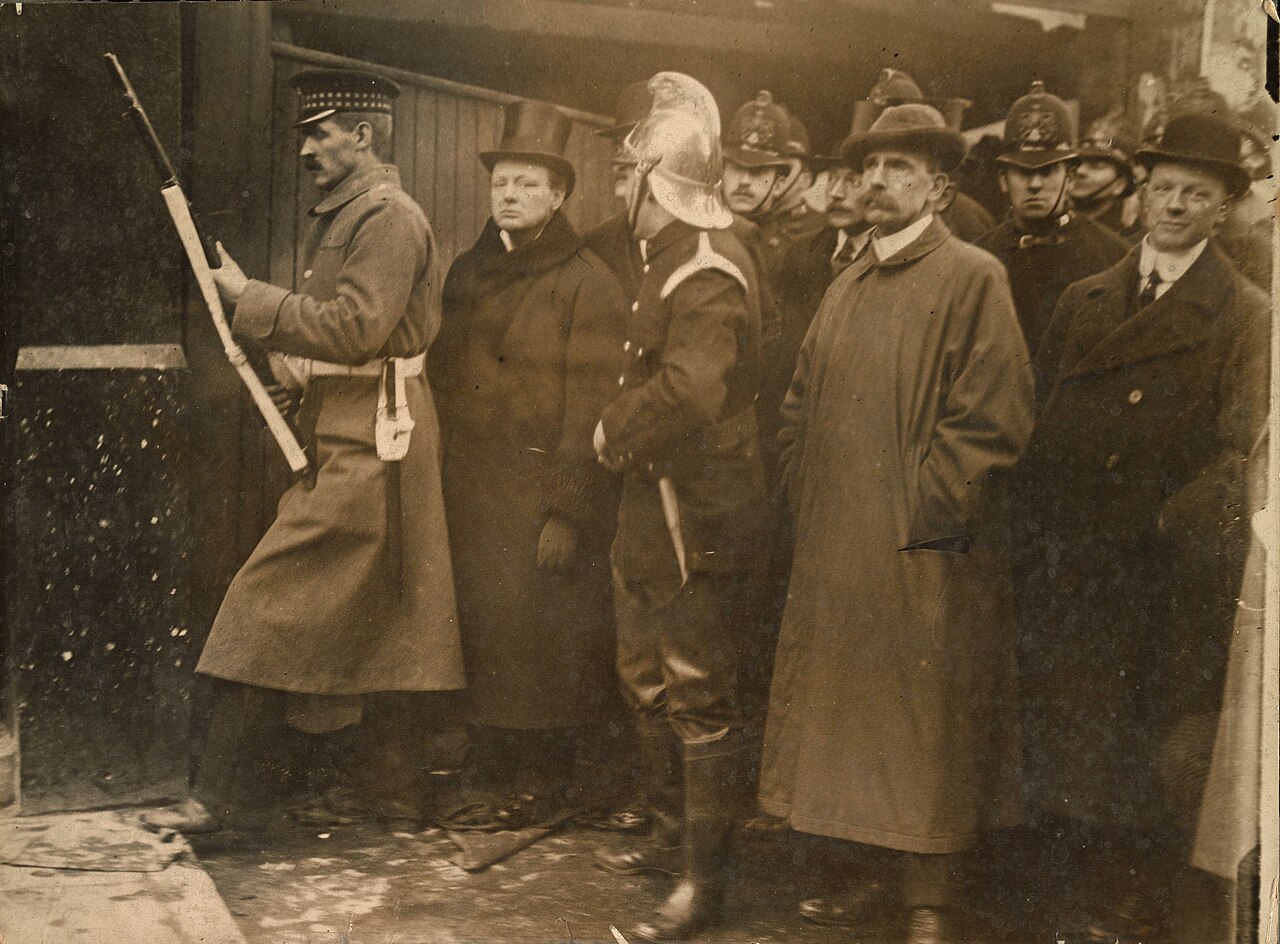




Background: Houndsditch and the robbery
Two weeks before the siege, a botched break‑in at a jeweller's premises in Houndsditch resulted in the deaths of three Metropolitan Police officers and the wounding of others. That incident—commonly referred to as the Houndsditch murders—prompted a large police search for the perpetrators. Investigations suggested the suspects were members of an émigré criminal group with alleged left‑wing or anarchist sympathies; contemporary press and police accounts often described them as foreign‑born, sometimes as Baltic or Eastern European.
The siege at Sidney Street
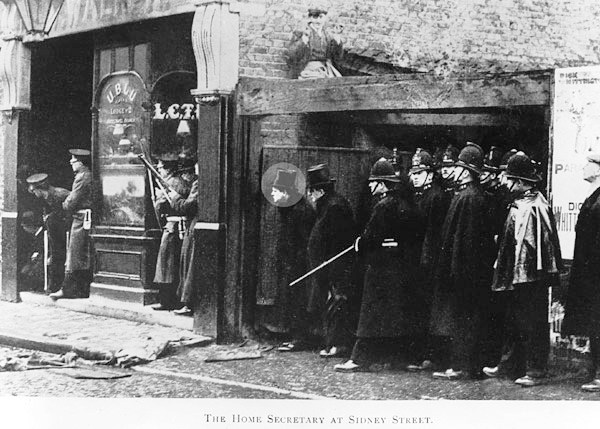
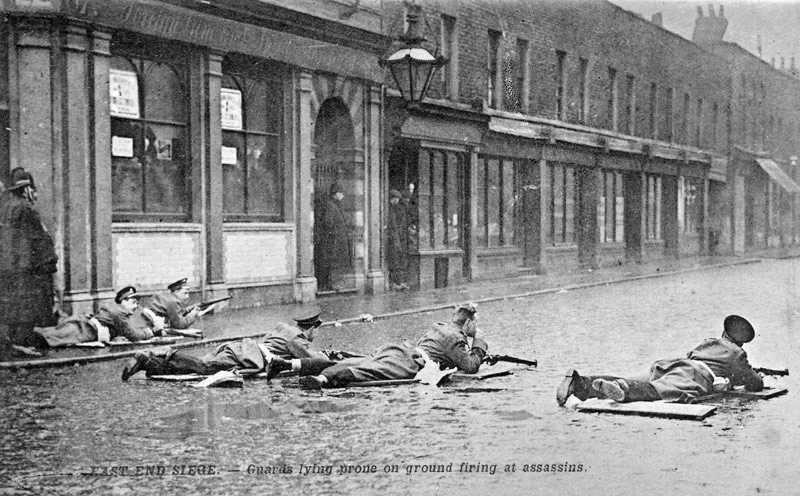
Police traced several suspects to a house on Sidney Street in Stepney. On 3 January, units of the Metropolitan Police, supported by detectives and armed officers, surrounded the building. A firefight ensued between the occupants and the officers. The standoff lasted several hours and became a public spectacle, with crowds gathering nearby. During the engagement a fire broke out in the property; by its end two of the suspects and one fireman had died. The identity of the gang's leader remained uncertain—newspapers named the elusive figure "Peter the Painter" (Peter Piatkow in some reports), but historians continue to debate whether any single person matched that label.
Key facts
- Date: 3 January 1911.
- Location: Sidney Street, Stepney, East End of London (East End).
- Preceding event: Houndsditch jewellery burglary that left three policemen dead.
- Casualties at the siege: two suspects killed and one fireman killed; several officers and bystanders were wounded.
Aftermath, inquiry and public reaction
The siege provoked intense public debate about policing, public order and immigration. There were inquiries into how the situation was handled and criticism in some quarters of the police response. The event also attracted political scrutiny: the Home Secretary at the time visited the scene, an action that generated commentary about ministerial involvement in policing decisions. Courts later tried some suspects connected with the Houndsditch affair; others escaped, disappeared, or had uncertain fates, which has contributed to the enduring mystery around the gang's composition and leadership.
Historical significance
Beyond its immediate human cost, the Siege of Sidney Street has been remembered as a flashpoint in Edwardian Britain. It highlighted tensions over urban policing, the challenges of dealing with heavily armed criminals, and anxieties about immigrant communities and radical politics. The episode has been examined in histories of policing and popular press of the period and continues to be cited in discussions of policing policy, media coverage of violence, and the cultural memory of London's East End. For contemporary summaries and archival materials see further reading.
Note: Some details—particularly the exact identities and fates of certain suspects, and the extent of any organized anarchist links—remain disputed or uncertain in the historical record, and have been the subject of ongoing research.
Questions and answers
Q: What was the Siege of Sidney Street?
A: The Siege of Sidney Street was a gunfight that took place in London's East End on 3 January 1911.
Q: What led to the Siege of Sidney Street?
A: The Siege of Sidney Street occurred after a failed jewellery robbery, known as the Houndsditch murders, two weeks earlier in which three policemen were killed and others were wounded.
Q: Who were the gang involved in the Siege of Sidney Street?
A: The gang involved in the Siege of Sidney Street were international anarchists led by Peter Piatkow, a.k.a. "Peter the Painter", although it is still unclear who their actual leader was.
Q: Where did the Siege of Sidney Street take place?
A: The Siege of Sidney Street took place at a house in Sidney Street.
Q: How did the Siege of Sidney Street end?
A: The Siege of Sidney Street ended in a fire that killed one fireman and two robbers.
Q: What was the fate of the other members of the gang and its leader after the Siege of Sidney Street?
A: The fates of other members of the gang and its leader are unknown.
Q: When did the Siege of Sidney Street take place?
A: The Siege of Sidney Street took place on 3 January 1911.
Related articles
Author
AlegsaOnline.com Siege of Sidney Street (Battle of Stepney), London, 1911 Leandro Alegsa
URL: https://en.alegsaonline.com/art/90254