
Siberian crane (Grus leucogeranus)
A critically endangered, long-distance migratory crane with nearly all-white plumage. Three main populations use distinct flyways between Siberian breeding grounds and wintering wetlands in China, India, and Iran.
The Siberian crane (Grus leucogeranus) is a distinctive, nearly all-white member of the crane family, notable for its long neck, long legs and a red facial patch. Classified as critically endangered, the species is monitored internationally because of its small, fragmented populations and strict dependence on wetlands. For a general species overview see the species account.
Image gallery
9 Images


Appearance and behaviour
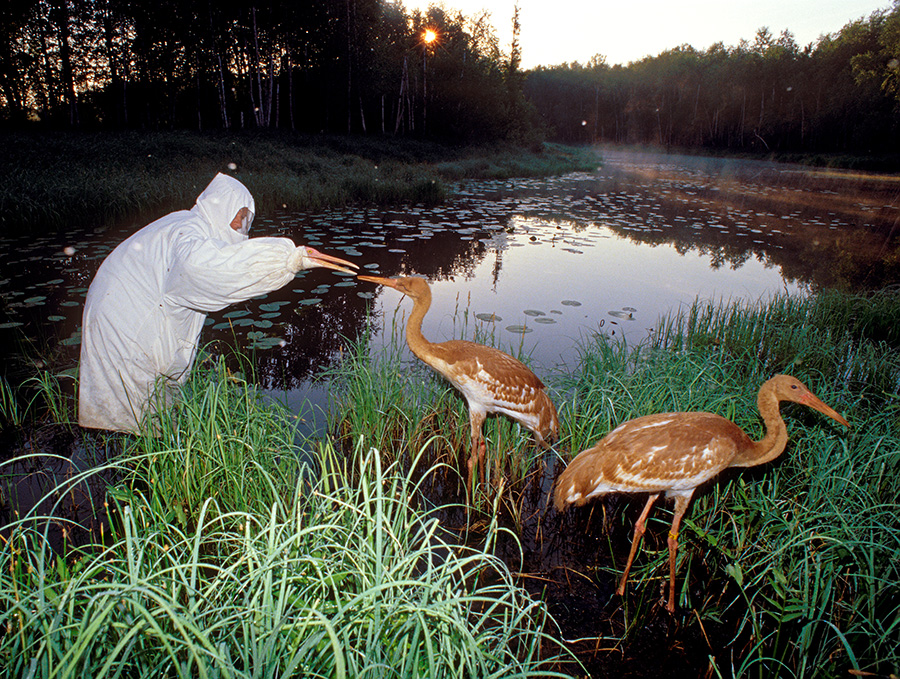
Adult birds are predominantly white with contrasting black primary feathers visible in flight; juveniles show dusky markings. They are long‑legged and long‑necked, with a loud, tremulous call typical of cranes. Siberian cranes form long‑term pair bonds during the breeding season and build shallow nests on tundra or marsh islands. Their social structure, courtship dances and vocalizations align them with other members of the crane family.
Range and migration
Breeding takes place on arctic and subarctic wetlands in Siberia. The species is traditionally divided into three main groups with separate flyways: the eastern group migrates from eastern Siberia to winter in parts of China, the central group historically traveled from western Siberia toward wintering grounds in India, and a western group used wetlands farther west, including sites in Iran. These long-distance migrations rely on a chain of stopover wetlands along each route.
Habitat and diet
Siberian cranes depend on shallow freshwater wetlands — tundra pools at breeding sites and lakes, marshes and floodplains at stopovers and wintering areas. Their diet includes aquatic plants, roots and tubers, seeds, and small aquatic animals; they feed by probing and gleaning in soft substrates.
Threats and conservation
- Wetland loss and degradation from drainage, agricultural conversion and water diversion.
- Illegal hunting and disturbance along migration corridors and at wintering sites.
- Collisions with power lines and reduced availability of safe stopover habitats.
Conservation actions combine habitat protection and restoration, legal protection, captive breeding and reintroduction, satellite tracking and international cooperation to safeguard flyways. Many initiatives involve local communities and cross‑border agreements to maintain the chain of wetlands cranes require.
Notable facts
The Siberian crane is an emblematic wetland species: its plight highlights the broader problem of wetland loss across Eurasia. While some captive and reintroduction programs have had localized success, recovery depends on protecting key breeding, staging and wintering sites and reducing human threats along its migration routes.
Further reading and resources: species account, crane family overview, regional information on Siberia, China wetlands, and historical records for India.
Questions and answers
Q: What is the Siberian crane?
A: The Siberian crane is a type of crane that is critically endangered.
Q: How many groups of Siberian cranes are there?
A: There are three groups of Siberian cranes.
Q: Where does the eastern group of Siberian cranes migrate to?
A: The eastern group of Siberian cranes migrates from eastern Siberia to China.
Q: Where does the central group of Siberian cranes migrate to?
A: The central group of Siberian cranes migrates from western Siberia to India.
Q: Where does the western group of Siberian cranes migrate to?
A: The western group of Siberian cranes migrate from western Russia to Iran.
Q: Why are Siberian cranes critically endangered?
A: Siberian cranes are critically endangered due to habitat loss and hunting.
Q: What is another name for the Siberian crane?
A: The Siberian crane is also known as the Siberian white crane or snow crane.
Related articles
Author
AlegsaOnline.com Siberian crane (Grus leucogeranus) Leandro Alegsa
URL: https://en.alegsaonline.com/art/90161
Sources
- iucnredlist.org : "Grus leucogeranus"
- savingcranes.org : "Siberian Crane"
- birdlife.org : "Siberian Crane (Grus leucogeranus)"
- birdbase.hokkaido-ies.go.jp : "Siberian Crane"
- npwrc.usgs.gov : "The Cranes"