
Short-term memory: overview, characteristics, and significance
Short-term memory is the brain's temporary store for information held for seconds to about a minute. It has limited capacity, interacts with working memory, and is important for everyday tasks and clinical assessment.
Overview
Short-term memory refers to the mind's ability to hold a small amount of information in an accessible state for a short period. Everyday examples include holding a phone number long enough to dial it or remembering the last few words of a sentence while finishing a thought. These brief holdings depend on active neural processes in the brain systems that maintain information without permanent storage.
Image gallery
1 Image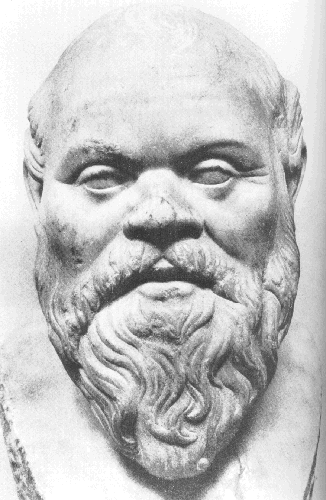
Characteristics and components
Short-term memory is limited by both duration and capacity. Information typically decays within seconds unless actively rehearsed. Capacity is often described in terms of items or chunks — a commonly cited rule is "seven plus or minus two," though chunking and strategy can change how much can be handled. Short-term memory overlaps with the concept of working memory, which emphasizes manipulation as well as storage.
Working memory model
Modern accounts view short-term storage as part of a multi-component working memory system. Key components include:
- Phonological loop: holds verbal and auditory information.
- Visuospatial sketchpad: stores images and spatial layouts.
- Central executive: directs attention and coordinates subsystems.
These components help explain differences in how numbers, words, and visual patterns are temporarily retained.
How it differs from long-term memory
Short-term memory is temporary and fragile; long-term memory refers to information consolidated for prolonged retention. Transfer to long-term stores usually requires encoding processes such as rehearsal, meaningful association, or repeated exposure. Interference and lack of rehearsal prevent many short-lived items from becoming long-term memories.
Importance, testing, and clinical relevance
Short-term memory supports reasoning, comprehension, and learning. Psychologists assess it with tasks like digit span and n-back tests. Impairments can occur with aging, attention disorders, head injury, or neurodegenerative disease; clinical evaluation helps distinguish temporary lapses from pathological memory loss. For further reading on mechanisms and applied tests see short-term memory resources.
Questions and answers
Q: What is short-term memory?
A: Short-term memory is the ability to keep information in mind for a short amount of time.
Q: What is an example of short-term memory?
A: Remembering a phone number long enough to find a piece of paper is an example.
Q: How long does the brain keep information in its short-term memory?
A: The brain keeps information in its short-term memory for a small period of time, which is usually some seconds.
Q: What is the opposite of short-term memory?
A: The opposite of short-term memory is long-term memory, which is where things are stored in the brain for a long time.
Q: Can items stored in long-term memory be recalled later?
A: Yes, items stored in long-term memory may be recalled later, but there may also be difficulty recalling them.
Q: Why is short-term memory important?
A: Short-term memory is important because it allows us to carry out tasks in the present moment, like remembering a phone number, without needing to keep that information in our long-term memory.
Q: How does short-term memory differ from long-term memory?
A: Short-term memory differs from long-term memory in terms of the duration of the memory retention. Short-term memory retains information for a very short period of time, while long-term memory retains information for much longer.
Related articles
Author
AlegsaOnline.com Short-term memory: overview, characteristics, and significance Leandro Alegsa
URL: https://en.alegsaonline.com/art/90000
Sources
- doi.org : 10.1016/S0022-5371(75)80045-4
- doi.org : 10.1037/1196-1961.50.4.408
- doi.org : 10.1016/S1364-6613(00)01538-2
- doi.org : 10.1037/0033-295X.112.1.3
- doi.org : 10.1037/h0043158
- doi.org : 10.3758/BF03198482
- doi.org : 10.1080/13607863.2012.674487