
Short-beaked echidna (Tachyglossus aculeatus)
Encyclopedia entry on the short‑beaked echidna: appearance, biology, distribution, reproduction and conservation of this spiny, egg‑laying monotreme of Australia and New Guinea.
Overview
The short‑beaked echidna (Tachyglossus aculeatus) is a distinctive egg‑laying mammal commonly called the spiny anteater. It is the only species in its genus and one of the four extant echidna taxa; it combines mammalian traits (hair, lactation) with primitive features shared by monotremes. The animal is notable for its dense fur interspersed with hollow spines, an elongated beaklike snout, and specialised foraging adaptations.
Image gallery
10 Images



Classification and related taxa
This species is treated in field guides and taxonomic accounts as one of the principal echidna lineages; for checklists and taxonomic details see species lists and general summaries on echidna overviews. The common name derives from its diet and appearance rather than a close relation to true anteaters.
Physical characteristics
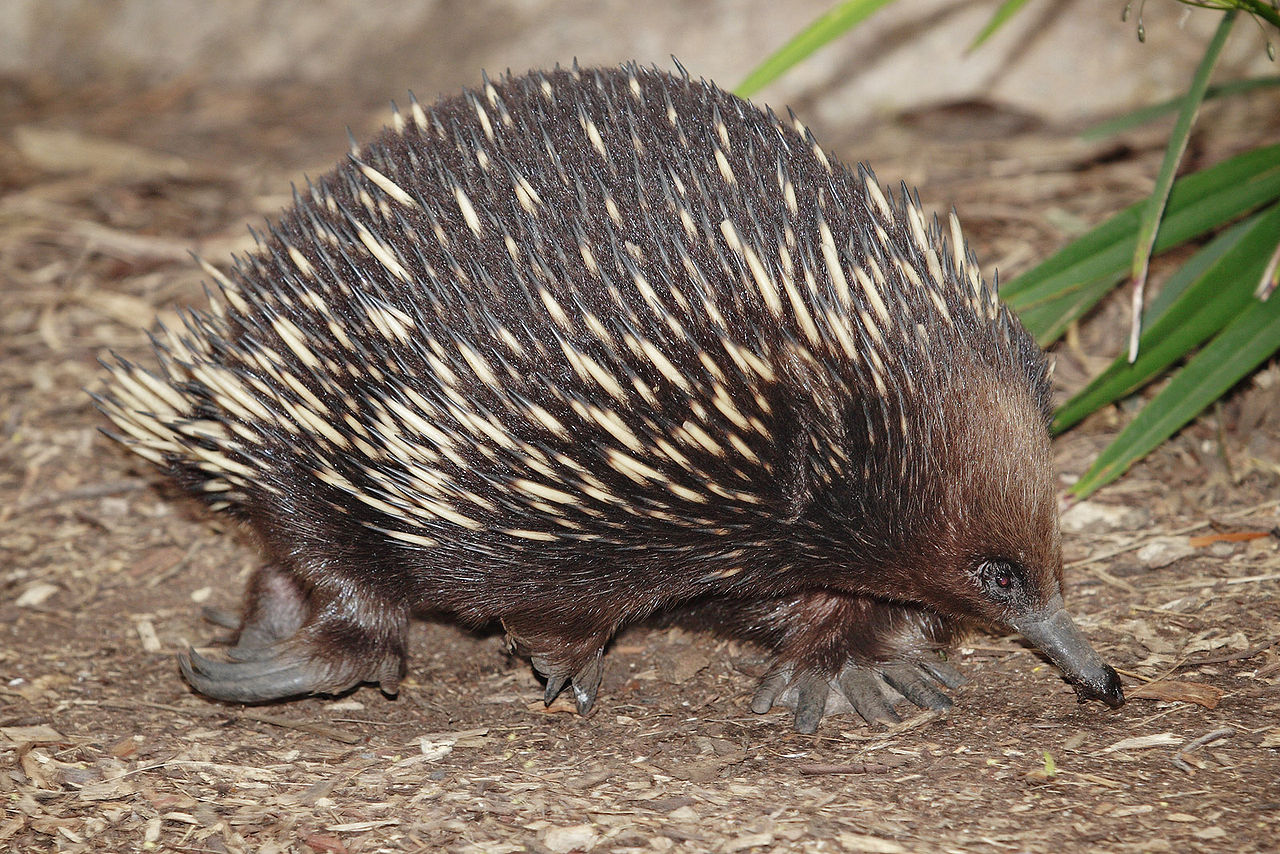
Adult short‑beaked echidnas are robust, low to the ground, and covered with a mixture of coarse fur and protective spines. The long tubular snout contains electroreceptors and tactile sensors that help locate prey. The tongue is long, sticky and rapidly protrusible, allowing the echidna to capture ants and termites efficiently. Limbs are strong and equipped with large claws for digging into soil, rotting logs and insect nests.
Physiology and thermoregulation
As monotremes, echidnas display several unusual physiological traits. They produce milk but lack nipples; milk is secreted onto specialized patches of skin. Echidnas have a low and variable body temperature compared with most placental mammals, and they can enter short periods of torpor to conserve energy in cold or dry conditions. Reproductive and metabolic cycles are adapted to seasonal food availability in many regions.
Diet and feeding behaviour
The short‑beaked echidna feeds primarily on social insects. Its common name, spiny anteater, reflects its diet of ants and termites. While foraging it uses the snout to probe and the sticky tongue to gather prey; field accounts describe the fur in relation to camouflage and insulation (fur description) and the spines as modified hairs providing defence (spine structure).
Distribution and habitat
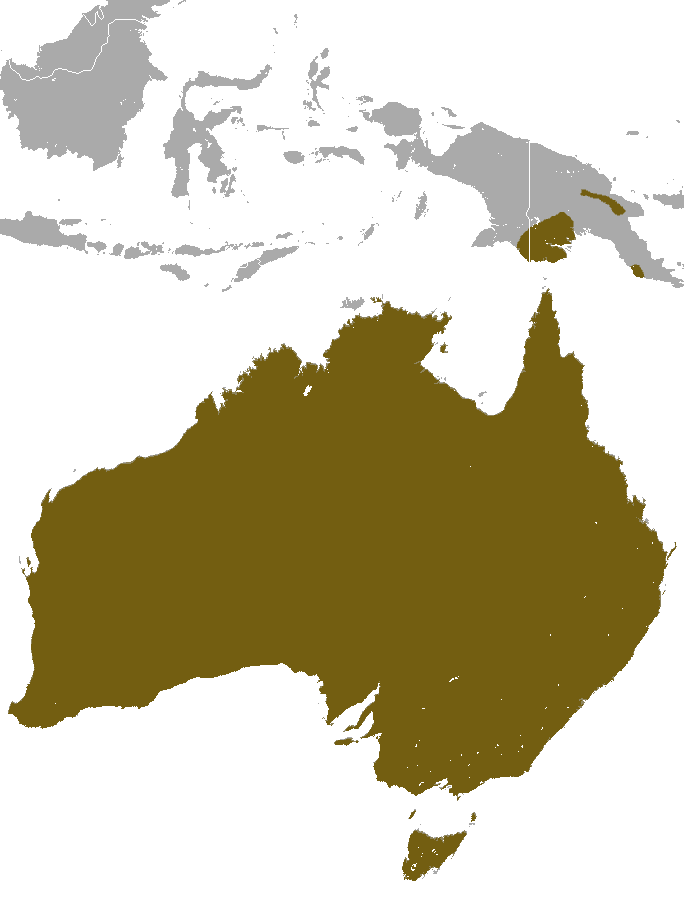
Short‑beaked echidnas are widely distributed across mainland Australia and occur in coastal and upland parts of southwestern New Guinea. They occupy diverse environments including forests, woodlands, grasslands, semi‑arid zones and alpine areas. Their adaptability allows them to persist in both remote and human‑altered landscapes.
Reproduction and life cycle
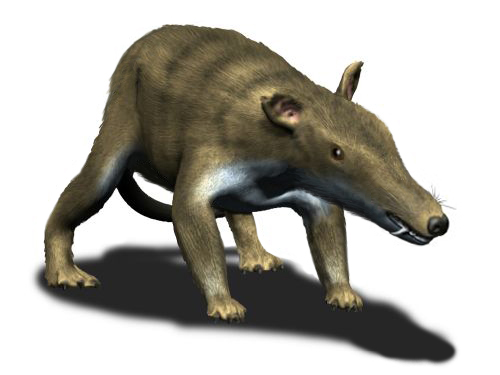
Like other monotremes, the short‑beaked echidna lays a single, leathery egg which the female incubates in a temporary pouch‑like fold on the belly. The hatchling, called a puggle, is altricial and remains in the pouch until spines begin to emerge. The species shares reproductive characteristics with other monotremes; it lays eggs and is commonly compared with the platypus in accounts about monotremes and their evolution.
Conservation status and threats
Across much of its range the short‑beaked echidna is not currently considered globally threatened and is often described as relatively secure due to its broad distribution and generalist habits. Nevertheless, local declines occur where animals face hunting, habitat modification and introduced predators. Some references note the species is not threatened with extinction at a global scale, while also documenting regional pressures such as hunting, habitat loss from land clearing and development, and impacts from introduced species.
Interactions with people and research
Echidnas are of interest to naturalists and researchers for their unusual biology and long evolutionary history. They frequently appear in wildlife education, rehabilitation efforts and citizen science projects. Human activities that reduce habitat connectivity or increase vehicle traffic can raise mortality; mitigation measures include habitat protection, public awareness and safe road designs where echidnas are common.
Further reading and resources
- Taxonomic lists and regional checklists: species lists.
- General overviews of echidnas and monotremes: echidna overview.
- Feeding ecology and diet reports: ants and termites.
- Descriptions of fur and external anatomy: fur description, spine structure.
- Reproductive biology and comparisons with other monotremes: egg laying, monotreme biology.
- Distributional information for Australia and New Guinea: Australia, New Guinea.
- Conservation status and regional threats: global status, hunting, habitat loss, introduced species.
Questions and answers
Q: What is the short-beaked echidna?
A: The short-beaked echidna is a species of echidna and the only member of its genus.
Q: Why is it called the spiny anteater?
A: It is called the spiny anteater because it eats ants and termites, and is covered in fur and spines.
Q: How does the echidna catch its prey?
A: The echidna catches its prey at a great speed using a special nose (snout) and tongue.
Q: How does the echidna reproduce?
A: The echidna lays eggs like other monotremes.
Q: Where does the echidna live?
A: The echidna lives throughout Australia and in coastal and highland regions of southwestern New Guinea.
Q: Is the echidna threatened with extinction?
A: The echidna is not threatened with extinction, but human activities such as hunting, habitat destruction, and the introduction of foreign predators and parasites have reduced its range.
Q: Is the echidna a native mammal of Australia?
A: Yes, the echidna is the most widespread native mammal of Australia.
Related articles
Author
AlegsaOnline.com Short-beaked echidna (Tachyglossus aculeatus) Leandro Alegsa
URL: https://en.alegsaonline.com/art/89992
Sources
- departments.bucknell.edu : "Order Monotremata"
- google.com : Mammal Species of the World: A Taxonomic and Geographic Reference
- worldcat.org : 62265494
- iucnredlist.org : "Tachyglossus aculeatus"
- doi.org : 10.2305/IUCN.UK.2016-2.RLTS.T41312A21964662.en
- ncbi.nlm.nih.gov : PMID 2566425
- deh.gov.au : Tachyglossidae
- species.wikimedia.org : Tachyglossus aculeatus