
Shooting (firearms, archery, artillery and projectile use)
Comprehensive overview of shooting: the use of firearms and other projectile weapons in sport, hunting, armed conflict and recreation, including types, history, skills and safety.
Shooting describes the act of discharging a device that launches a projectile. The term covers a wide range of tools and contexts: small arms such as rifles and shotguns, handguns, as well as platforms that fire larger munitions. It also applies to devices that propel non‑gun projectiles, for example bows and crossbows. In broader military or engineering settings the same word is used for the operation of artillery, or the launch of rockets and missiles. The basic idea is the controlled release of a projectile to travel toward a target.
Image gallery
10 Images



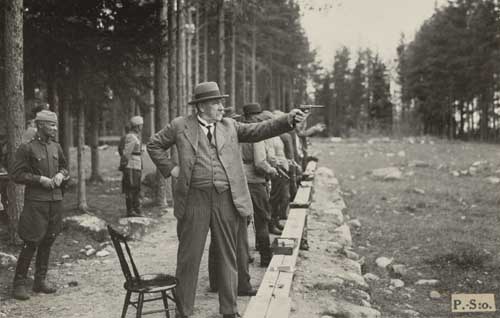
Characteristics and types
Shooting modalities differ by mechanism, range, and intended effect. Firearms use expanding gases to propel a bullet; shotguns disperse multiple pellets for short‑range targets. Archery relies on stored elastic energy in a bow. Specialized systems vary in accuracy, rate of fire, and required ammunition. The word "projectile" groups bullets, shot, arrows and engineered warheads under a single concept: an object deliberately launched toward a point of impact (projectile).
Contexts and uses
- Recreation and sport: Target shooting and competitive disciplines are organized at club, national and international levels; practical, precision and clay target events test different skills. Shooting is also an Olympic sport.
- Hunting: Many people engage in shooting to pursue wild game; equipment and techniques vary by quarry and environment (hunting).
- Military and law enforcement: Shooting in operations ranges from individual marksmanship to coordinated use of heavy weapons in combat.
- Engineering and industry: Controlled firing of rockets and missiles is part of aerospace and defense testing.
History and development
The practice of shooting predates firearms: early cultures used thrown spears, bows and crossbows to hunt and fight. The invention of gunpowder and the subsequent development of firearms and artillery transformed tactics, range and lethality. Over centuries, improvements in metallurgy, propellants, sights and ammunition increased reliability and precision, enabling both military applications and the emergence of target sports.
Training, safety and skill
Shooting demands practice, attention to technique and strict safety measures. Common training focuses on stance, breath control, sight alignment, trigger control and ammunition handling. Safety protocols—such as treating every weapon as loaded, keeping the muzzle pointed in a safe direction, and using eye and ear protection—are universal. Proficiency levels range from casual shooters to specialists: a highly skilled shooter may be called a marksman or, in military contexts, a sniper when trained in concealment and long‑range engagement.
Notable distinctions
- Sport vs. combat: Competitive shooting emphasizes score and repeatability; combat shooting prioritizes speed, cover and mission objectives.
- Short vs. long range: Different weapons and optics are optimized for particular distances and target types.
- Regulation and culture: Laws and social attitudes about shooting vary widely by jurisdiction and influence who can shoot, where, and with what equipment.
Shooting remains a multifaceted activity with historical roots, technical diversity, and significant cultural and legal dimensions. Whether encountered as a sport on ranges and in arenas, as a means of subsistence in hunting, or as a capability in military settings, the principles of accuracy, control and safety are constant.
Questions and answers
Q: What is shooting?
A: Shooting is the act of firing a projectile from weapons like rifles, shotguns, bows, or crossbows. It can also include the firing of artillery, rockets, and missiles.
Q: Who is a marksman?
A: A marksman is someone who is very skilled at shooting.
Q: Where can shooting take place?
A: Shooting can take place in a shooting range, in the field during hunting, in shooting sports, or in combat.
Q: Is shooting an Olympic sport?
A: Yes, shooting is indeed an Olympic sport.
Q: What are some weapons that can be used for shooting?
A: Rifles, shotguns, bows, and crossbows are some weapons that can be used for shooting. Artillery, rockets, and missiles can also be used.
Q: What is the difference between shooting at a shooting range and shooting in the field during hunting?
A: Shooting at a shooting range is done in a controlled environment, while shooting in the field during hunting is done in a natural environment. The latter usually involves more movement and unpredictability.
Q: Can shooting be non-lethal?
A: Yes, shooting can be non-lethal if non-lethal ammunition is used. This is often the case in shooting sports or when practicing at a shooting range.
Related articles
Author
AlegsaOnline.com Shooting (firearms, archery, artillery and projectile use) Leandro Alegsa
URL: https://en.alegsaonline.com/art/89975