
Shoaling and Schooling: Collective Grouping in Fish
Shoaling and schooling are collective behaviours in fish where individuals form groups for social, defensive, foraging, and hydrodynamic benefits. Schooling denotes coordinated motion; shoaling simply denotes aggregation.
Overview
Shoaling and schooling are related forms of social behaviour seen in many fish species. Broadly, any assemblage of fish that remains together for social reasons is called a shoal; when that assemblage swims in a coordinated way with aligned headings and synchronized turns it is called a school. These patterns are a subset of wider collective animal behaviour and are exhibited by both small reef fishes and large pelagic species, often changing with life stage, season and local conditions. Observers have distinguished shoaling and schooling to emphasize whether the group's primary attribute is proximity or coordinated movement.
Image gallery
10 Images
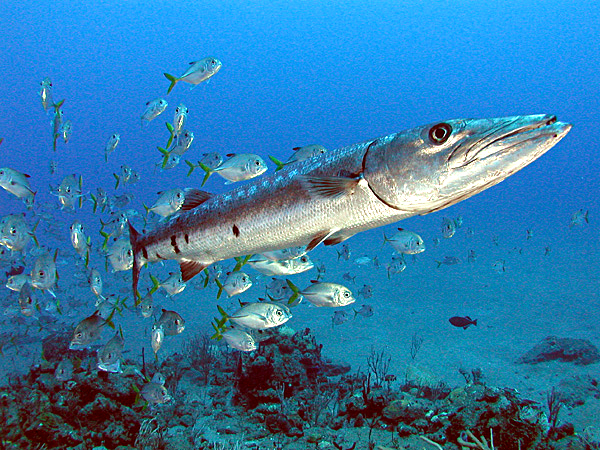


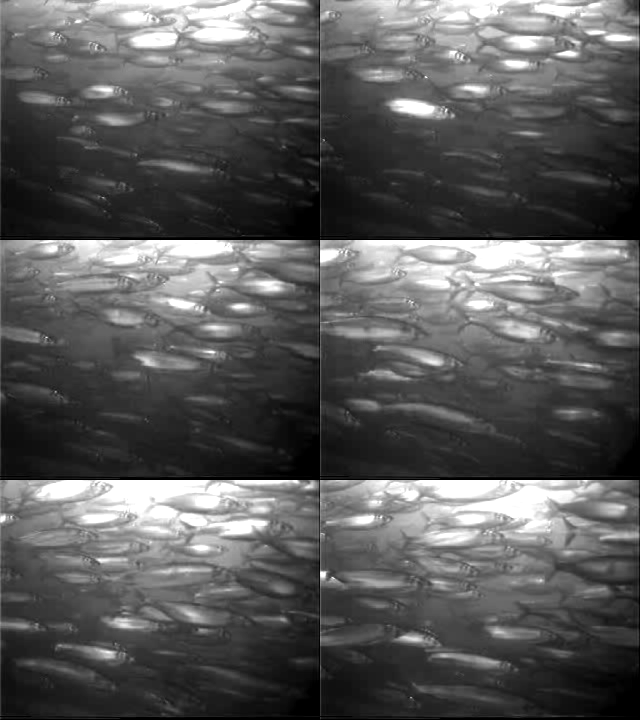


How groups are organised
At the individual level, schooling emerges from simple behavioural rules rather than from central control. Fish use visual cues, the lateral line (a flow-sensitive organ), and occasional tactile interactions to maintain spacing, match heading and avoid collisions. Researchers describe three basic tendencies: attraction (to stay with the group), alignment (to swim in the same direction as neighbours), and repulsion (to avoid crowding). Together these produce a range of group shapes and densities, from loose shoals to tightly polarized schools that turn and accelerate almost as one.
Benefits and ecological role
Shoaling and schooling provide several adaptive advantages. Key benefits include:
- Predator avoidance: Grouping reduces the chance any one individual is taken (dilution effect) and can confuse predators, making target selection harder.
- Improved detection: More eyes and sensors increase the probability of detecting food, danger or mates (the many-eyes effect).
- Foraging efficiency: Groups can locate and exploit patchy food resources more effectively than solitary fish.
- Hydrodynamic savings: Close formation can reduce energy expenditure for some members by taking advantage of flows produced by neighbours.
Fish often prefer shoalmates of the same species, similar size and appearance, healthy individuals, and—when possible—relatives. The "oddity effect" describes the greater predation risk for individuals that stand out in colour or size, which helps explain assortative grouping.
Research history and human relevance
Groups of fish have been noted since antiquity, but modern study combines field observation, laboratory experiments and mathematical modelling. Computational approaches—such as the rule-based "boids" models developed in the late 20th century—show how simple local rules can recreate realistic schooling dynamics. Field studies use tagging, video tracking and sonar to study movements at scale.
Shoaling and schooling matter to fisheries management, conservation and engineering. Large schools support commercial catches and shape marine food webs; they can also be vulnerable to overfishing. Insights from fish schools inspire swarm robotics, autonomous vehicle coordination and algorithms for distributed sensing. For further reading on collective behaviour and fish biology see resources on collective animal behaviour and general information about fish.
Questions and answers
Q: What is schooling and shoaling in fish?
A: Schooling and shoaling is a kind of collective animal behaviour by fish where a group of fish stay together for social reasons, and if they swim in the same direction, it is called schooling.
Q: What are the benefits of shoaling for fish?
A: Fish get many benefits from shoaling including defence against predators, finding food and mates, swimming faster than a lone fish, and recognizing kin.
Q: How many fish shoal all their lives?
A: About one quarter of fish shoal all their lives.
Q: How many fish shoal for part of their lives?
A: About one half of fish shoal for part of their lives.
Q: What kind of shoalmates do fish prefer?
A: Fish generally prefer larger shoals, shoalmates of their own species, shoalmates similar in size and appearance to themselves, healthy fish, and kin (when recognized).
Q: What is the oddity effect in fish shoaling?
A: The oddity effect is when any shoal member which stands out in appearance may be targeted by predators. This may explain why fish prefer to shoal with individuals that resemble themselves.
Q: How does shoaling benefit fish in terms of predator defence?
A: If fish swim in schools, it is less likely any one of them will be eaten, providing defence against predators.
Related articles
Author
AlegsaOnline.com Shoaling and Schooling: Collective Grouping in Fish Leandro Alegsa
URL: https://en.alegsaonline.com/art/89923
Sources
- books.google.com : Behaviour of Teleost Fishes
- savethefish.org : Forage fish
- imr.no : Herring schooling manoeuvres in response to killer whale attacks
- www3.interscience.wiley.com : Body size and shoaling in fish
- springerlink.com : Bioeconomics of schooling fishes: selfish fish, quasi-free riders, and other fishy tales.
- springerlink.com : Preview
- flmnh.ufl.edu : "Marine scientists scratch heads over sardines"
- lifeinthefastlane.ca : "Sardine run shark feeding frenzy phenomenon in Africa"