
Ship's cat
Domestic cats kept aboard vessels for pest control, companionship and superstition; a practice with ancient roots that influenced shipboard life, cargo protection and maritime folklore.
Overview
A ship's cat is a domestic cat that lives on board a sailing vessel, naval ship, merchantman, fishing boat or private yacht. Across many cultures and historical periods, cats were kept at sea primarily for practical reasons such as pest control, but they also served social and symbolic roles. On long voyages a cat could help protect provisions and cargo, reduce the risk of disease spread by rodents, and provide companionship to sailors in small, often difficult living conditions.
Image gallery
10 Images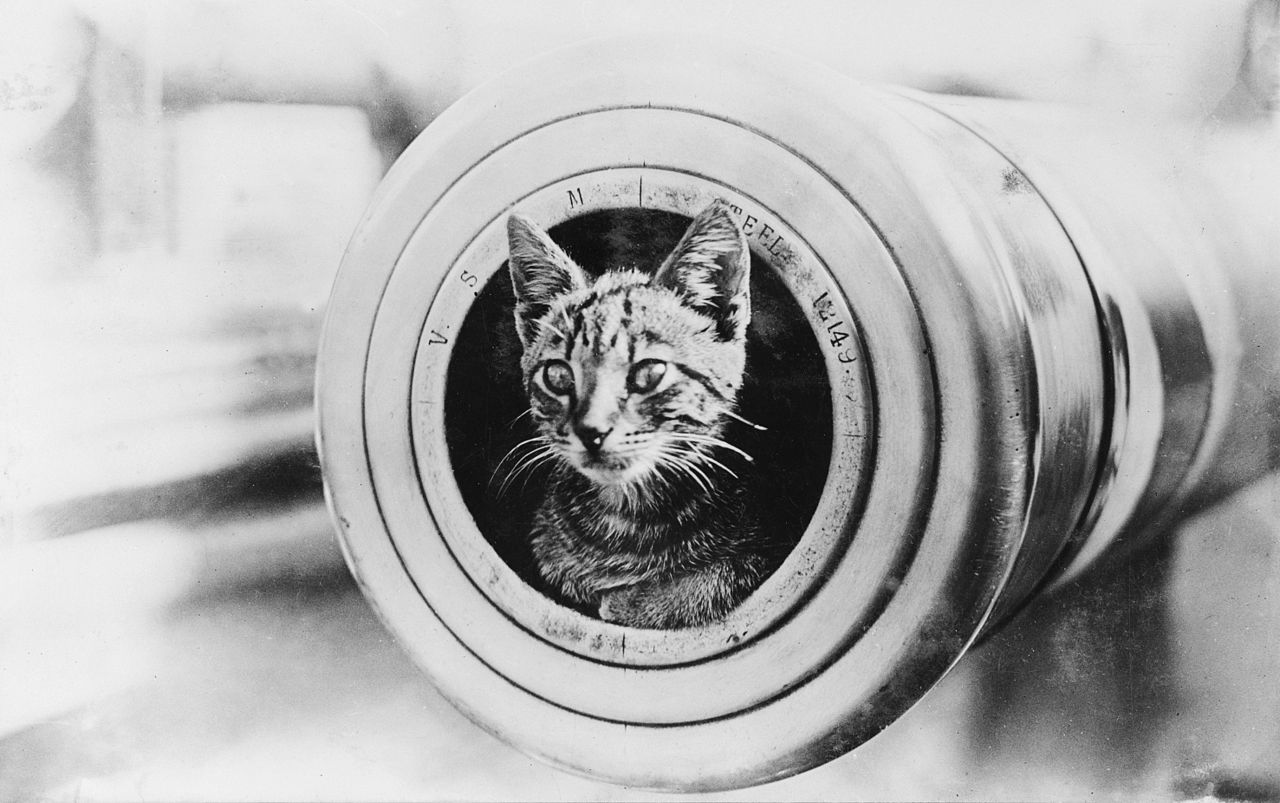


Functions and characteristics
The most reliable function of shipboard cats was to hunt mice and rats, which could damage ropes, woodwork and stored provisions. Rodents eaten or gnawed stored foodstuffs, including grain and other staples, and could also damage sails, cordage and later electrical wiring. By controlling rodent populations, cats reduced economic loss and helped preserve the health of the crew.
Cats are well suited to shipboard life because of their agility, balance and compact size. They adapt readily to confined, moving spaces and can find sheltered spots to sleep. Their presence often changed the social atmosphere on board: many sailors formed strong attachments to animals that became mascots and companions during long and monotonous passages.
Typical duties and care
On many vessels a ship's cat would patrol the hold and galley areas and sleep near the crew quarters or the forecastle. Feeding arrangements varied: some cats were fed from the galley, others scavenged, and some were allocated specific rations by the crew. Care depended on the ship's size, the voyage length and local regulations; veterinary care at sea was usually informal and rudimentary. Crew members often took turns looking after the animal, and the cat's value was judged by its effectiveness in reducing vermin.
History and cultural notes
The practice of keeping cats on ships dates back to antiquity and continued through medieval and modern times. In many maritime cultures cats were commonplace aboard trading vessels and warships because rodents were everywhere and presented an immediate threat to supplies. Historically, sailors developed superstitions and folklore about cats: some believed a cat might bring good luck in navigation or calm storms, while other beliefs warned that mistreating a cat could bring bad luck. Polydactyl cats—those with extra toes—were sometimes prized for their perceived greater skill at catching prey.
Superstitions, welfare and rituals
Shipboard lore included a range of rituals and stories relating to cats. A favorite cat might be treated with ceremony, given a place of honor, or receive a burial at sea if it died. Superstitions varied by region and era; for instance, a cat walking toward the bow was often seen as an omen, and some crews believed cats could sense unseen dangers. At the same time, cultural attitudes shifted over time, and welfare concerns rose with modern understanding of animal care and quarantine rules that govern the movement of pets between countries.
Notable examples and legacy
Individual ship cats have entered maritime lore through stories, paintings and museum displays. Although mechanical pest-control methods and stricter biosecurity measures have reduced the reliance on cats in commercial shipping, the image of the ship's cat remains prominent in literature and popular culture. Smaller vessels, research boats and private yachts continue to keep cats both for companionship and for practical pest control.
Modern practice and regulations
Today, international and national rules on animal transport, quarantine and public health affect how and whether cats can travel with crews. Naval and commercial operators generally follow official rules on biosecurity, vaccination and documentation. Private boat owners and small-crew vessels may still keep cats, but they must observe port and border requirements when entering different countries.
Further information and references
- General overview of shipboard animals
- Historical accounts of animals at sea
- Ancient maritime practices
- Pest control on ships
- Rat and mouse biology
- Damage to ship materials
- Electrical systems and ship safety
- Cargo protection and losses
- Grain and stored food on ships
- Disease transmission by rodents
- Vectors such as fleas and public health
- Historical spread of pandemics
- Sailor life and morale
- Wartime seafaring and animals
Note: Practices have varied widely by era, region and vessel type. Modern regulations, public-health concerns and animal-welfare standards influence whether animals travel with a crew and how they are cared for during voyages.
Questions and answers
Q: What is a ship's cat?
A: A ship's cat is a cat that rides along on a ship.
Q: When did the tradition of having cats aboard ships begin?
A: The tradition of having cats aboard ships dates back to ancient times.
Q: Why were cats carried on ships?
A: Cats were carried on ships primarily to catch mice and rats, which can damage ropes, wooden parts, and electrical wiring of the ship. They also threatened the cargo by eating food meant for the crew and damaging other goods like grain. Additionally, they spread disease which was dangerous for sailors who could be away from home for long periods of time.
Q: How did cats help sailors?
A: Cats offered companionship (friendship), a sense of home and security, and lifted sailors' spirits while they were away from home for long periods - especially in times of war.
Q: What natural ability do cats have that made them suitable for serving on ships?
A: Cats have a natural ability to get used to new surroundings quickly, making them well-suited to serve on ships.
Q: Could rats have been responsible for spreading the Black Death?
A: Yes, rats on ships may have been one of the main reasons why the Black Death spread due to their ability to carry plague through rat fleas.
Related articles
Author
AlegsaOnline.com Ship's cat Leandro Alegsa
URL: https://en.alegsaonline.com/art/89860
Sources
- bruzelius.info : "Sailing Ships"
- purr-n-fur.org.uk : "Simon of HMS Amethyst"
- vetmed.ucdavis.edu : "History of Domestic Cats and Cat Breeds"
- time.com : "Here's How to Predict the Weather Using Your Cat"
- rjerrard.co.uk : Royal Navy
- winstonchurchill.org : "Churchill's Feline Menagerie"
- beworldwise.org : "Ship's cat (Chibbley)" · web.archive.org
- theglobeandmail.com : "Empress of Ireland, 'Canada's Titanic,' finally getting its due after 100 years"
- plimoth.org : "Felix"
- purr-n-fur.org.uk : Famous ships cats and their lives
- picton-castle.com : Chibbley's travels aboard Barque Picton Castle