
Shinty: Scotland’s traditional stick-and-ball game
Shinty is a team sport from the Scottish Highlands played with a curved stick (caman) and a ball. It has Highland roots, governed by the Camanachd Association, and is related to Irish hurling.
Overview
Shinty is a fast, physical team sport that developed in the Scottish Highlands and remains strongest there today. Two sides of twelve players each use a wooden stick called a caman to move and strike a hard ball with the aim of scoring in the opponent’s goal. Organized play follows rules set by the Camanachd Association, and while its strongest base is in the Scottish Highlands, shinty is also played in cities, at universities and by expatriate communities abroad, including enthusiasts in America.
Image gallery
9 Images





Equipment and basic play
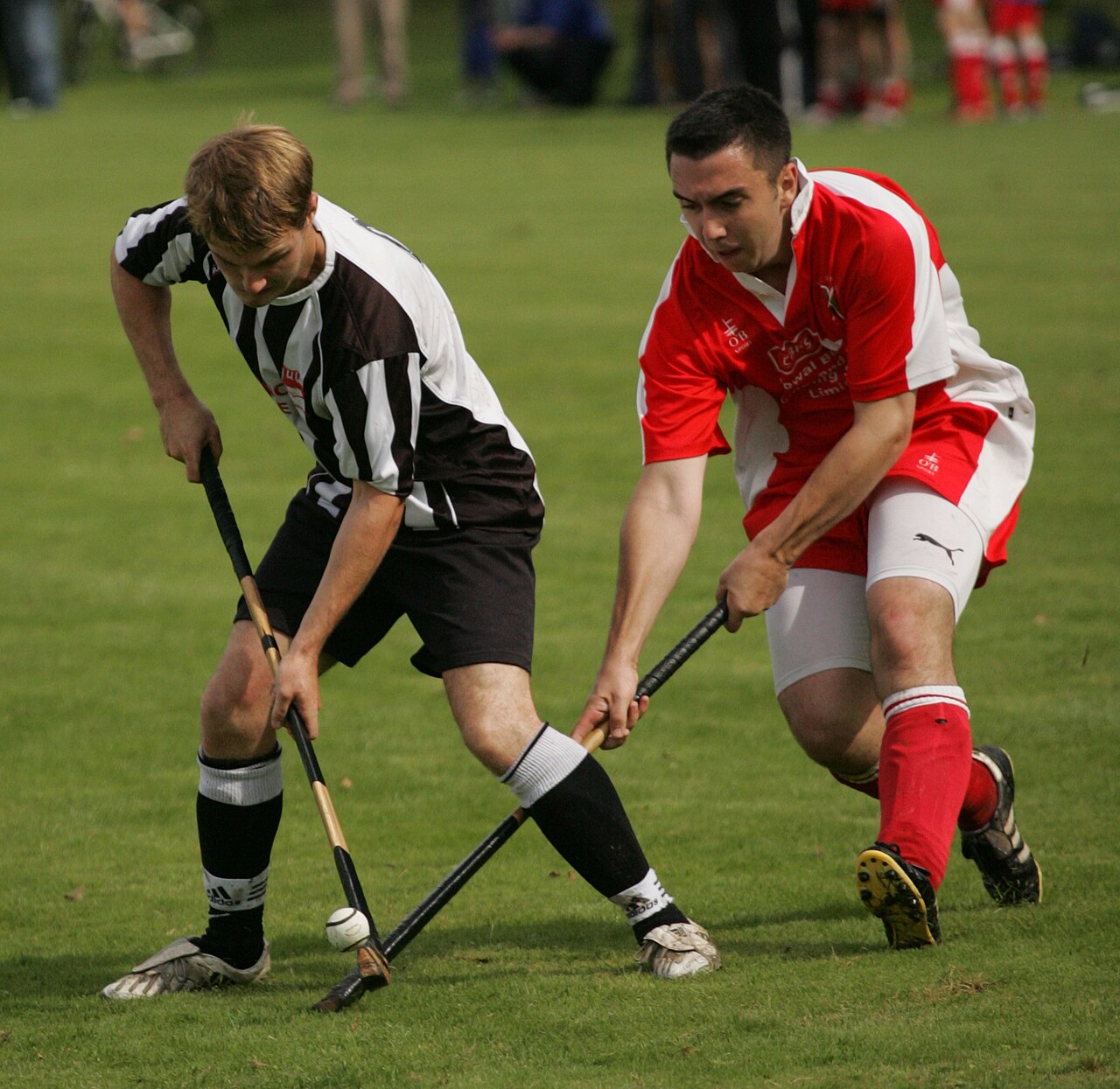
The principal piece of equipment is the caman, a carved stick with a slanted, wedge-shaped head used to strike or control the ball. The ball is small and hard, designed for running along the ground and for hitting at speed. Play takes place on a grass pitch and combines ground play, tackling with the stick and running with the ball in open field situations. Matches emphasize teamwork, quick passing and physical commitment, while rules restrict dangerous play and protect goalkeepers.
Rules and structure
At its core, shinty is straightforward: teams seek to hit the ball into the opposing goal. The sport permits play both on the ground and in the air, although specific actions such as striking from the hand or catching are treated differently than in related games. Play is continuous, with throw-ins, free hits and penalties as methods to restart the game. Governing bodies produce detailed rules about fouls, equipment and match conduct; the Camanachd Association is responsible for national regulations and competitions.
History and development
Shinty has deep roots in Scottish culture and Gaelic tradition. It evolved from ancient stick-and-ball contests played in rural communities and was once widespread across Scotland. Over time the sport became more organized, clubs formed in towns and districts, and formal competitions were established. While its strongest pockets remain the Highlands and island communities, migrations and urban growth led to clubs in larger Scottish cities and to teams formed by expatriates overseas. The mid- to late-19th century saw the development of modern rules and the creation of bodies to administer competitive play.
Uses, competitions and community role
Beyond being a competitive sport, shinty functions as a social and cultural link in Gaelic-speaking areas. Local leagues and national knock-out competitions provide focal points for communities; the top cup competitions attract wide interest among players and supporters. The game is played at all levels — junior, amateur, women’s and university — and youth programs help sustain participation. Clubs often serve as social centres, preserving language and regional identity while offering physical activity and youth development.
Relation to other sports and notable distinctions
Shinty shares a common ancestry with the Irish game of hurling, and composite rules matches between shinty and hurling players are staged periodically to celebrate their shared heritage. Important distinctions exist: hurling and shinty have different approaches to handling the ball, styles of striking and some equipment differences, which shape the character of each game. Internationally, shinty remains modest in scale compared with larger global sports, but it retains a distinct cultural importance within Scotland and among diasporic communities.
- Key features: caman (stick), small hard ball, teams of twelve.
- Governing body: the Camanachd Association sets rules and runs national competitions.
- Community role: strong ties to Highland culture, youth development and local identity.
Questions and answers
Q: What is shinty?
A: Shinty is a traditional game that is mainly played in the Scottish Highlands.
Q: How many players are there in a shinty team?
A: There are 12 players in a shinty team.
Q: What is the stick used in shinty called and where does the name come from?
A: The stick used in shinty is called a "caman" and the name comes from Scottish Gaelic.
Q: What is the objective of shinty?
A: The objective of shinty is to put a ball in the opposing team's net.
Q: Where is shinty played today?
A: Shinty is played mostly in the Scottish Highlands and Highland communities in the big Scottish cities. It is also played in universities and by enthusiasts in America.
Q: Who decides the rules and regulations of shinty?
A: The Camanachd Association decides the rules and regulations of shinty.
Q: Does shinty have any connection with Irish hurling?
A: Yes, shinty has a common ancestor with the Irish game of hurling and hurlers and shinty players sometimes hold internationals.
Related articles
Author
AlegsaOnline.com Shinty: Scotland’s traditional stick-and-ball game Leandro Alegsa
URL: https://en.alegsaonline.com/art/89844