
Shedd Aquarium (John G. Shedd Aquarium) — Chicago public aquarium
Historic indoor public aquarium on Chicago's Museum Campus, opened 1930. Renowned for its early saltwater collection, diverse species, award-winning exhibits, conservation work, and roughly two million annual visitors.
Overview
The Shedd Aquarium, officially the John G. Shedd Aquarium, is a major indoor public aquarium located on Chicago's Museum Campus along Lake Michigan. Opened on May 30, 1930, it became notable as one of the first inland aquaria to maintain a permanent saltwater collection. The institution is named for John G. Shedd, a Chicago businessman whose endowment helped establish the facility. The building sits near other cultural institutions, including the Field Museum, and contributes to the lakefront's concentration of museums and research centers.
Image gallery
10 Images


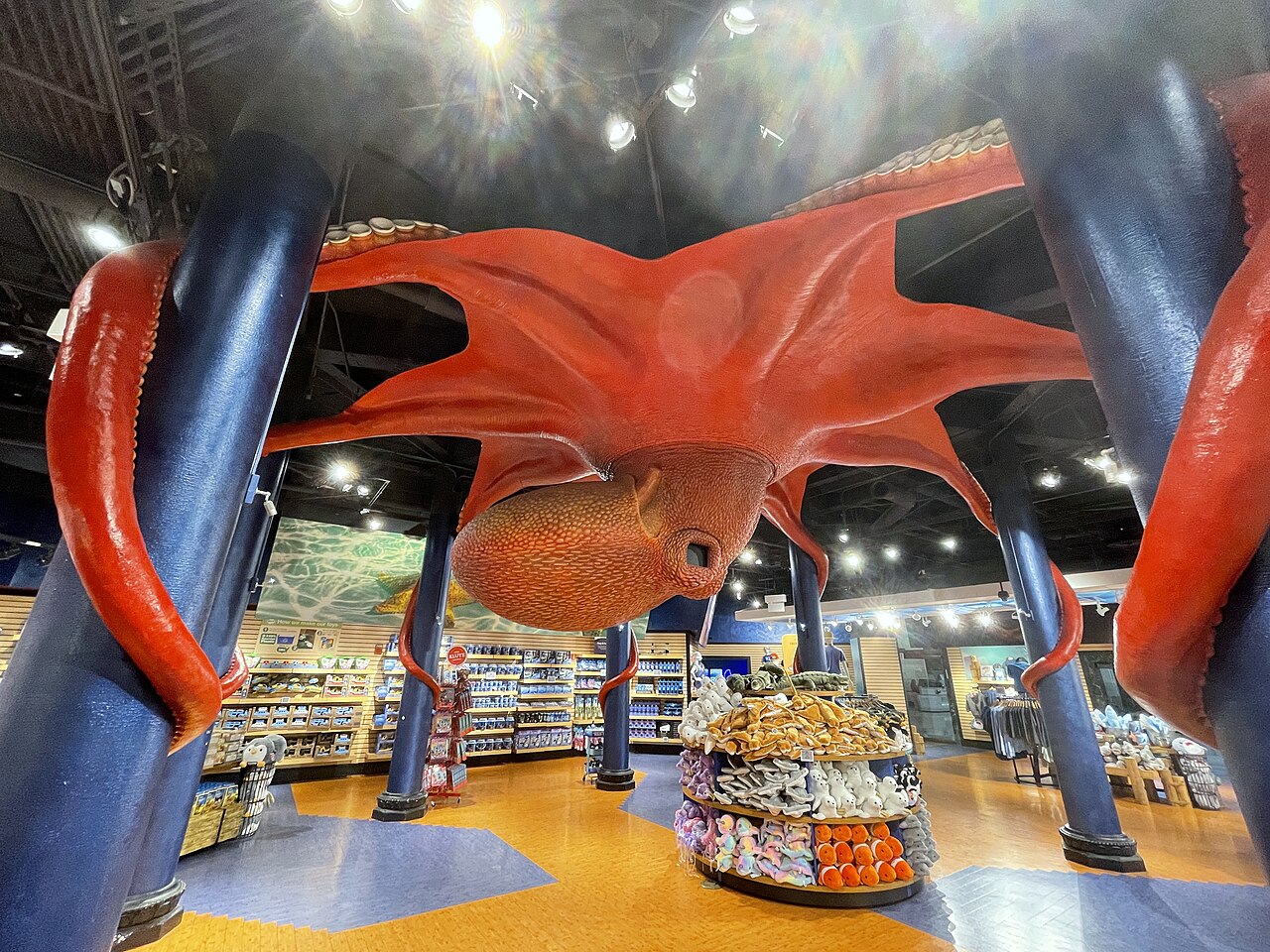

Collections and habitats
Shedd houses a large and diverse living collection that has included tens of thousands of individual animals representing roughly 1,500 species. The collections span freshwater and marine fishes, invertebrates, amphibians, reptiles, birds, and marine mammals. Exhibits are organized to reflect major aquatic environments, with galleries that simulate coral reefs, tropical rivers, the Caribbean and Pacific seas, and the open ocean. Large tanks, touch exhibits and enclosed habitats are designed to provide welfare-appropriate care and to illustrate ecological relationships.
Permanent and special exhibitions
The aquarium combines long-term galleries with rotating and seasonal exhibits. Permanent galleries have focused on freshwater ecosystems such as the Amazon and Great Lakes, reef systems populated by colorful fishes and invertebrates, and habitats for marine mammals. Special exhibits have presented immersive themes and new interpretive approaches; several have been recognized by professional organizations for design and educational impact. Visitors can experience feeding demonstrations, animal-training sessions, and interpretive talks throughout the day.
- Amazon and freshwater river habitats — species adapted to riverine conditions and seasonal floodplain cycles.
- Coral reef and tropical marine galleries — reef fishes, corals and associated invertebrates.
- Marine-mammal habitats and performance spaces — where applicable, used for public education about pinnipeds and cetaceans.
History, architecture and development
Since its opening in 1930, Shedd Aquarium has been an important cultural and scientific institution in the United States Midwest. For many decades it was the largest indoor aquarium by water volume until larger modern facilities opened elsewhere, notably the Georgia Aquarium in 2005. Over time the institution has modernized its exhibits, updated animal-care standards and expanded its educational offerings while preserving the historic character of the original building and site in downtown Chicago, Illinois.
Conservation, research and education
Beyond public display, Shedd engages in conservation initiatives and research partnerships focused on aquatic ecosystems and species conservation. Programs include captive-breeding efforts for vulnerable species, water-quality research, and outreach to schools and community groups. Educational programming ranges from school visits and camps to behind-the-scenes tours and adult learning events, all designed to promote stewardship of aquatic environments and to make science accessible to diverse audiences.
Visitation and public role
The aquarium routinely attracts around two million visitors a year and has been cited as one of Chicago's most popular cultural attractions. Its lakeside location and proximity to other Museum Campus institutions make it a frequent stop for tourists and local families. Accessibility services, seasonal programming, and special events aim to welcome a broad public while communicating conservation messages and research findings.
Awards and distinctions
Shedd has received recognition for exhibit design and education from professional associations. Its historical role as an inland aquarium with a long-term saltwater collection and its continuing work in animal care, interpretation and conservation contribute to its reputation. The aquarium balances public engagement, scientific inquiry and stewardship in its ongoing mission.
For up-to-date information on hours, tickets and current exhibits, visitors are encouraged to consult official institutional resources and partner information pages prior to visiting. The Shedd Aquarium remains a significant cultural and scientific landmark on Chicago's lakefront, linking public education with active conservation work.
Questions and answers
Q: What is the Shedd Aquarium?
A: The Shedd Aquarium is an indoor public aquarium located in Chicago, Illinois in the U.S.
Q: When did the Shedd Aquarium open?
A: The Shedd Aquarium opened on May 30, 1930.
Q: How many fish does the aquarium have?
A: The aquarium has more than 25,000 fish.
Q: What was the Shedd Aquarium known for when it first opened?
A: The Shedd Aquarium was known for being the first inland aquarium with a permanent saltwater fish collection.
Q: Who is the Shedd Aquarium named after?
A: The Shedd Aquarium is named after businessman John G. Shedd.
Q: How many annual visitors does the Shedd Aquarium have?
A: The Shedd Aquarium has 2 million annual visitors.
Q: What are some of the animals that can be found at the Shedd Aquarium?
A: The Shedd Aquarium contains 1,500 species including fish, marine mammals, birds, snakes, amphibians, and insects.
Related articles
Author
AlegsaOnline.com Shedd Aquarium (John G. Shedd Aquarium) — Chicago public aquarium Leandro Alegsa
URL: https://en.alegsaonline.com/art/89577
Sources
- sheddaquarium.org : "Shedd Aquarium Overview"