
Bardenas Reales — semi‑desert badlands of Navarre, Spain
The Bardenas Reales is a semi‑desert badlands region in southeast Navarre, Spain, covering about 42,000 hectares. Known for eroded clay, chalk and sandstone formations, it is a protected natural park and cultural landscape.
The Bardenas Reales is a striking semi‑desert region in southeast Navarre, northern Spain. It covers about 42,000 hectares (roughly 100,000 acres) and is characterised by sparse vegetation, exposed sedimentary soils and a variety of sharply eroded landforms. The landscape lacks urban centres within its core and is notable for its open horizons and sculpted shapes that result from long‑term erosion.
Image gallery
10 Images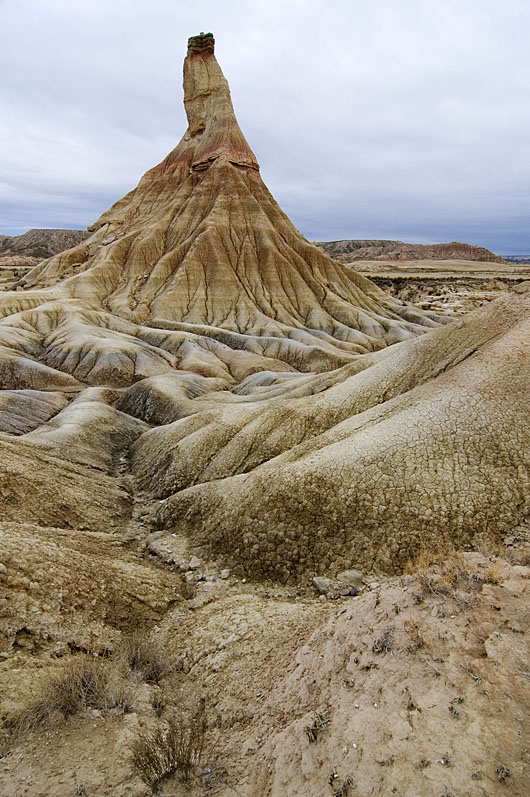



Landscape and geology
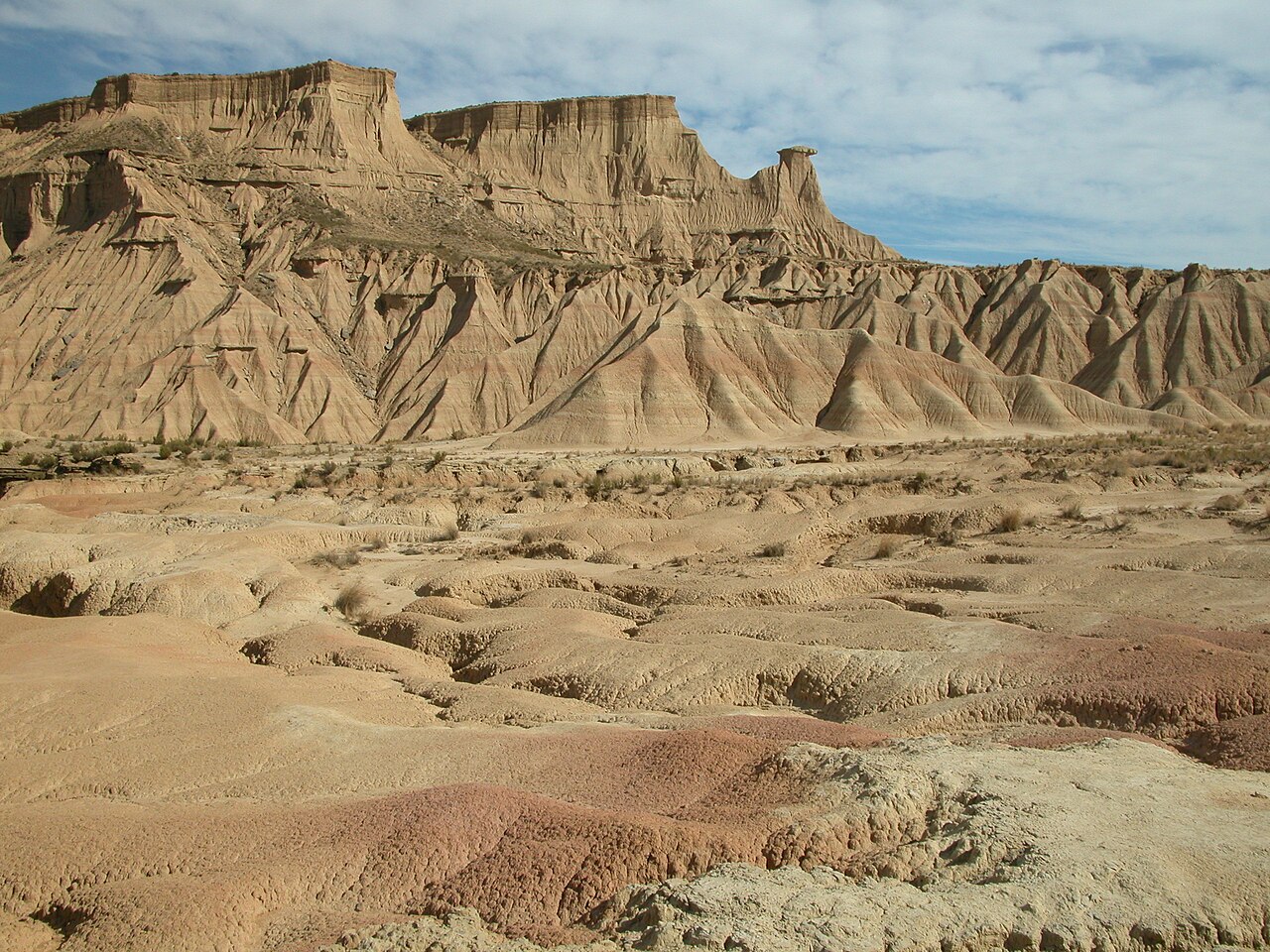
The soils and bedrock of the Bardenas are dominated by clay, chalky deposits and sandstones. Over geological time, alternating layers of softer and harder materials have been sculpted by episodic rains and persistent winds into canyons, plateaus, tabular mesas and isolated hills often called cabezos or seamounts. Differential erosion produces distinct features such as steep cliffs, ravines and the famous tall, pillar‑like forms. One well known formation, Castildetierra, illustrates how layered sedimentary rocks weather into dramatic silhouettes.
Climate, vegetation and wildlife
The climate is semi‑arid, with low annual precipitation and pronounced temperature variation between seasons. Vegetation is sparse and adapted to drought and saline or calcareous soils: steppe grasses, drought‑tolerant shrubs and halophytic plants are common. Despite appearing barren, the Bardenas supports a variety of wildlife adapted to open, dry environments, including reptiles, small mammals, insects and numerous birds, especially raptors and other species that make use of the wide hunting areas and cliffs for nesting.
Human history and land use
Human presence in and around the Bardenas has been largely traditional and extensive rather than intensive: grazing, seasonal pasture use and small‑scale agriculture on the fringes have been the principal activities for centuries. The cultural landscape includes tracks, shepherds' shelters and other traces of pastoral management. More recently parts of the area are used as a military training range, which has influenced land access and management in some zones.
Protection, management and access
Much of the Bardenas Reales is protected for its natural, scenic and cultural values and is managed to balance conservation, recreation and traditional uses. The protected status imposes regulations on vehicles, camping and other activities to reduce damage to fragile soils and habitats. Visitors are encouraged to follow marked trails, respect seasonal closures and consult local authorities about restricted areas and safety notices related to military use.
Recreation, research and cultural significance
The Bardenas is popular with hikers, cyclists, photographers and naturalists attracted to its dramatic relief and clear light. It is also a site of interest for geological and ecological research because the exposed sedimentary sequences and active erosion provide an accessible record of landscape processes. The stark scenery has made the area a location for film and photography projects seeking an otherworldly backdrop.
Further reading and resources
- Badlands and erosion processes
- Geography of Navarre
- Regional information on Navarre
- Spain — national context
- Soil types: clay, chalk and sandstone
- Clay geology and land use
- Chalk deposits and erosion
- Sandstone landscapes and formation
- Erosion by water and wind
- Vegetation and wildlife of semi‑arid areas
For visitors and researchers, it is advisable to check seasonal information and access rules before planning a trip and to follow local guidance to minimise impact on this fragile and distinctive landscape.


Questions and answers
Q: What is the Bardenas Reales?
A: The Bardenas Reales is a semi-desert natural region, or badlands.
Q: Where is the Bardenas Reales located?
A: The Bardenas Reales is located in southeast Navarre (Spain).
Q: What are the soils of the Bardenas Reales made up of?
A: The soils of the Bardenas Reales are made up of clay, chalk and sandstone.
Q: How have the soils of the Bardenas Reales been eroded?
A: The soils of the Bardenas Reales have been eroded by water and wind.
Q: What has the erosion of the soils created in the Bardenas Reales?
A: The erosion of the soils has created a number of shapes, canyons, plateaus, tabular structures and isolated hills, called seamounts.
Q: Is there urban areas in the Bardenas Reales?
A: The Bardenas Reales lacks urban areas.
Q: How is the vegetation in the Bardenas Reales?
A: The vegetation in the Bardenas Reales is scarce.
Related articles
Author
AlegsaOnline.com Bardenas Reales — semi‑desert badlands of Navarre, Spain Leandro Alegsa
URL: https://en.alegsaonline.com/art/8947