
Shang dynasty (c. 1600–1046 BC)
Early historic Chinese dynasty on the Yellow River plain, known for bronze ritual vessels, oracle-bone writing, state formation, and archaeological remains at Anyang.
Overview
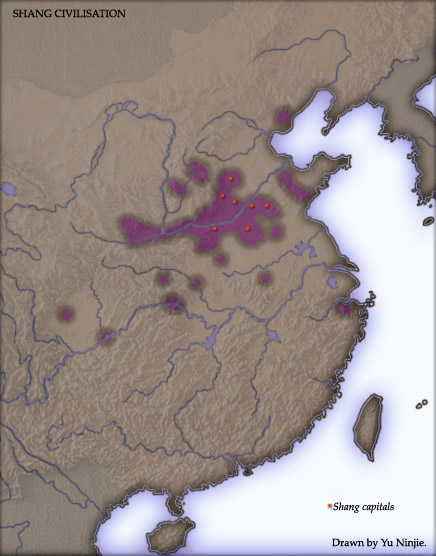
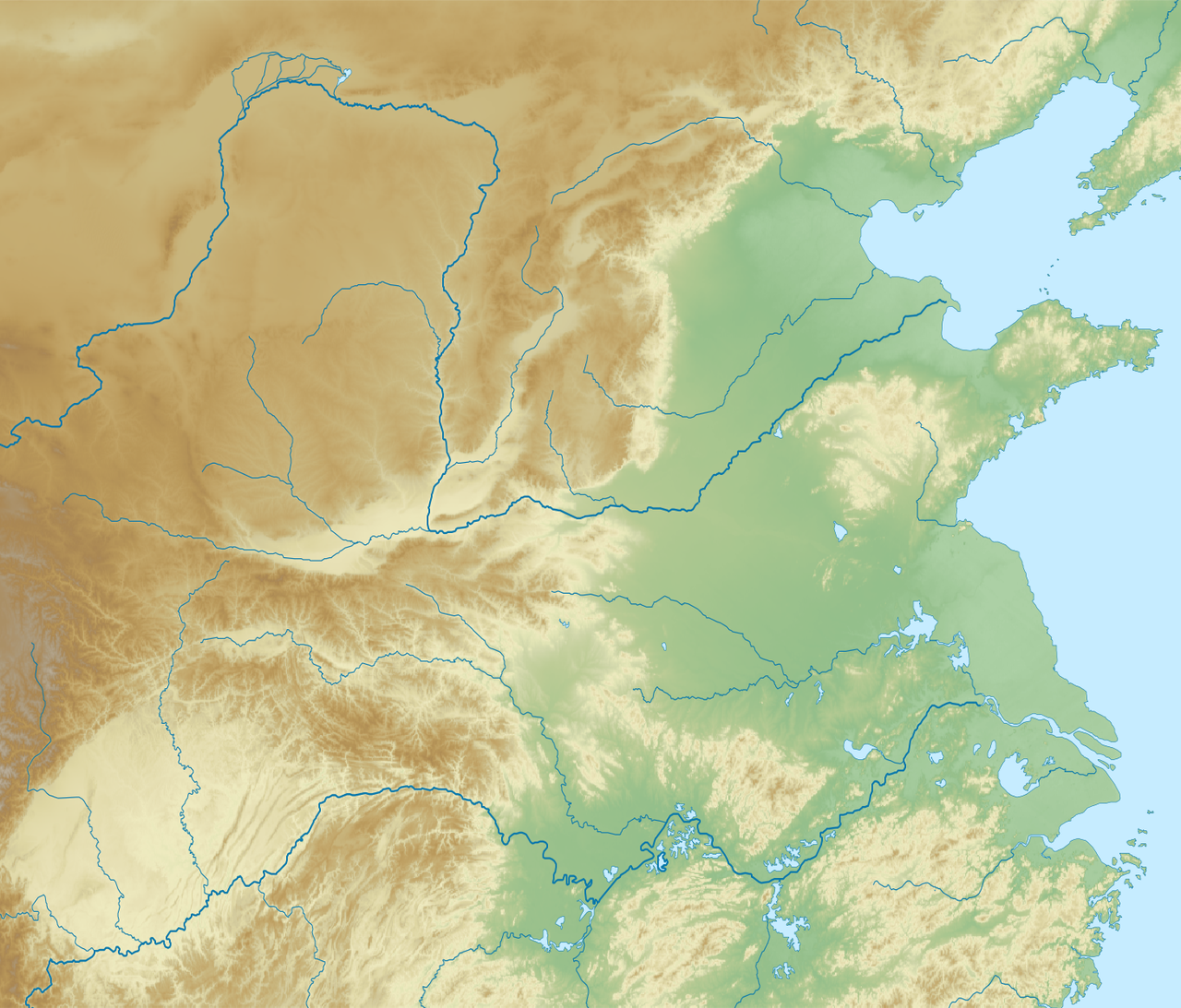
The Shang dynasty is the second broadly recognized ruling dynasty of ancient China, conventionally dated from about 1600 to 1046 BC. It succeeded the earlier Xia dynasty in traditional accounts and is the earliest Chinese dynasty confirmed by substantial archaeological evidence. The political center of the late Shang was in the Yellow River valley; its last major capital is usually identified with the archaeological site at Anyang, often called Yīn in later texts.
Image gallery
10 Images




Characteristics and material culture
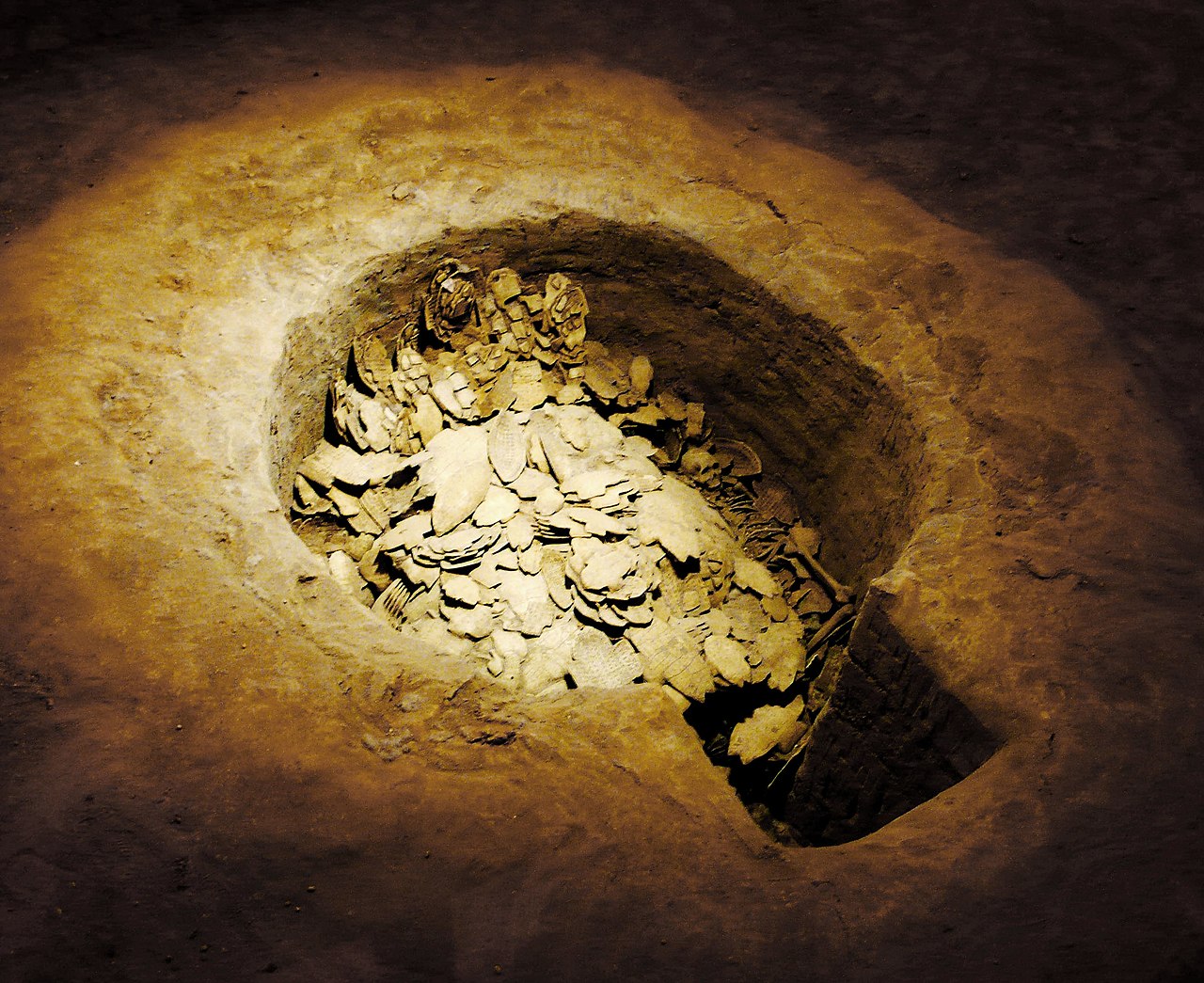
The Shang is especially noted for a high level of bronze metallurgy and for a corpus of inscribed objects that document ritual life and administration. Bronze vessels and weapons, often elaborately cast and decorated, were used in ceremonies and as markers of social rank. A distinctive written record survives on animal bones and turtle plastrons, the so-called oracle bones, which preserve the earliest substantial examples of Chinese characters and were used in divinatory practices (oracle bones).
Society, religion, and administration
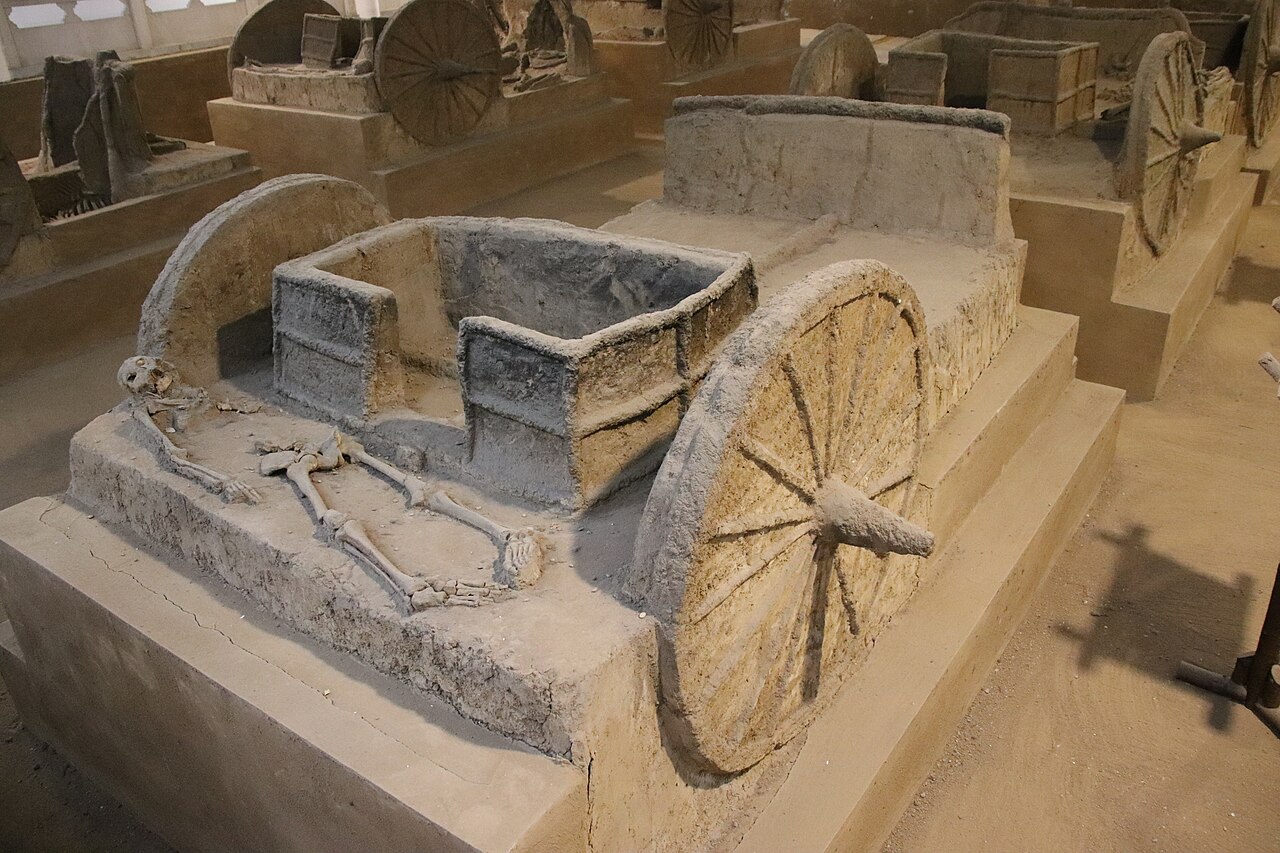
Shang society was hierarchical and centered on an elite of kings and nobles who controlled land, ritual, and military power. The king acted as political ruler and ritual intermediary, performing sacrifices to ancestors and deities to secure favorable outcomes. Archaeological finds indicate specialized craft workshops, large-scale bronze production, and evidence of human and animal offerings associated with elite burials. Agriculture, centered on millet and other cereals in the north, supported urbanized settlements and a labor force for craft and construction.
History and archaeological discovery
Much of modern knowledge about the Shang comes from excavations at Anyang and other sites that began in the late 19th and early 20th centuries. These field projects uncovered royal tombs, workshops, and caches of inscribed bones and bronzes that document names of rulers, lineage ties, and ritual events. The material record has allowed scholars to connect archaeological phases with lists of kings preserved in later historical writing and to refine timelines for early Chinese state formation.
Legacy and significance
The Shang laid foundations for subsequent Chinese civilization: a bureaucratic elite, ritual traditions, bronze technology, and a script that evolved into later written Chinese. According to traditional accounts, the last Shang king was overthrown around 1046 BC and replaced by the Zhou dynasty (Zhou), an event often described as a dynastic transition marking changes in political ideology and territorial control.
Key features
- Bronze craftsmanship: ritual vessels and weapons cast with complex molds.
- Oracle-bone inscriptions: earliest systematic Chinese writing and divination records.
- Urban centers: fortified capitals, workshops, and elite tomb complexes.
- Ritual and ancestor cults: central to political legitimacy and social order.
For further reading on the Shang dynasty and its archaeological sites, see general surveys and specialized studies that discuss material culture, script development, and the transition to the Zhou period. Many museum collections and academic publications reproduce bronzes and oracle-bone texts that illustrate the dynasty's artistic and administrative achievements (China overview, Xia background, oracle-bone studies, Zhou transition).
Questions and answers
Q: What is the Shang dynasty?
A: The Shang dynasty was the second dynasty in China that lasted from 1600BC to 1046BC.
Q: How do we know about the Shang dynasty?
A: Most of the information about the Shang dynasty was acquired from reading pictures on oracle bones and bronze objects.
Q: What is a dynasty?
A: A dynasty is a sequence of rulers that are believed to belong to the same family because they rule a country or countries over many generations.
Q: When did the Shang dynasty come to an end?
A: According to tradition, the last Shang king was overthrown in 1046 BC.
Q: What was the succeeding dynasty after the Shang dynasty?
A: The Zhou dynasty was the dynasty that followed the Shang dynasty.
Q: What is the Xia dynasty?
A: The Xia dynasty was the first dynasty in China that existed before the Shang dynasty.
Q: What is the source of information about the Shang dynasty?
A: The source of information about the Shang dynasty was primarily derived from reading pictures on oracle bones and bronze objects.
Related articles
Author
AlegsaOnline.com Shang dynasty (c. 1600–1046 BC) Leandro Alegsa
URL: https://en.alegsaonline.com/art/89451
Sources
- jwsr.pitt.edu : "East-West Orientation of Historical Empires and Modern States"
- worldcat.org : 1076-156X