
Sexual selection: mechanisms, examples, and evolutionary significance
Sexual selection is an evolutionary process where traits evolve because they increase mating success. This article explains mechanisms, examples, history, hypotheses, costs, and ongoing research.
Sexual selection is the component of evolutionary change that arises when characteristics affect an individual's access to mates. It is usually treated as a special case of natural selection, since traits favored by mating success influence reproductive fitness even if they have no direct survival benefit. Sexual selection helps explain why males and females of the same species often look or behave very differently, a phenomenon called sexual dimorphism.
Image gallery
10 Images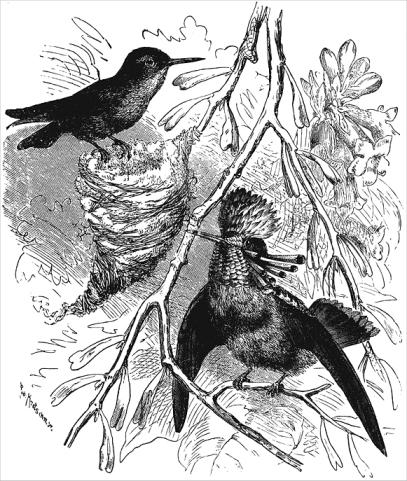



Mechanisms
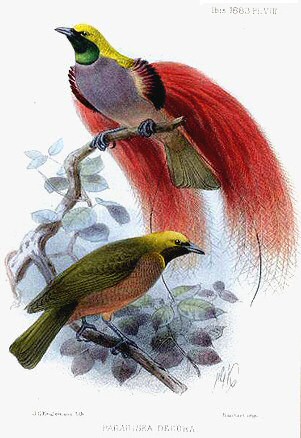
Two broad processes drive sexual selection. Intrasexual competition occurs when members of the same sex compete for mating opportunities; this often favors weapons or large body size. Intersexual selection, commonly called mate choice, happens when one sex (typically females in many animals) prefers certain traits in partners, producing elaborate displays or ornaments. Both mechanisms can operate together and vary widely among taxa and ecological contexts.
- Intrasexual competition: physical contests, territoriality, dominance hierarchies and the evolution of structures such as horns and antlers.
- Intersexual choice: visual, acoustic or chemical displays such as bright plumage, songs, or courtship behaviors that attract mates.
- Sexual conflict: situations in which what benefits one sex reduces the fitness of the other, leading to evolutionary arms races.
History and major ideas
The concept was articulated by Charles Darwin in the 19th century to account for traits that seemed maladaptive for survival but useful for reproduction. Since Darwin, several complementary hypotheses have been developed. The "good genes" idea suggests that preferred traits indicate genetic quality or health, while the "runaway" model describes how preference and trait can become exaggerated through positive feedback. Another proposal, sensory bias, argues preferences can evolve because of pre-existing sensory system biases.
Theory, evidence and examples
Evidence for sexual selection comes from observational and experimental work across animals and plants. Classic examples include peacocks with ornate tails, where long trains function as ornaments rather than survival advantages, and deer species where antlers serve as weapons in male contests. Mechanistic studies show that ornaments can signal parasite resistance or vigor, in line with the good genes hypothesis. Morphological and behavioral traits used in mating contexts are sometimes labeled "secondary sexual characteristics" and studied as parts of broader organismal biology morphology.
Costs, human relevance and contemporary research
Traits favored by sexual selection often carry costs—greater visibility to predators, metabolic expense, or reduced longevity—so natural and sexual selection can act in opposing directions. Research continues into how sexual selection interacts with ecology, speciation, and genetic architecture. Work on humans is cautious: patterns of mate preference and dimorphism are complex and shaped by culture as well as biology, and modern studies combine evolutionary theory with social and behavioral evidence human sexual selection.
Sexual selection remains a central idea for explaining diversity in form and behavior. By linking mating success to trait evolution, it provides tools for understanding ornamentation, combat structures, courtship behaviors, and the sometimes surprising ways that reproduction shapes life histories and species differences.
Questions and answers
Q: What is sexual selection?
A: Sexual selection is a special kind of natural selection that explains certain traits through competition within a species.
Q: How did Charles Darwin define sexual selection?
A: Charles Darwin defined sexual selection as the struggle between individuals of one sex, usually males, for the possession of the other sex.
Q: What are secondary sexual characteristics?
A: Secondary sexual characteristics are traits selected by male combat, such as horns and antlers.
Q: What are ornaments in the context of sexual selection?
A: Ornaments are traits selected by mate choice and are exaggerated features of morphology.
Q: Do females prefer males with external ornaments in sexual selection?
A: Yes, females often prefer to mate with males that have external ornaments.
Q: What is the 'good genes' hypothesis in sexual selection?
A: The 'good genes' hypothesis suggests that genes that enable males to develop impressive ornaments or fighting ability may simply show greater disease resistance or a more efficient metabolism.
Q: What is the importance of studying sexual selection according to one author?
A: According to one author, studies on sexual selection have something important to tell us, namely "how males and females came to be what they are".
Related articles
Author
AlegsaOnline.com Sexual selection: mechanisms, examples, and evolutionary significance Leandro Alegsa
URL: https://en.alegsaonline.com/art/89296
Sources
- pnas.org : The objects of selection
- onlinelibrary.wiley.com : onlinelibrary.wiley.com/doi/abs/10.1111/j.1469-185X.1970.tb01176.x