
Adams–Onís Treaty (Transcontinental or Florida Purchase Treaty)
1819 agreement between the United States and Spain that ceded Florida to the U.S. and fixed a boundary between U.S. territory and Spanish North America, shaping later western borders.
The Adams–Onís Treaty, signed in 1819 and often called the Transcontinental Treaty or the Florida Purchase Treaty, was a landmark diplomatic agreement between the United States and Spain. Negotiated by U.S. Secretary of State John Quincy Adams and Spanish minister Luis de Onís, it transferred Spanish Florida to the United States and established a defined boundary between U.S. territory and Spanish possessions in North America. The treaty helped resolve long-standing disputes that had produced armed incidents, cross-border raids, and diplomatic tension.
Image gallery
4 Images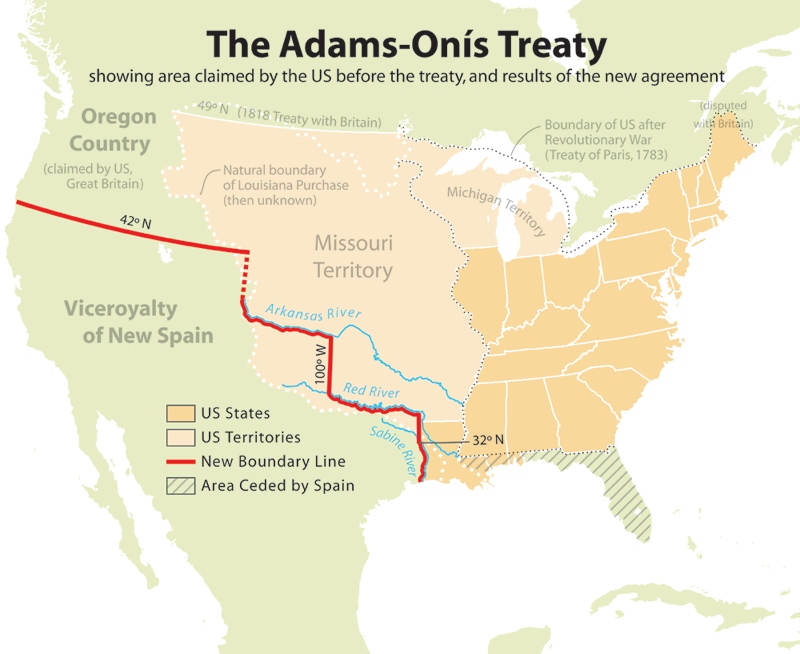


Main provisions
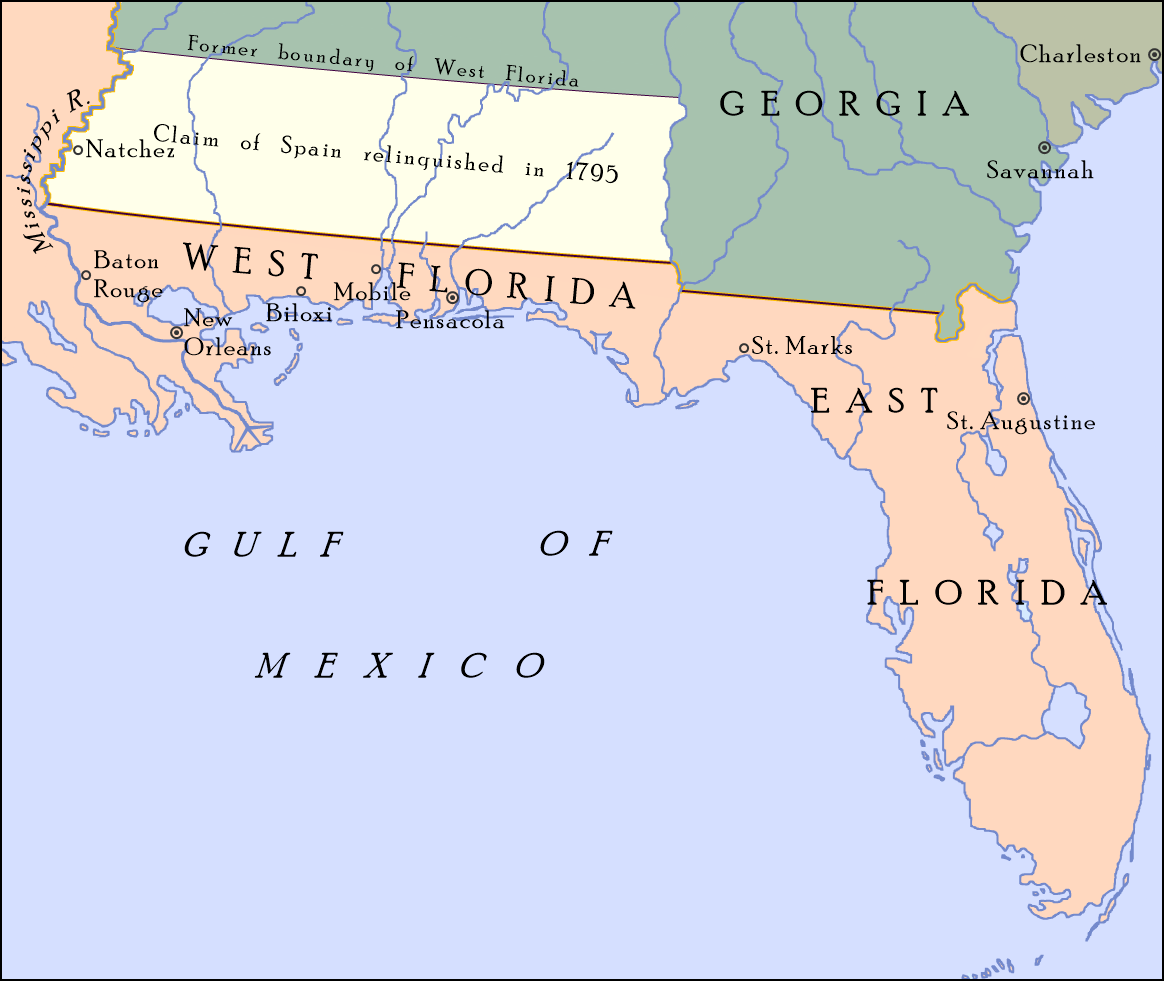
- Cession of Florida: Spain agreed to cede East and West Florida to the United States, ending Spanish sovereignty over the peninsula.
- Border delimitation: The treaty fixed a transcontinental boundary running from the Gulf of Mexico along the Sabine River in the east, following rivers and agreed lines northward to the 42nd parallel, and then west along that parallel to the Pacific. This line clarified limits between U.S. territory and Spanish North America.
- Financial and legal terms: The United States agreed to assume up to $5 million in claims by its citizens against Spain, and the U.S. relinquished certain claims on Spanish Texas that had been based on earlier interpretations of the Louisiana Purchase.
The formal text was signed in 1819 and later ratified by both countries; the exchange of ratifications completed the transfer. Scholars and reference works discuss the treaty under several names; for the original diplomatic record see treaty text and contemporary archives such as diplomatic papers.
Background and negotiation
By the 1810s Spain's colonial control in North America had weakened. Repeated cross-border raids into Florida by Native groups and escaped enslaved people, plus incursions by American militia and U.S. military forays under figures like Andrew Jackson, created pressure for a diplomatic settlement. Negotiations aimed to remove a recurring source of conflict and to clarify competing territorial claims left ambiguous after the Louisiana Purchase. The treaty resulted from detailed bargaining in which both sides traded territory and legal claims to achieve a stable frontier.
Consequences and significance
The Adams–Onís Treaty had several lasting effects. It brought Florida into U.S. jurisdiction and significantly reduced friction with Spain, at least temporarily. By delineating a practical transcontinental boundary, it influenced later American claims and settlement patterns and set the stage for subsequent disputes and negotiations after Mexico gained independence from Spain. Historians note the treaty as an important step in early 19th-century U.S. territorial expansion and as a diplomatic achievement of John Quincy Adams.
For further reading and primary sources, consult collections and analyses available through government archives and historical editions: collections, scholarly overviews at major research libraries and guides, and digitized primary documents at archival portals online.
Questions and answers
Q: What was the Adams-Onís Treaty?
A: The Adams-Onís Treaty was a treaty between Spain and the United States of America in 1819.
Q: What did the Adams-Onís Treaty give to the United States?
A: The Adams-Onís Treaty gave the state of Florida to the United States.
Q: What issue did the Adams-Onís Treaty settle between the United States and Spain?
A: The Adams-Onís Treaty settled a standing border dispute between the United States and Spain.
Q: When was the Adams-Onís Treaty signed?
A: The Adams-Onís Treaty was signed in 1819.
Q: Who were the two countries involved in the Adams-Onís Treaty?
A: The two countries involved in the Adams-Onís Treaty were Spain and the United States.
Q: Which border was established by the Adams-Onís Treaty?
A: The Adams-Onís Treaty established the U.S- Mexican border.
Q: Why was the Adams-Onís Treaty significant?
A: The Adams-Onís Treaty was significant because it resolved border issues between two countries, Spain and the United States, and also gave the United States the state of Florida.
Related articles
Author
AlegsaOnline.com Adams–Onís Treaty (Transcontinental or Florida Purchase Treaty) Leandro Alegsa
URL: https://en.alegsaonline.com/art/892
Sources
- commons.wikimedia.org : Adams–Onís Treaty
- tamu.edu : "Adams-Onís Treaty of 1819"
- pbs.org : "The Adams-Onis Treaty"