
Server (computing): overview, types, architecture and uses
A server is a computer or program that provides services to other computers (clients). This article explains roles, components, history, common types, networking protocols and deployment models.
Overview
A server is a system—either hardware, software, or a combination—that provides resources, data, services or programs to other devices known as clients. In computing, each distinct function a server performs is called a service. Servers often focus on a small set of services and support many clients simultaneously, forming a client–server relationship that separates responsibilities between requesters and providers. For example, an online encyclopedia may run a web server to deliver pages to users; a game company may run specialized servers to coordinate multiplayer sessions. In practice, the term "server" can mean a physical machine, a virtual machine, or a process running on a host.
Image gallery
5 Images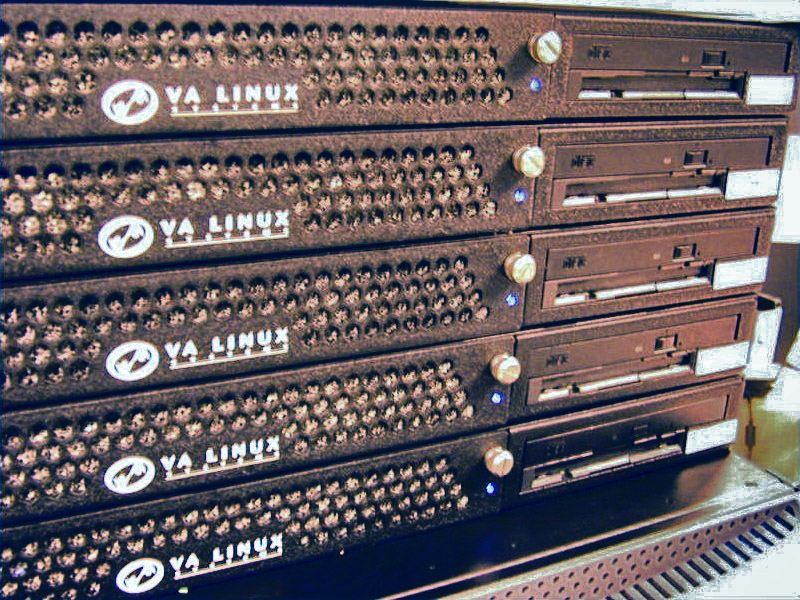


Key characteristics and components
Servers are characterized by availability, scalability, security, and manageability. Typical components include:
- Hardware: CPUs optimized for parallel tasks, large memory, reliable storage and redundant power/ cooling.
- Operating system: Server-grade OS software that supports networking, process isolation and longer uptimes.
- Server software: Programs that implement services such as file sharing, printing, web hosting or databases.
- Network interfaces: High-throughput network adapters and software stacks to handle many client connections.
- Management tools: Monitoring, logging, backup and orchestration utilities for operations teams.
History and development
The concept of a server evolved with networked computing. Early mainframes provided services to multiple terminals. With the rise of local area networks and the Internet, the client–server model became standard for distributing tasks between end-user machines and centralized hosts. Advances such as virtualization and containerization have changed how servers are deployed: one physical host can now run many isolated servers, improving utilization and flexibility. Cloud computing further abstracted servers into on-demand, managed services that can scale automatically.
Common uses and typical types
Servers power a wide variety of everyday digital services. Common server types include:
- Web servers that deliver web pages over protocols like HTTP.
- File servers that store and share files across a network.
- Database servers that respond to structured data queries.
- Application servers that host business logic for client applications.
- Mail servers that send and receive email messages.
- Game servers that coordinate multiplayer sessions and state.
Examples: a personal computer can act as a simple file server for a home network, while large organizations use rack-mounted servers and clusters to support enterprise applications and public websites. A single public-facing site may be backed by multiple specialized servers working together.
Networking, protocols and the client–server model
Servers and clients communicate over a network using agreed protocols, which define message formats and interaction rules. Common protocols include HTTP for web content, FTP/SFTP for file transfer, SMTP for email transport, and database-specific protocols for queries. The client initiates requests and the server responds; security, authentication and session management are important aspects of these interactions. For practical examples of concepts and implementations, see resources about central hosts and client machines: central server, client computer, and the client–server model. Many educational pages and service providers illustrate how web hosting works with concrete scenarios such as an online encyclopedia using web services: online encyclopedia and general web services.
Deployment models and notable distinctions
Servers can be deployed in several ways: on-premises physical machines, virtual machines in data centers, containers orchestrated across clusters, or as managed cloud services. Each model involves trade-offs in control, cost, scalability and operational overhead. Important distinctions include:
- Dedicated vs shared: dedicated servers run a single tenant, while shared hosts allocate resources among many users.
- Edge vs central: edge servers place resources closer to users to reduce latency, whereas central servers concentrate resources in larger facilities.
- Stateful vs stateless: stateful servers retain session information; stateless servers treat each request independently, which simplifies scaling.
Networking fundamentals and protocol compatibility remain essential: servers and clients must agree on network addressing and communication rules to interoperate. For further technical topics and standards, consult introductory and reference materials on networking, protocols and server management: game server examples, file sharing, printer and peripheral services, network basics, and protocol specifications.
Understanding servers is fundamental to modern computing because they form the backbone of online services, enterprise computing and distributed applications. Whether described as physical machines, virtual instances or managed services, servers enable clients worldwide to access shared resources reliably and efficiently.
Questions and answers
Q: What is a server?
A: A server is a computer that provides many kinds of information to a user or client machine. It usually only does a few things for many clients.
Q: What is the relationship between client and server called?
A: The relationship between client and server is called a client-server relationship.
Q: How do servers provide web pages over the Internet?
A: Servers provide web pages over the Internet by using the HTTP Protocol, which sends web sites to computers that ask for them.
Q: What else can servers do besides host websites?
A: Besides hosting websites, servers can also host internet games, share files, and give access to peripheral equipment such as printers.
Q: How are individual computers connected to servers?
A: Individual computers are connected to some powerful computers called servers in order to store files and information in the form of website so that different users anywhere in the world can access these files with an Internet connection.
Q: What do machines need in order for them to talk to each other?
A: For machines to talk to each other, they need to be connected on a network and use the same communication protocol, which acts like a language for machines.
Related articles
Author
AlegsaOnline.com Server (computing): overview, types, architecture and uses Leandro Alegsa
URL: https://en.alegsaonline.com/art/89118