
Serengeti: East Africa's Great Savanna and the Annual Migration
The Serengeti is a vast East African savanna spanning Tanzania and Kenya, renowned for its wildlife, the annual ungulate migration, archaeological finds and a network of protected areas.
Overview
The Serengeti is a broad savanna ecosystem in East Africa, covering roughly 30,000 square kilometers. Most of this landscape—about eighty percent—lies within Tanzania, while its northern reaches extend into Kenya. The region is globally recognized for its extensive grasslands, seasonal woodlands and exceptionally high density of large mammals.
Image gallery
10 Images


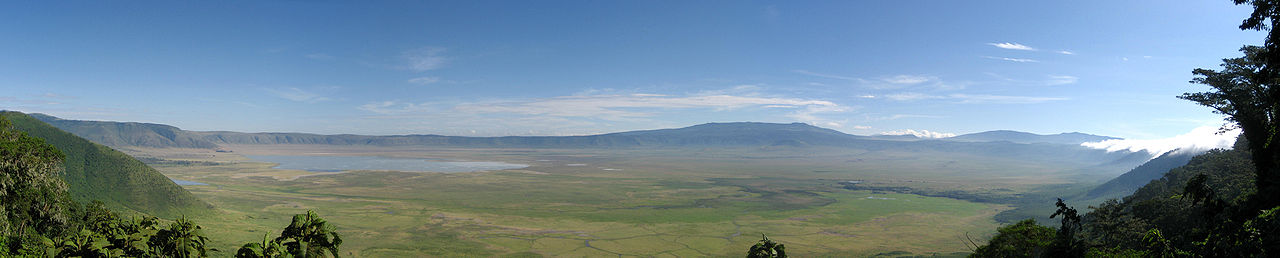


Landscape and protected areas
The Serengeti mosaic includes open plains, riverine forests, kopjes (rocky outcrops) and seasonal floodplains that respond to distinct wet and dry seasons. These habitat types support complex food webs and fuel seasonal movements of animals. Within the region are several formal conservation units, such as Serengeti National Park, the Ngorongoro Conservation Area and Maswa Game Reserve in Tanzania, together with the Maasai Mara National Reserve in Kenya, which connects directly to the northern Serengeti (Maasai Mara).
Wildlife and ecology
The Serengeti hosts immense populations of grazing mammals and their predators. Estimates often note well over 1.6 million herbivores across the ecosystem. Characteristic species include the blue wildebeest (wildebeest), Thomson's and Grant's gazelles, and plains zebras, together with large numbers of African buffalo. Predators such as lions, spotted hyenas, cheetahs and Nile crocodiles depend on this abundance and shape patterns of survival and movement.
The Great Migration
The Serengeti is best known for the annual mass movement of grazing ungulates often called the Great Migration. Driven by seasonal rains and the search for fresh pasture, roughly one to one-and-a-half million herbivores—chiefly wildebeest, gazelles and zebra—move in a broad circle between the southern plains and the northern grasslands. Key events in this cycle include dramatic river crossings, notably the Mara River, where many animals face significant predation and natural obstacles (Great Migration).
Human history and archaeology
Beyond its living wildlife, the Serengeti region has deep palaeoanthropological significance. The Olduvai Gorge, located near the central Serengeti region, has yielded important fossil and archaeological evidence related to early human ancestors and stone-tool cultures. Find sites at Olduvai have contributed to understanding of early hominid evolution and prehistoric lifeways (Olduvai Gorge).
Conservation, tourism and challenges
The Serengeti's protected areas attract substantial tourism, which supports local economies and funds conservation, but the ecosystem also faces pressures. Land-use change at its margins, illegal hunting, competition with pastoral livelihoods, and climate variability pose ongoing management challenges. Collaborative approaches with Maasai and other local communities, park management, scientific monitoring and regulated tourism aim to maintain the ecological processes—especially the Migration—that define the Serengeti's global importance.
- Tanzania: conservation and parks
- Kenya: transboundary connection
- Wildlife population summaries
- Wildebeest behavior and biology
- Gazelle species of the Serengeti
- Zebra ecology
- Details on the Migration
- Olduvai Gorge research
- Hominid fossil discoveries
- Maasai Mara connection
- Regional context: East Africa
Questions and answers
Q: What is the Serengeti?
A: The Serengeti is a region of savannah in East Africa that is famous for its wildlife and the circular migration of herbivores.
Q: Where is the Serengeti located?
A: The Serengeti is located in East Africa. About 80% of it belongs to Tanzania and the north of it is in Kenya.
Q: What kind of animals can be found in the Serengeti?
A: The Serengeti is home to more than 1.6 million herbivores and thousands of predators. The most common animals include wildebeests, gazelles, zebras, and buffalos.
Q: What is the circular migration?
A: The circular migration is a phenomenon that takes place every year in the Serengeti region when nearly 1.5 million herbivores travel towards the southern plains, crossing the Mara River, from the northern hills for the rains. They then head back to the north through the west, once again crossing the Mara river, after the rains in around April.
Q: What is the significance of the Olduvai Gorge in the Serengeti region?
A: The Olduvai Gorge is an archeologically significant site in the Serengeti region where some of the oldest hominid fossils have been found.
Q: What are some of the protected areas in the Serengeti region?
A: The Serengeti region contains the Serengeti National Park, the Ngorongoro Conservation Area, and Maswa Game Reserve in Tanzania and the Maasai Mara National Reserve in Kenya.
Q: What is the size of the Serengeti?
A: The Serengeti is about 30,000 square kilometers in size.
Related articles
Author
AlegsaOnline.com Serengeti: East Africa's Great Savanna and the Annual Migration Leandro Alegsa
URL: https://en.alegsaonline.com/art/88998
Sources
- rarespecies.org : "Downward trends in Ngorongoro Crater ungulate populations 1986-2005"
- utalii.com : "Ngorongoro Conservation Area - Lakes Within The Area"
- zgf.de : "Management of Black Rhino in the Ngorongoro Crater"
- www7.nationalgeographic.com : "Heartbreak on the Serengeti"