
Senegambia: geography, history and the modern region linking Senegal and The Gambia
Senegambia is the West African region overlapping present-day Senegal and The Gambia, notable for shared geography, cultural ties and a short-lived 20th-century confederation between the two states.
Overview
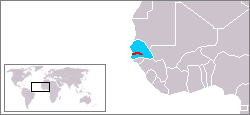
Senegambia is a historical and cultural region of West Africa centered on the lower reaches of the Gambia River and the surrounding Atlantic coast. In contemporary usage it usually denotes the territories of present-day Senegal and The Gambia together. The name has been applied in different ways across centuries: as a geographic label, as a colonial administrative concept, and as the name of a brief political attempt at union in the late 20th century.
Image gallery
4 Images

Geography and features
The region’s geography is dominated by the Gambia River, which flows inland from the Atlantic and gives The Gambia its narrow, elongated shape. Maritime islands and offshore features were important to early European traders; British sources in the 18th century referred to their holdings among the islands along the coast. The landscape includes riverine forests, savanna, and coastal lagoons; archaeological sites such as the Senegambian stone circles reflect long human occupation.
History and development
Before European colonization the area was home to several trading networks and political entities. During the colonial era the French and British established overlapping spheres of influence: Senegal largely under French control and The Gambia under British rule. The British used the term Senegambia for parts of their settlements from the mid-18th century onward. In the late 20th century the two independent states explored closer ties.
Senegambia Confederation
From 1982 to 1989 the two countries formed a loose confederation intended to coordinate defence, foreign policy and economic cooperation. The arrangement addressed security concerns and encouraged cross-border integration, but institutional differences and political realities limited how deeply the union grew. The experiment ended without creating full political unification.
Culture, economy and modern relevance
Senegambia is notable for shared languages (including Wolof and Mandinka among others), music, trade patterns and transnational family ties. Economies rely on agriculture, fisheries and regional trade; cross-border markets and migration create strong social links. The modern use of the term often appears in discussions of regional planning, cultural heritage and cooperative projects between the two capitals.
- Key distinctions: a historical region versus a political union.
- Notable sites: megalithic stone circles and riverine trading towns.
- Legacy: illustrates how colonial borders intersect with pre-existing cultural landscapes.
Today Senegambia remains a useful concept for scholars, policymakers and communities that recognize the deep interconnection of two neighboring states whose histories, peoples and environments overlap across a relatively compact space in West Africa.
Questions and answers
Q: What was Senegambia?
A: Senegambia was a region of West Africa that included present day Senegal and Gambia.
Q: What was the Senegambia Confederation?
A: The Senegambia Confederation was a loose confederation between Senegal and Gambia that was established in the 20th century.
Q: When did the British first use the term Senegambia?
A: The British first used the term Senegambia as early as 1765 to refer to their settlements on the islands off the coast of present day Senegal.
Q: What is the modern use of the term Senegambia?
A: The modern use of the term Senegambia means the region that includes both Senegal and Gambia.
Q: Was the Senegambia Confederation a tight alliance between Senegal and Gambia?
A: No, the Senegambia Confederation was a loose confederation between the two countries.
Q: What was the geographical area occupied by Senegambia?
A: Senegambia occupied the area of present day Senegal and Gambia.
Q: When was the Senegambia Confederation established?
A: The Senegambia Confederation was established in the 20th century.
Related articles
Author
AlegsaOnline.com Senegambia: geography, history and the modern region linking Senegal and The Gambia Leandro Alegsa
URL: https://en.alegsaonline.com/art/88831
Sources
- commons.wikimedia.org : Senegambia
- observer.gm : "The Senegambia Confederation The rise and fall of the unification"
- accessgambia.com : "Senegambia Origins"
- columbia.edu : "Senegambia"
- theguardian.com : theguardian.com/notesandqueries/query/0,,-1255,00.html
- theroot.com : "How Many Slaves Landed in the US?"
- abolition.nypl.org : "Senegambia, The Gold Coast, and The Bight Of Benin"
- albany.edu : "Women's Resistance in the Middle Passage: A Story Lost at Sea"