
Senate (legislative assembly)
A senate is a legislative chamber—often the upper house in a bicameral system—responsible for reviewing, amending and approving laws. This article explains structure, history, functions, selection methods and variations.
Overview
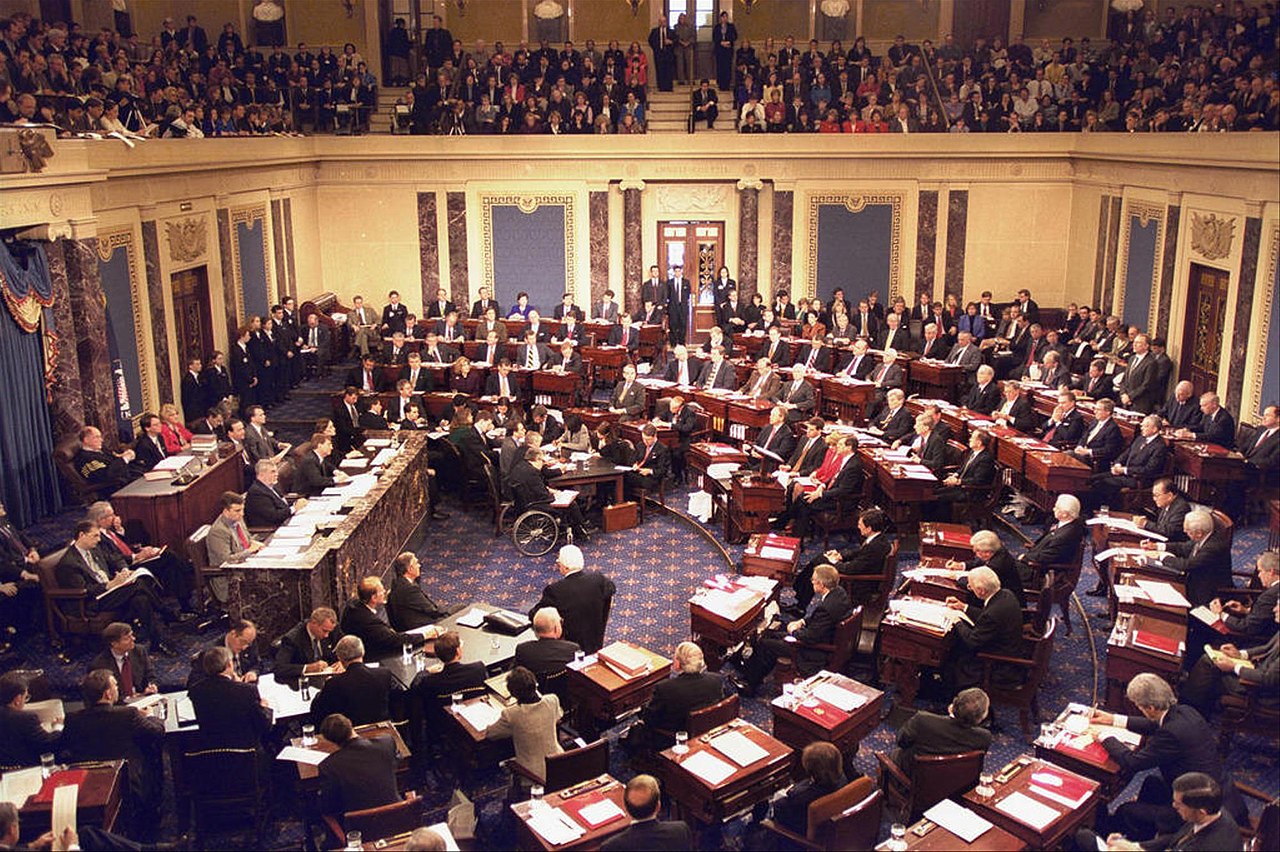
A senate is a deliberative body that forms part of a broader legislature in many nations and subnational polities. In a modern democracy the senate typically reviews legislation, represents territorial or constituent interests, and performs oversight of the executive. Members of a senate are commonly called senators. Where a legislature has two chambers, the senate is often described as the upper house and sits alongside a lower chamber such as a House of Representatives or a House of Commons.
Image gallery
3 Images

Structure and common characteristics
Senates vary widely in size, term length and method of selection. Some are directly elected, others are appointed, and some combine both methods. A senate may represent states, provinces or regions rather than population alone; this federal role is familiar in countries like Canada and Australia. In bicameral systems both houses normally must approve the same bill for it to become law, though the relative powers of each chamber differ from place to place.
History and origin
The concept of a senate has ancient precedents. The term itself derives from an early institution in Rome, the Roman Senate, whose name came from a root meaning "elder" and which advised magistrates and influenced public policy in the classical period. Many modern senates draw their name and some aspects of procedure from this classical model, though powers and membership became widely adapted during the formation of modern states.
Functions and activities
Common functions of a senate include:
- Reviewing and revising legislation proposed by the lower chamber or government.
- Conducting inquiries and oversight of the executive branch and public administration.
- Confirming or ratifying important appointments, treaties or high‑level officials in some systems.
- Representing constituent units (states, regions) to protect regional interests in national lawmaking.
Committees within senates handle detailed examination of legislation, budgets and investigations; this committee work is central to how a senate exercises careful scrutiny rather than rapid lawmaking.
Variations, examples and selection methods
Senates appear in many forms. In some countries the senate is a powerful equal partner with the lower house; in others it is a revising chamber with limited ability to block legislation. For example, various subnational bodies and several national systems use senates to balance representation of territory and population. Members may be elected, appointed by executives or parliaments, or indirectly chosen by state legislatures or councils. The institution exists not only at national level but also in federated states and provinces.
Senates beyond national legislatures
The word "senate" also describes governing councils in other institutions. Many universities maintain an academic senate that advises on curriculum, research and academic standards; see a representative example in university governance universities. Local assemblies, advisory bodies and historical councils sometimes use the same name.
Important distinctions and notable facts
Key distinctions to note: the senate is often an upper chamber in a bicameral parliament; it can be weaker or stronger than a lower house depending on constitutional design; and both houses usually must pass the same measure before it becomes law in jurisdictions where a legislature passes or changes laws. Senates exist at national level and in subnational units such as a state or region, and they sometimes play an explicit role in representing constituent parts of a country. These variations explain why the powers and public perceptions of senates differ widely around the world.
Questions and answers
Q: What is a senate in a modern democracy?
A: A senate is a group of people who are part of a legislature in a modern democracy.
Q: What do legislatures do?
A: Legislatures pass or change laws for their country, state, or other area.
Q: What are members of a senate called?
A: Members of a senate are called senators.
Q: What is a bicameral legislature?
A: A bicameral legislature is a legislature that has two groups of people (working in separate places) called houses.
Q: What is the other house in a bicameral legislature called?
A: The other house in a bicameral legislature is called a House of Representatives, House of Commons, or Assembly.
Q: Which modern democratic systems include legislatures with senates?
A: Modern democratic systems including legislatures with senates include the United States of America (U. S.), Canada, Australia, and many states in the United States.
Q: What was the first ever senate?
A: The first ever senate was the Roman Senate, and the name comes from their word for "elder".
Related articles
Author
AlegsaOnline.com Senate (legislative assembly) Leandro Alegsa
URL: https://en.alegsaonline.com/art/88805