
Senate of Belgium
The Senate is the upper chamber of Belgium's Federal Parliament. Its role was reduced by major state reforms; today it focuses on constitutional and institutional matters, and serves as a forum for the federated entities.
Overview
The Senate of Belgium is the upper house of the country's bicameral Federal Parliament, sitting alongside the House of Representatives (Chamber). Created in 1831, the Senate originally shared equal legislative authority with the lower chamber. Over decades of constitutional change it has been reshaped into a smaller, mainly review and deliberative body rather than a parallel law-making chamber.
Image gallery
3 Images

Composition and functions
Since the most recent major reform the Senate is no longer directly elected by the public. It is composed of representatives delegated by the parliaments of the regions and communities, together with a limited number of co-opted members. The reconfigured assembly meets less frequently than the lower house and concentrates on a narrow set of competencies.
Core responsibilities
- Review and participation in constitutional revision and texts that affect the fundamental structure of the state;
- Deliberation on institutional and federal matters that touch the relations between communities and regions;
- Providing a forum for interparliamentary dialogue and reflection, and issuing advisory opinions on complex governance questions.
Historical development
The Senate was established at Belgium's founding in 1831 as a chamber with powers comparable to the lower house. A series of state reforms across the late 20th and early 21st centuries progressively transferred competences to regional and community institutions and reduced the Senate's direct legislative authority. Significant constitutional changes in the 1990s and a major overhaul implemented in 2014 transformed its composition and remit; those changes are often referenced in discussions of Belgian federalization and institutional reform reforms.
Legislative role today
Although the Senate no longer co-legislates on most ordinary laws, it retains key roles in matters that require special majorities or constitutional procedures. It acts as a chamber of reflection rather than a routine lawmaking body; in practice it convenes only occasionally, typically for a limited number of plenary sessions each year, and plays a consultative and safeguarding role in the constitutional order legislative process.
Significance and notable facts
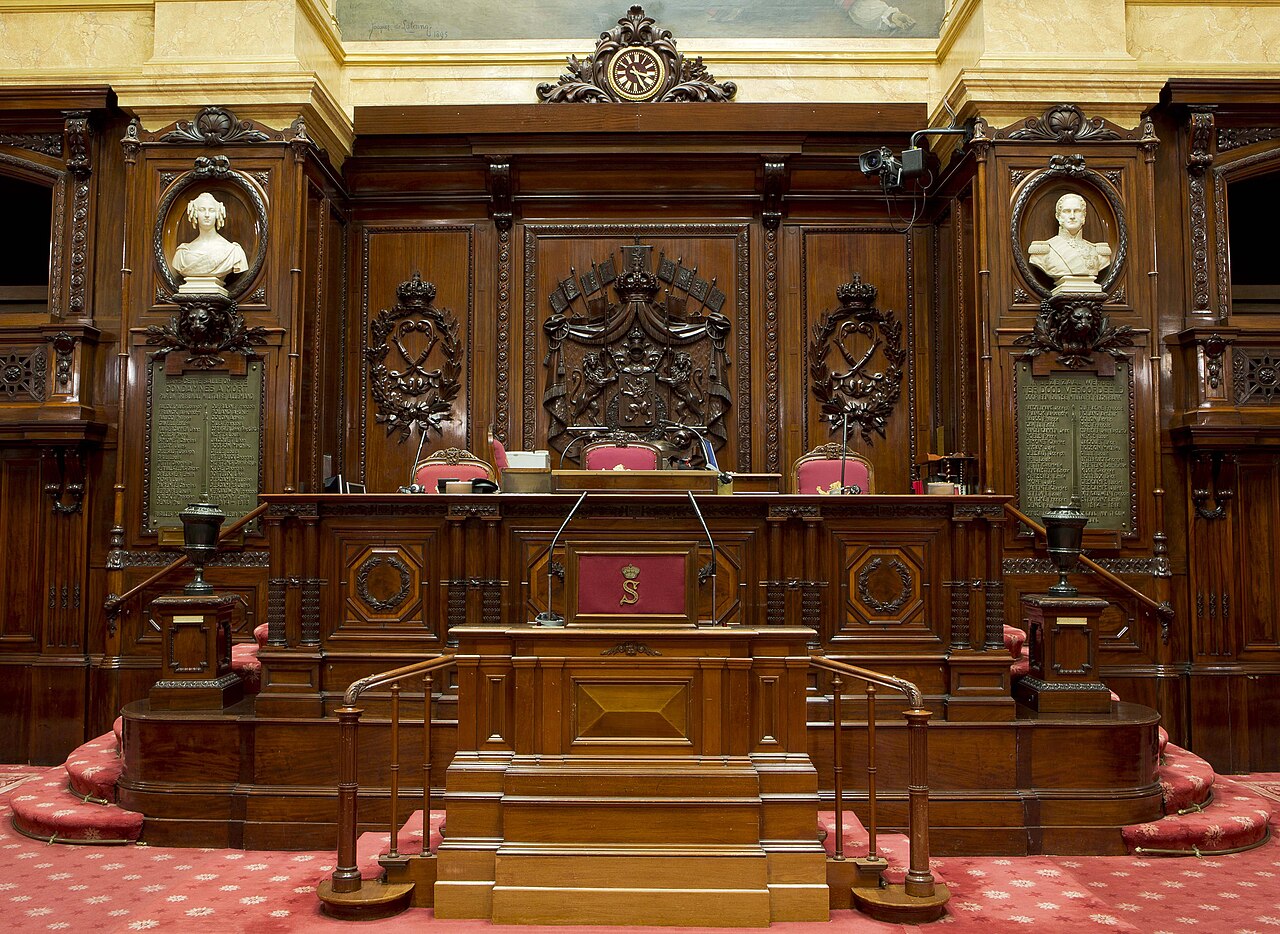
The modern Senate functions as an institutional bridge between the federal level and the federated entities, helping to manage dialogue among language groups and regional governments. Its meetings take place in the Palace of the Nation in Brussels, and proceedings commonly use the country’s official languages. While smaller and less active than in the past, the Senate remains a constitutional guardian and a venue for high-level political and institutional debate in Belgium.
Questions and answers
Q: What is the Senate of Belgium?
A: The Senate of Belgium is the upper house of the bicameral Federal Parliament of Belgium, above the House of Representatives.
Q: When was the Senate of Belgium established?
A: The Senate of Belgium was established in 1831.
Q: What is the role of the Senate in the legislative process today?
A: While the Senate today plays only a minor role in the legislative process, it still has, along with the House, full responsibility for the upholding of the Constitution and the organisation and functioning of the Country and Federal States.
Q: When was the most notable reform in the Senate made?
A: The most notable reform in the Senate was made in 1993 and 2014.
Q: How many sessions does the Senate hold per year following the 2014 reform?
A: Following the 2014 reform, the Senate now holds about ten sessions per year.
Q: What is the position of the Senate in the bicameral Federal Parliament of Belgium?
A: The Senate of Belgium is the upper house of the bicameral Federal Parliament of Belgium, above the House of Representatives.
Q: What are the responsibilities of the Senate and the House of Representatives in Belgium?
A: The Senate and the House of Representatives have full responsibility for the upholding of the Constitution and the organisation and functioning of the Country and Federal States.
Related articles
Author
AlegsaOnline.com Senate of Belgium Leandro Alegsa
URL: https://en.alegsaonline.com/art/88793
Sources
- senate.be : "Introduction in Belgian Parliamentary History"