
Seminole: history, culture, and modern tribes
The Seminole are Indigenous peoples of Florida and the southeastern United States, known for resistance to removal, distinct Muscogee and Mikasuki roots, and contemporary tribal nations in Florida and Oklahoma.
Overview
The Seminole are a group of Indigenous peoples historically associated with the wetlands and pinewoods of Florida and the greater Southeastern Woodlands. Over the last two centuries Seminole communities also established a large presence in present-day Oklahoma. Today the population is organized into several federally recognized tribes that maintain cultural practices, languages, and political institutions.
Image gallery
10 Images


Origins and historical development
The Seminole emerged in the 18th and early 19th centuries as a distinct people from a mix of Native groups—principally Muscogee (Creek) migrants—as well as escaped Africans, and other local communities in Florida. They adapted to the peninsula's marshes and hammock forests, developing livelihoods suited to hunting, fishing, small-scale agriculture, and trade. Contact and conflict with European colonists and the expanding United States profoundly affected Seminole society during the 19th century.
Resistance and removal
During the period of United States expansion, the Seminole resisted efforts to be removed from their lands. A series of conflicts known collectively as the Seminole Wars involved military campaigns, negotiation, and ongoing resistance. Many Seminole were forcibly relocated to Indian Territory (now Oklahoma), while others avoided removal by retreating deeper into the Everglades and maintaining autonomous communities.
Culture, language, and social organization
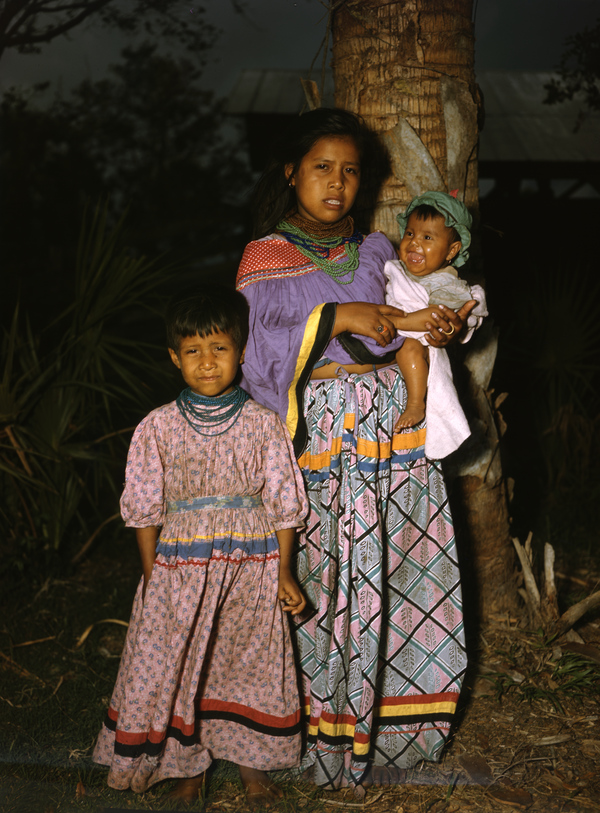
Seminole culture reflects connections to the larger Muscogee-speaking world and to distinct Mikasuki-speaking groups. Languages commonly associated with Seminole people include Mvskoke (Creek) and Mikasuki, though many community members today speak English as a primary language. Traditional crafts include distinctive patchwork clothing, beadwork, and basketry; ceremonial life incorporates dances, feasts, and kinship-based clan affiliations. Social patterns were shaped by seasonal subsistence cycles and by adaptation to wetland landscapes.
Modern tribal nations and economy
Presently there are several federally recognized Seminole-related tribes. Major contemporary entities include the Seminole Nation of Oklahoma, the Seminole Tribe of Florida, and the Miccosukee Tribe of Indians of Florida. Each has its own governance, cultural programs, and economic initiatives. In recent decades some Seminole nations have developed enterprises in hospitality, gaming, and cultural tourism, which fund health, education, and cultural preservation programs.
Notable distinctions and legacy
- The name "Seminole" is thought to derive from words meaning "free people" or "runaway," reflecting a complex history of migration and formation.
- Seminole resistance is widely remembered for its prolonged opposition to forced removal, and for leaders who negotiated and fought during tumultuous years.
- Today Seminole communities work to sustain language revitalization, cultural education, and legal sovereignty while engaging with regional and national institutions.
For readers seeking more detail on specific tribes, languages, or historical events, consult tribal websites and scholarly accounts that focus on Muscogee and Mikasuki traditions, the Seminole Wars, and contemporary tribal governance. Reliable resources include tribal cultural centers and academic studies of Southeastern indigenous history.
Questions and answers
Q: Who are the Seminole?
A: The Seminole are a group of Native American people from Florida in the Southeastern Woodlands.
Q: Where do many Seminole people live today?
A: Many Seminole people live in different groups across Florida and Oklahoma.
Q: What are the three main tribes of the Seminole?
A: The three main tribes of the Seminole are the Seminole Nation of Oklahoma, Seminole Tribe of Florida, and Miccosukee Tribe of Indians of Florida.
Q: How long have the Seminoles been living in Florida?
A: It is unclear how long exactly the Seminoles have been living in Florida, but they have been present for centuries.
Q: Are there any other locations where some members of the tribe reside?
A: Yes, some members also reside outside of Oklahoma and Florida, such as Alabama, Georgia, Louisiana and South Carolina.
Q: What language do most members speak? A: Most members speak Creek or Mikasuki languages.
Related articles
Author
AlegsaOnline.com Seminole: history, culture, and modern tribes Leandro Alegsa
URL: https://en.alegsaonline.com/art/88758