
Selective Service System (United States)
Overview of the U.S. Selective Service System: purpose, who must register, brief history, uses and consequences, and notable distinctions about registration and gender policy.
The Selective Service System is an independent agency of the federal government that maintains information on individuals potentially subject to conscription in the event the United States activates a military draft. It does not itself conduct a draft, which would require an act of Congress and a presidential proclamation, but it operates the statutory registration framework and associated records used to identify eligible men for possible induction. For more on the statutory draft framework see draft procedures.
Image gallery
10 Images



Who is required to register
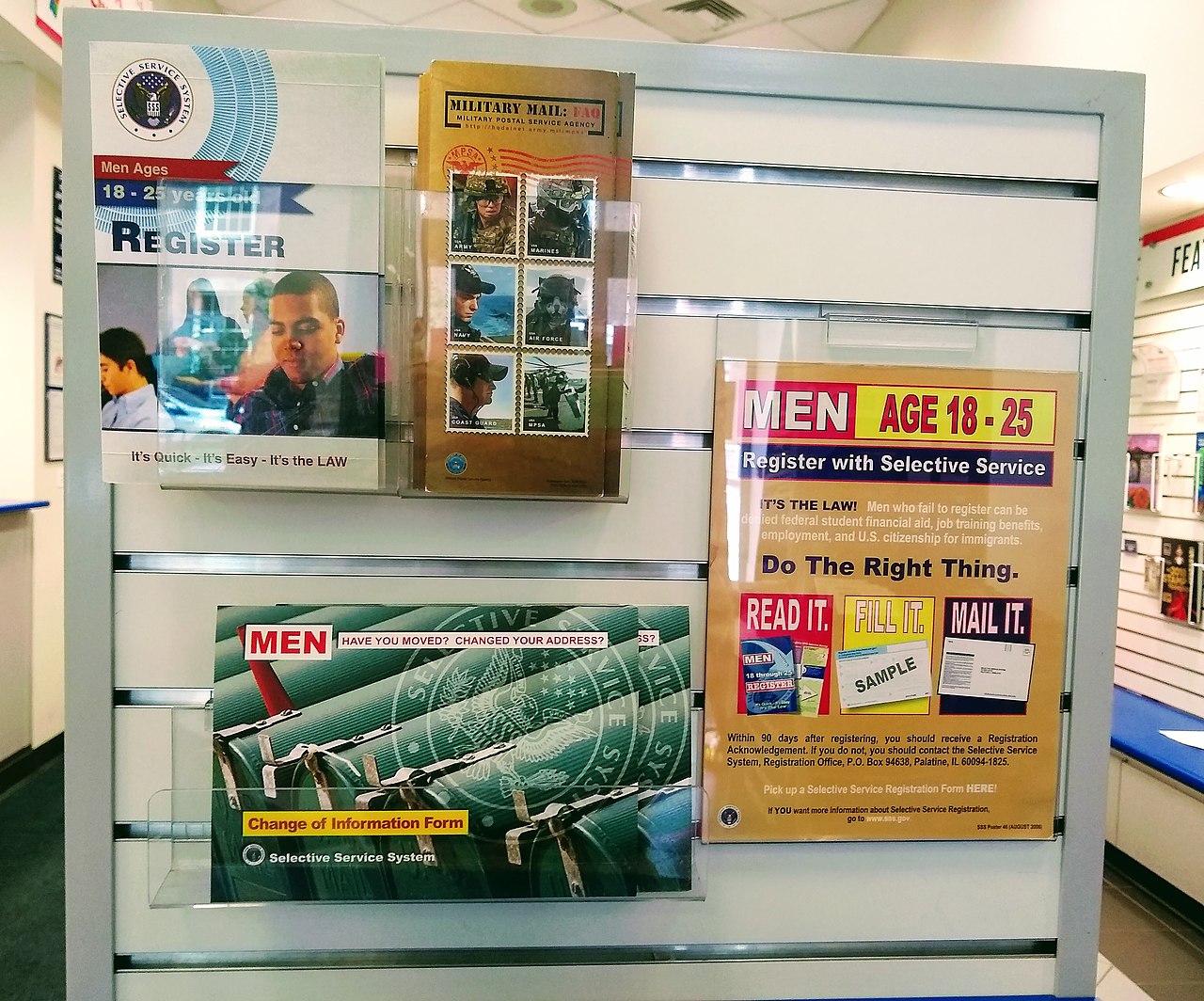
By federal law, nearly all male U.S. citizens and male immigrant non-citizens between the ages of 18 and 25 must register with the Selective Service within 30 days of their 18th birthday. The legal obligation generally applies to male U.S. citizens and to male noncitizen residents in the same age range; women are currently not required to register. Registrants must update the agency within ten days of changes to information they provided, such as a change of address or citizenship status.
Registration process and practical details
- How to register: Registration has been available by mail, online, and through certain federal forms. The agency provides instructions and forms for those who miss the initial 30-day window.
- Documentation: Registration requires basic identifying information; it is not an enlistment and does not by itself create obligations beyond record keeping.
- Link to immigration and naturalization: Compliance can affect immigration benefits, and some naturalization applicants are required to show registration status; see guidance on naturalization and related procedures.
History and development
The modern registration requirement was re‑established on July 2, 1980, when President the President signed a proclamation reinstating mandatory registration for men born on or after January 1, 1960; that proclamation was implemented under the administration of Jimmy Carter. The decision followed geopolitical events of the late 1970s, including the Soviet invasion of Afghanistan in 1979, which influenced U.S. defense policy debates at the time (contextual history).
Initial registrations under the 1980 order began at post offices and other designated locations on July 21, 1980. The rollout targeted different birth cohorts in phases, and local post offices remained a common registration point during that period (registration sites). The system and its rules are applicable throughout the United States and territories.
Uses, benefits linkage, and consequences
Registration is tied to eligibility for certain federal programs and benefits. Individuals who fail to register at required ages may face ineligibility for federal student aid, certain job training programs, and some federal employment opportunities. For noncitizen residents, failure to register can also have implications for immigration benefits and status. Because the Selective Service functions as an administrative registry, registration itself has not meant immediate induction; a draft would require new legal steps and formal activation.
Policy debates and notable developments
Debate over whether women should be required to register has been ongoing. In April 2016, a committee vote considered an amendment to extend draft registration authority to include females; the proposal would have authorized the president to require registration by young women as well as men, reflecting changing military roles and equal opportunity arguments (2016 amendment and coverage of proposals to include females). Similar proposals have recurred in subsequent years during congressional and judicial review. Legislative and executive options remain the primary routes to change registration requirements; for example, past proposals referenced authority available to presidents such as Barack Obama.
In summary, the Selective Service System today is a registry and administrative agency that preserves the option of a rapid expansion of military manpower through an organized list, while continuing to be the focus of legal, civic and policy discussions about fairness, gender, and the relationship between civic obligations and government benefits.
Questions and answers
Q: What is the Selective Service System?
A: The Selective Service System is an independent agency of the United States government that has information on those subject to the U.S. military draft.
Q: Who is required to register with the Selective Service?
A: All male U.S. citizens and male immigrant non-citizens between ages 18 and 25 are required by law to register within 30 days of their 18th birthdays. They must also contact the Selective Service within ten days of any changes of any information they gave, like a change of address.
Q: Are females required to register with the Selective Service?
A: No, females are not required to register with the Selective Service.
Q: What programs or benefits require registration with the Selective Service?
A: Registration with Selective Service is also required for several federal programs and benefits, including job training, federal employment, naturalization, Pell grants and student loans.
Q: When did President Jimmy Carter sign Proclamation 4771?
A: President Jimmy Carter signed Proclamation 4771 (Registration under the Military Selective Service Act) on July 2nd 1980 in response to the Soviet war in Afghanistan from 1979-1989 year prior.
Q: When did registrations begin for men born in 1960?
A: Registrations began on July 21st 1980 at various post offices across the United States for men born in 1960.
Q: When was it proposed that women be added to draft registration requirements? A: On April 27th 2016, it was proposed by Armed House Services Committee that an amendment be added which would extend authority for draft registration requirements to include females as well as males if passed by then-President Barack Obama's order .
Related articles
Author
AlegsaOnline.com Selective Service System (United States) Leandro Alegsa
URL: https://en.alegsaonline.com/art/88633
Sources
- sss.gov : "Why Register"
- sss.gov : "Change of Address"
- sss.gov : "Women and the Draft"
- archives.gov : "Proclamations" · web.archive.org
- congress.gov : "The National Defense Authorization Act 2017"
- hasbrouck.org : "House Committee Votes to Extend Draft Registration to Women"