
Second Triumvirate (Roman Republic, 43–33 BC)
The political alliance of Octavian, Mark Antony and Lepidus that took control of Rome after Caesar's assassination, enacted proscriptions, defeated the Liberators and set the stage for imperial rule.
Overview
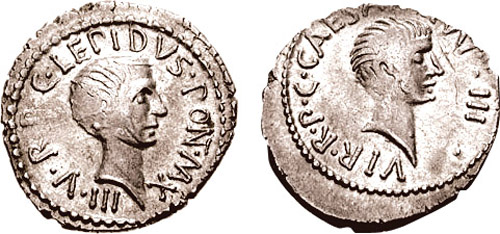
The Second Triumvirate was a formal, legally sanctioned political alliance created in 43 BC between three leading Romans: Octavian, Mark Antony and Lepidus. Formed in the aftermath of the assassination of Julius Caesar, the triumvirs were granted extraordinary powers to restore order, pursue the assassins and reorganize the state. The arrangement, often dated 43–33 BC, marked a decisive step in the decline of republican institutions and the concentration of power in individual hands.
Image gallery
10 Images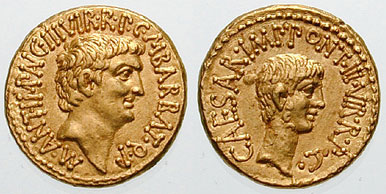




Formation and legal basis
The alliance was ratified through legislation that gave the three men extraordinary authority to make laws, appoint magistrates and command armies with fewer checks from the Senate and popular assemblies. This legal framework allowed the triumvirs to act with sweeping powers beyond ordinary republican norms. The arrangement differed from informal alliances of the past by being an official, public office with a mandate to govern.
Members and division of power
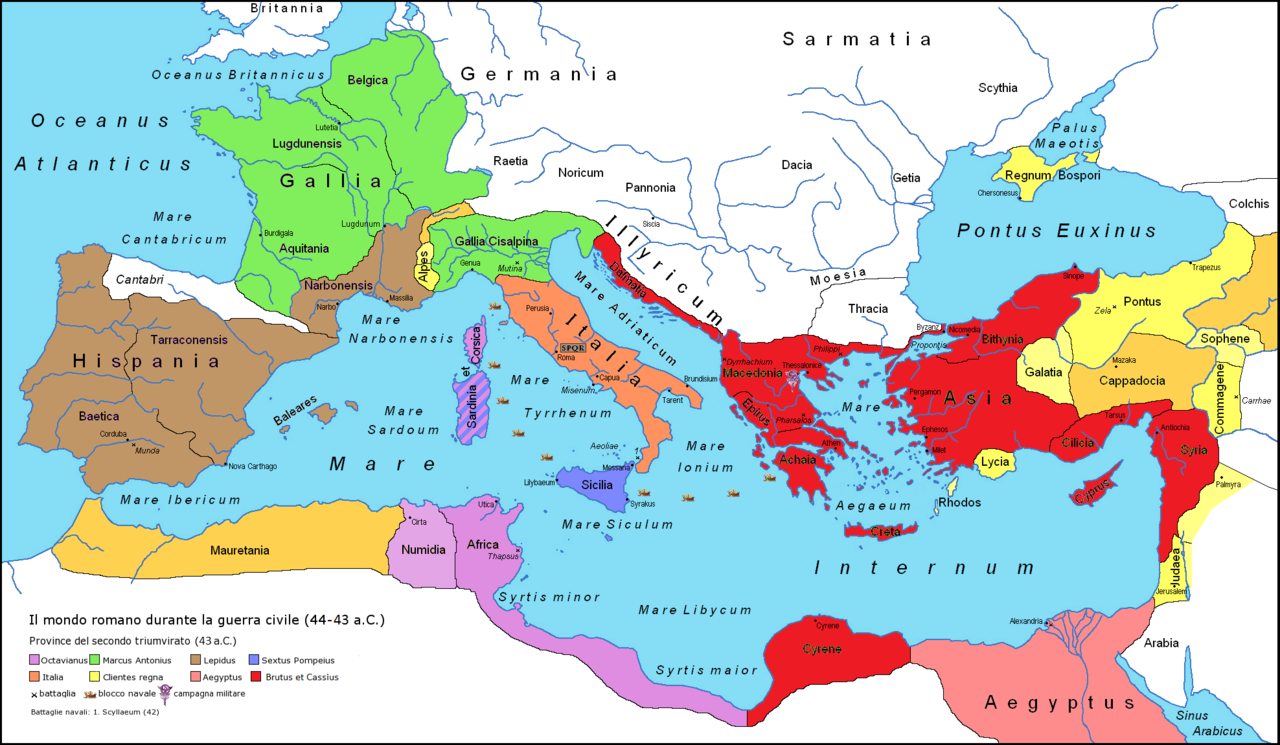
Each triumvir assumed control over broad regions of the Roman world: Octavian consolidated his position in Italy and the western provinces; Mark Antony held sway in the eastern provinces; and Lepidus controlled parts of Africa and retained certain religious and military roles. In practice the balance of power shifted, with Lepidus increasingly marginalized and rivalry growing between Octavian and Antony.
Proscriptions and domestic policy
One of the most controversial measures of the triumvirate was the use of proscriptions: published lists of political enemies whose property was confiscated and who could be killed without trial. Proscriptions eliminated opponents, raised funds for the triumvirate’s armies and redistributed wealth. The practice had deep and lasting effects on Roman politics and society, spreading fear and weakening traditional republican legal protections.
Military campaigns and Philippi
In 42 BC the triumvirs moved against the leading conspirators responsible for Caesar’s murder. The decisive encounter was the campaign culminating in the victory at the Battle of Philippi in Macedonia, where forces loyal to the triumvirate defeated the armies commanded by Brutus and Cassius. The two leading conspirators died by suicide after their defeat; remaining opposition forces were absorbed or dispersed.
Decline, rivalry and civil war
After Philippi the distribution of provinces and resources temporarily preserved the alliance, but differences and personal ambitions led to growing friction. Mark Antony became increasingly focused on the eastern Mediterranean and his partnership with Egypt, while Octavian strengthened his position in the west and in Rome. Lepidus lost influence and was sidelined before the final breakdown between Octavian and Antony, a rivalry that culminated in the naval defeat of Antony and his ally in 31 BC and left Octavian as Rome’s dominant figure.
Aftermath and legacy
The end of the Second Triumvirate paved the way for the end of the Roman Republic and the rise of imperial government under Octavian, who became Augustus. The triumvirate’s use of extraordinary legal measures, its redistribution of power and its suppression of opponents illustrate how civil conflict and institutional change combined to transform Roman political life. Historians contrast this formal, legally based triumviral rule with the earlier, informal First Triumvirate of Caesar, Pompey and Crassus.
Further reading
For introductory surveys and primary-text collections consult standard histories and editions of contemporary accounts and inscriptions; many such resources are summarized in specialist bibliographies and online collections here. For the principal figures see individual studies of Octavian, Mark Antony and Lepidus, and for the conspirators and their defeat consult work on Brutus and Cassius and on the campaign of Philippi.
Questions and answers
Q: What was the Second Triumvirate?
A: The Second Triumvirate was an alliance between Octavian, Mark Antony and Lepidus formed to punish the conspirators who assassinated Julius Caesar.
Q: How long did the Second Triumvirate last?
A: The Second Triumvirate lasted from 43 BC to 33 BC.
Q: Why did the Second Triumvirate come into existence?
A: The Second Triumvirate was formed to punish the conspirators who assassinated Julius Caesar.
Q: What were the consequences of the Second Triumvirate?
A: The Triumvirate ended the effort by Marcus Tullius Cicero to make the Senate once again the top body of the Republic, and from then on Rome was ruled by an Emperor.
Q: Who led the Triumvirate army?
A: The Triumvirate army was led by Octavian and Mark Antony.
Q: Who did the Triumvirate army defeat in the war?
A: The Triumvirate army, led by Octavian and Mark Antony, defeated the Conspirators' army led by Cassius and Brutus.
Q: How did the war end and what happened to Cassius and Brutus?
A: The war ended with the Battle of Philippi in Roman Macedonia in 42 BC. Cassius and Brutus committed suicide, and the remainder of their army joined the Triumvirate forces.
Related articles
Author
AlegsaOnline.com Second Triumvirate (Roman Republic, 43–33 BC) Leandro Alegsa
URL: https://en.alegsaonline.com/art/88446
Sources
- davidrsear.com : "Common legend abbreviations on Roman coins"