
Second Sudanese Civil War (1983–2005)
Prolonged conflict between Sudan’s central government and the Sudan People’s Liberation Army in the south, Nuba Mountains and Blue Nile; ~2 million dead, massive displacement, ended by a 2005 peace deal.
Overview
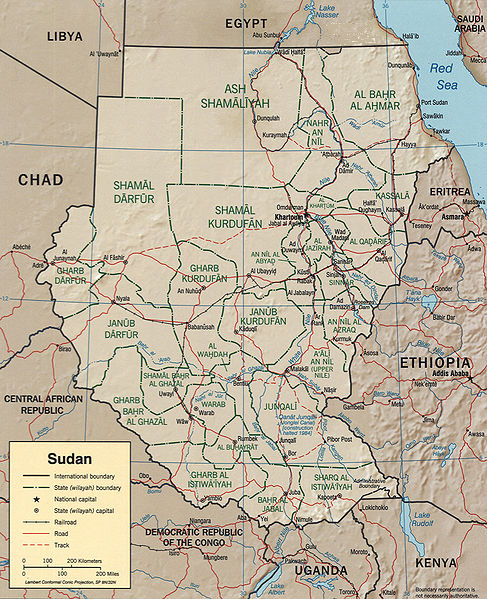
The Second Sudanese Civil War was an extended armed conflict that lasted from 1983 until 2005. It pitted the Sudanese government against the Sudan People's Liberation Army/Movement (SPLA/M) and began in the southern provinces before spreading to other contested regions such as the Nuba Mountains and the Blue Nile. The fighting grew into one of Africa’s longest and most devastating internal wars, combining political, religious and ethnic dimensions. The armed struggle and its humanitarian consequences played a central role in the eventual creation of an independent South Sudan in 2011.
Image gallery
4 Images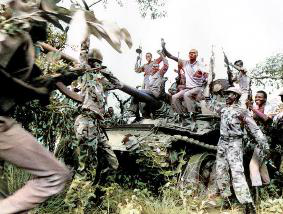


Origins and main causes
The war was rooted in unresolved tensions from Sudan’s earlier conflicts and uneven relations between the predominantly Arab-Muslim north and the largely African-Christian and animist south. Key triggers included changes in national governance and law in the early 1980s—most notably the revocation of southern autonomy and the introduction of Islamic legal measures—which many southerners perceived as attempts to impose a single national identity. The SPLA/M formed to resist central control and to press for greater political rights, regional autonomy or, for some factions, independence.
Course of the conflict
Fighting was irregular and widely dispersed, involving conventional battles, guerrilla actions and shifting front lines. Control and influence changed frequently, with the conflict at times spilling into neighbouring areas and involving multiple armed groups. Leadership within the rebel movement and its political aims evolved over the decades; international mediators, regional states and humanitarian agencies intermittently sought ceasefires and negotiated arrangements. The Comprehensive Peace Agreement of 2005 brought an end to large-scale hostilities and established mechanisms for a transition period and a future referendum on southern self-determination.
Humanitarian impact
The human cost was enormous. Estimates place civilian and combatant deaths at roughly two million, with widespread famine, disease and the breakdown of services contributing to mortality. Around four million people were displaced internally or became refugees at some point during the conflict. The war was marked by repeated human rights abuses, including attacks on civilians, forced displacement, child soldier recruitment, abductions and practices described by observers as slavery and mass killings. Relief operations by international organizations faced chronic access and security challenges.
Consequences and legacy
The 2005 peace arrangements created a framework for southern autonomy during an interim period and a referendum that led to the formal independence of South Sudan in 2011. The war reshaped Sudan’s political geography and left deep social and economic scars: contested borders, unresolved disputes over oil revenues and citizenship, weakened institutions and ongoing communal tensions. Memory of the conflict continues to influence politics and humanitarian needs in both Sudan and South Sudan.
Notable aspects and distinctions
- Duration: at 22 years, it ranks among the longest postcolonial civil wars in Africa.
- Complexity: the conflict combined local grievances, national policy disputes and regional interventions.
- Humanitarian scale: displacement and mortality figures make it one of the deadliest civil wars since World War II.
- Outcome: it culminated in a negotiated political settlement that directly enabled a successful independence referendum.
Questions and answers
Q: What was the Second Sudanese Civil War?
A: The Second Sudanese Civil War was a conflict that lasted from 1983 to 2005 between the Sudanese government and the Sudan People's Liberation Army.
Q: How long did the Second Sudanese Civil War last?
A: The Second Sudanese Civil War lasted for 22 years.
Q: Where did the Second Sudanese Civil War take place?
A: Although it started in southern Sudan, the civil war spread to the Nuba mountains and the Blue Nile.
Q: How did the Second Sudanese Civil War end?
A: The Second Sudanese Civil War resulted in the independence of South Sudan six years after the war ended.
Q: How many people died as a result of the Second Sudanese Civil War?
A: Roughly two million people died as a result of the war.
Q: What were some of the consequences of the Second Sudanese Civil War?
A: The conflict caused famine and disease, and roughly four million people in southern Sudan were displaced at least once during the war.
Q: What human rights violations were committed during the Second Sudanese Civil War?
A: Human rights violations during the war included slavery and mass killings, and the civilian death toll is one of the highest of any war since World War II.
Related articles
Author
AlegsaOnline.com Second Sudanese Civil War (1983–2005) Leandro Alegsa
URL: https://en.alegsaonline.com/art/88444