
Second Dynasty of Egypt: rulers, archaeology, and historical significance
Egypt's Second Dynasty (c. 2890–2686 BC) in the Early Dynastic Period saw political consolidation, shifts in royal symbolism and limited but important archaeological traces centered on Thinis and Abydos.
Overview
The Second Dynasty of ancient Egypt ruled during the Early Dynastic Period, roughly c. 2890–2686 BC. It succeeded the First Dynasty and preceded the more architecturally prominent Third Dynasty. Political power continued to centre on the traditional northern Upper Egyptian capital area around Thinis, and the period marks a transitional phase in the formation of the pharaonic state.
Image gallery
10 Images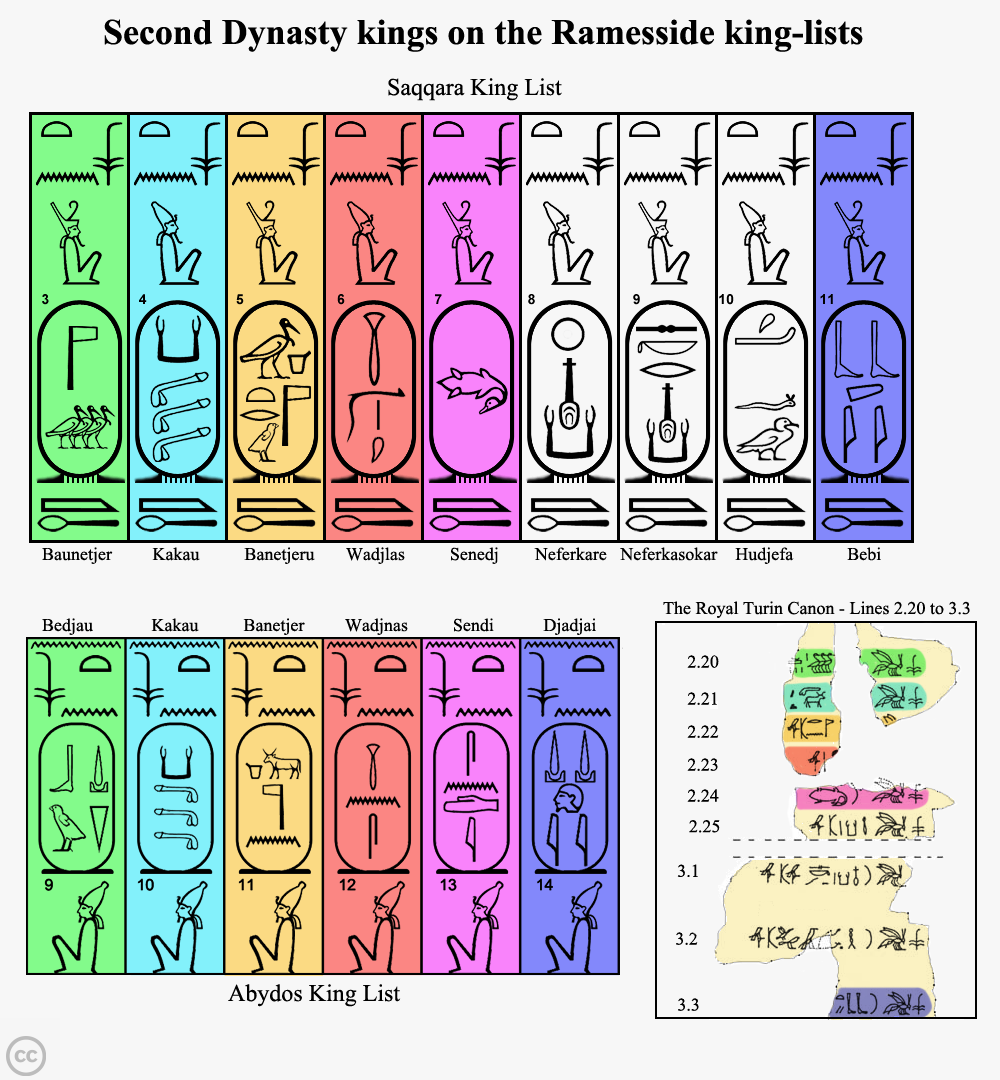


Rulers and documentary records
Knowledge about the kings of the Second Dynasty comes mainly from later king lists, fragmentary inscriptions and seal impressions found on tombs and pottery. Names commonly associated with this dynasty include Hotepsekhemwy, Raneb, Nynetjer, Peribsen and Khasekhemwy, among others. These lists are incomplete and sometimes conflicting, so scholars treat individual reigns and the order of succession with caution. For summaries of primary sources and typologies see relevant catalogs.
Archaeology and principal sites
Archaeological evidence is sparse compared with later eras, but important material survives at Abydos and Saqqara, and in cemetery complexes associated with Thinis. Royal tombs and burial goods show continuity with First Dynasty funerary practices while also hinting at developments in stoneworking and administration. Excavations and sealings provide much of the direct material basis used to reconstruct this period; for excavation reports consult archaeological summaries.
Political and religious developments
Several episodes in the Second Dynasty suggest political change and religious realignment. Some rulers are linked to the god Horus, while others — most notably Peribsen and his immediate successors — are associated with the god Seth or with combined Horus–Seth iconography. These shifts have been interpreted variously as evidence for internal conflict, regional division, or administrative reorganization. The last well-attested king of the dynasty, Khasekhemwy, employed both symbols in his royal titulary, which may reflect reunification efforts.
Administration, economy and material culture
Although fewer monumental buildings survive than in later periods, the Second Dynasty saw important institutional consolidation: more complex record-keeping, expanding craft workshops, and increased control over Nileine resources and trade routes. Seal impressions and factory marks indicate growing bureaucratic practices. Changes between the First and Third Dynasties imply that these institutional innovations were significant even if direct evidence is limited; for comparative studies see scholarly reviews.
Legacy and historical importance
The Second Dynasty is important chiefly as a bridge between Egypt's earliest pharaonic institutions and the state structures that produced the Old Kingdom. Its fragmentary record challenges historians, but the dynasty's apparent administrative reforms, religious experimentation and episodes of consolidation influenced how kingship and statecraft developed in subsequent centuries. For accessible overviews and further reading consult introductory resources.
Questions and answers
Q: When did the Second Dynasty rule Egypt?
A: The Second Dynasty ruled ancient Egypt from c. 2890 to c. 2686 BC.
Q: What is the Second Dynasty?
A: The Second Dynasty is the second dynasty of the Early Dynastic Period of Egypt.
Q: Where was the seat of government located during the Second Dynasty?
A: The seat of government was centred at Thinis during the Second Dynasty.
Q: What is known about this period in ancient Egyptian history?
A: Very little is known about this period in ancient Egyptian history.
Q: Is there much archaeological evidence from the time of the Second Dynasty?
A: No, there is very little archaeological evidence from the time of the Second Dynasty.
Q: Were there any important institutional and economic developments during the Second Dynasty?
A: Yes, there must have been important institutional and economic developments during the Second Dynasty, as comparing the differences between the First and Third Dynasties shows.
Q: How does the Second Dynasty compare to the First and Third Dynasties?
A: Comparing the differences between the First and Third Dynasties shows that there must have been important institutional and economic developments during the Second Dynasty.
Related articles
Author
AlegsaOnline.com Second Dynasty of Egypt: rulers, archaeology, and historical significance Leandro Alegsa
URL: https://en.alegsaonline.com/art/88412