
Secession in the United States: history, causes, and legal aftermath
Overview of state secession in U.S. history, the 1860–61 Southern secessions and Civil War outbreak, constitutional questions, legal rulings, Reconstruction, and modern implications.
Secession in the United States most commonly refers to the withdrawal of one or more states from the federal union. Debates over whether and how a state could leave were prominent in the 19th century and culminated in the American Civil War. Historians identify a mix of political, economic and social motives behind those events, including disputes over slavery, federal authority, and states' rights. For a concise legal and historical overview see state secession and background on the American Civil War.
Image gallery
4 Images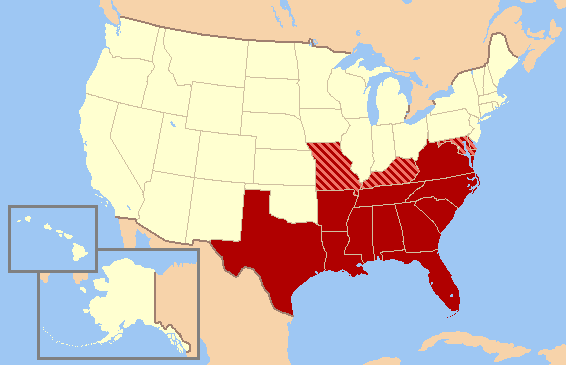


Immediate causes and constitutional questions
Southern political leaders argued that the Constitution preserved a compact among sovereign states and that a state could withdraw when its rights were threatened. Opponents countered that the Union was perpetual and that unilateral withdrawal would destabilize the republic. The Constitution itself does not provide a procedure for secession; that absence became a central legal question after 1865. Subsequent litigation and scholarship examined whether secession could ever be lawful without mutual consent or a constitutional amendment.
Chronology of the 1860–61 secessions
The crisis began after the 1860 presidential election. South Carolina was the first state to act, formally declaring its secession on December 20, 1860. In the following months seven Deep South states left the Union and established a provisional government:
- Georgia
- Florida
- Alabama
- Mississippi
- Texas
- Louisiana
- and the original secession of South Carolina listed above.
Those states organized themselves as the Confederate States of America, first centered in Montgomery and claiming a separate constitutional order.
Hostilities between federal and Confederate forces soon followed. The opening engagement that marked the transition from political crisis to armed conflict—when Confederate batteries fired on the federal garrison at Fort Sumter—occurred near Charleston on April 12, 1861, an event contemporaries described as the beginning of open hostilities. After the fighting began, additional slaveholding states, including Arkansas, Tennessee and North Carolina, joined the Confederacy. The government relocated its capital to Richmond.
Aftermath, legal rulings, and Reconstruction
The Civil War ended in 1865 with Confederate defeat. The Union states—sometimes described as the Northern states and the Border states that had remained loyal—preserved the federal government and reintegrated the seceded states through the processes of military occupation, political reorganization and Reconstruction. In the decades after the war the Supreme Court addressed the legal status of secession. In Texas v. White (1869) the Court held that the Union was indissoluble and that unilateral secession was not constitutionally valid, a ruling that has shaped later legal and political thinking about the matter.
Modern implications and distinctions
Since the 19th century, occasional political movements and commentators have raised the idea of secession in various states or regions. These initiatives range from advocacy groups and proposals to rhetorical expressions of discontent to scholarly discussions about federalism. Under current constitutional doctrine, peaceful withdrawal would require a negotiated political settlement or constitutional amendment rather than a simple unilateral act. It is also important to distinguish secession from other political choices such as sovereign independence movements in territories or changes in status by mutual consent; for example, proposals concerning territorial status or statehood involve different legal mechanisms than secession from an existing state.
Notable facts: the first formal secession vote in the crisis was by South Carolina; the Confederacy first met in Montgomery before transferring its seat to Richmond; and the long-term legal effect of the Civil War and subsequent court decisions has been to treat the Union as a continuing entity not subject to dissolution by individual states.
For additional reading, see primary documents and specialized studies on the constitutional controversy and the military and political history of the secession crisis and the Civil War. Contemporary commentary continues to debate federalism, state sovereignty and the political remedies available to dissatisfied regions.
Related terms and contexts: Union.
Questions and answers
Q: What is secession in the context of the United States?
A: Secession in the United States refers mainly to state secession.
Q: When did the American Civil War outbreak occur?
A: The outbreak of the American Civil War occurred on December 20, 1860, when South Carolina officially declared their secession from the United States.
Q: Which were the first seceding states in the American Civil War?
A: The first seceding states in the American Civil War were South Carolina, Georgia, Florida, Alabama, Mississippi, Texas and Louisiana.
Q: Where was the Confederate States of America based?
A: The initial seven seceding states formed the Confederate States of America based in Montgomery, Alabama.
Q: When did hostilities begin at Fort Sumter?
A: Hostilities began at Fort Sumter on April 12, 1861, in Charleston, South Carolina.
Q: Which states joined the Confederacy after the initial seven?
A: After the initial seven seceding states, the states of Virginia (except the northwestern counties), Arkansas, Tennessee, and North Carolina joined the Confederacy.
Q: Which states remained with the Union during the American Civil War?
A: The Northern and Border states remained with the Union during the American Civil War.
Related articles
Author
AlegsaOnline.com Secession in the United States: history, causes, and legal aftermath Leandro Alegsa
URL: https://en.alegsaonline.com/art/88398
Sources
- historynet.com : "Secession"
- history.com : "Secession"
- civilwar.org : "The Reasons for Secession, A Documentary Study"
- civilwar.org : "The Declaration of Causes of Seceding States"
- ucs.louisiana.edu : "Declaration of Causes of Seceding States"
- teachingushistory.org : ""Declaration of Immediate Causes which May Induce and Justify the Secession of South Carolina from the Federal Union," 24 December 1860"
- teachingamericanhistory.org : "Two Papers Regarding the Justifying Causes of Secession"
- mtholyoke.edu : "Civil War: Election of 1860"
- history.com : "Abraham Lincoln elected president - Nov 06, 1860 - HISTORY.com"
- tsl.texas.gov : "Declaration Of Causes: February 2, 1861 A declaration of the causes which impel the State of Texas to secede from the Federal Union"