
Bar-tailed godwit (Limosa lapponica)
Large migratory wader (Limosa lapponica) breeding on Arctic coasts and tundra; famed for record non-stop migrations between breeding and wintering coasts in the Old World and Pacific regions.
The bar-tailed godwit (Limosa lapponica) is a large shorebird in the family Scolopacidae. It is recognized by a long, slightly upturned bill, long legs and a relatively stocky body. Adults show a rufous breeding plumage and a more subdued mottled greyer tone in winter. As a coastal wader it probes mud and sand for invertebrates and is often seen in flocks along estuaries and tidal flats.
Image gallery
10 Images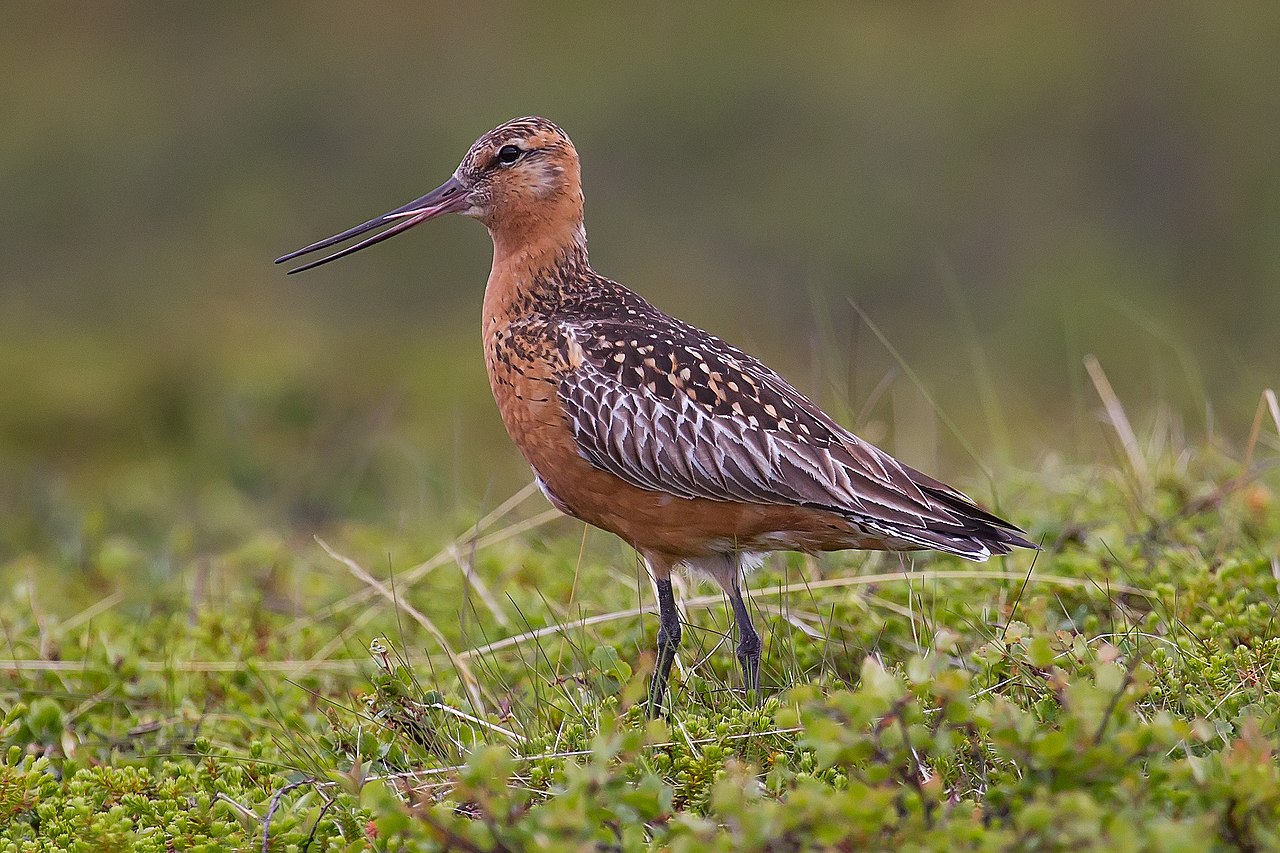





Characteristics
Key features include a straight to slightly upward-curving bill used to extract worms, crustaceans and molluscs, and strong flight adapted for long-distance movement. The species belongs to the Scolopacidae family and displays seasonal changes in feathering and body condition. Body size and bill length vary among geographic groups, and there are several recognized subspecies with distinctive plumage and migration strategies.
Distribution and habitat
Bar-tailed godwits breed on Arctic coasts and tundra areas, predominantly across Eurasia and adjacent islands of the Old World. In the non-breeding season they occupy temperate and tropical coastal wetlands, sandy shores and sheltered bays, where they stage or remain for extended winters. Different populations use distinct flyways and wintering regions.
Migration and remarkable flights
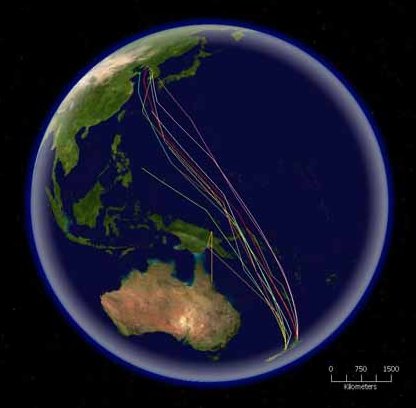
Migration is a defining aspect of the species. Some populations undertake extremely long migrations, including direct transoceanic flights. Satellite tracking and banding studies have documented individuals flying without stopping for days or weeks, a migratory behavior often described as the longest known nonstop migration. This capability makes the bar-tailed godwit notable among birds and among long-distance animals for endurance and navigation.
Ecology, human relevance and conservation
As predators of benthic invertebrates, bar-tailed godwits are indicators of intertidal ecosystem health. They are culturally significant in some coastal communities and are studied to understand physiological adaptations for endurance flight. Populations face pressures from habitat loss, disturbance and changing food supplies at migratory stopovers and wintering sites; conservation efforts focus on protecting key coastal habitats and flyway networks.
- Diet: marine and estuarine invertebrates.
- Breeding: Arctic tundra and coastal marshes.
- Notable: extraordinary nonstop migratory flights recorded by researchers.
For further reading on identification, migration routes and conservation priorities consult species accounts and flyway conservation resources. Research continues to clarify subspecies distinctions, exact migratory corridors and the effects of climate change on breeding and wintering habitats.
Questions and answers
Q: What is a bar-tailed godwit?
A: A bar-tailed godwit is a water bird in the family Scolopacidae.
Q: Where does the bar-tailed godwit breed?
A: The bar-tailed godwit breeds on Arctic coasts and tundra mainly in the Old World.
Q: Where does the bar-tailed godwit spend its winters?
A: The bar-tailed godwit spends its winters on coasts in temperate and tropical regions of the Old World.
Q: What is unique about the migration of a bar-tailed godwit?
A: The migration of a bar-tailed godwit is the longest known non-stop flight of any bird and also the longest journey without pausing to feed by any animal.
Q: Does the bar-tailed godwit breed in the New World?
A: The text states that the bar-tailed godwit mainly breeds in the Old World, suggesting it may not breed in the New World.
Q: Does the bar-tailed godwit migrate north or south for the winter?
A: The text does not specify whether the bar-tailed godwit migrates north or south for the winter, only that it spends its winters on coasts in temperate and tropical regions of the Old World.
Q: Does the bar-tailed godwit feed during its non-stop flight migration?
A: The text states that the bar-tailed godwit completes its migration without pausing to feed, suggesting it does not feed during its non-stop flight migration.
Related articles
Author
AlegsaOnline.com Bar-tailed godwit (Limosa lapponica) Leandro Alegsa
URL: https://en.alegsaonline.com/art/8839
Sources
- iucnredlist.org : "Limosa lapponica"
- rspb.royalsocietypublishing.org : Proc Biol Sci.276(1656):447-57.
- alaska.usgs.gov : PDF
- birdingnz.co.nz : New Zealand birding network brings you the best of New Zealand birding
- birds.cornell.edu : Stap, Don. 2009. The flight of the Kuaka. Living Bird.
- werc.usgs.gov : Shorebird migration